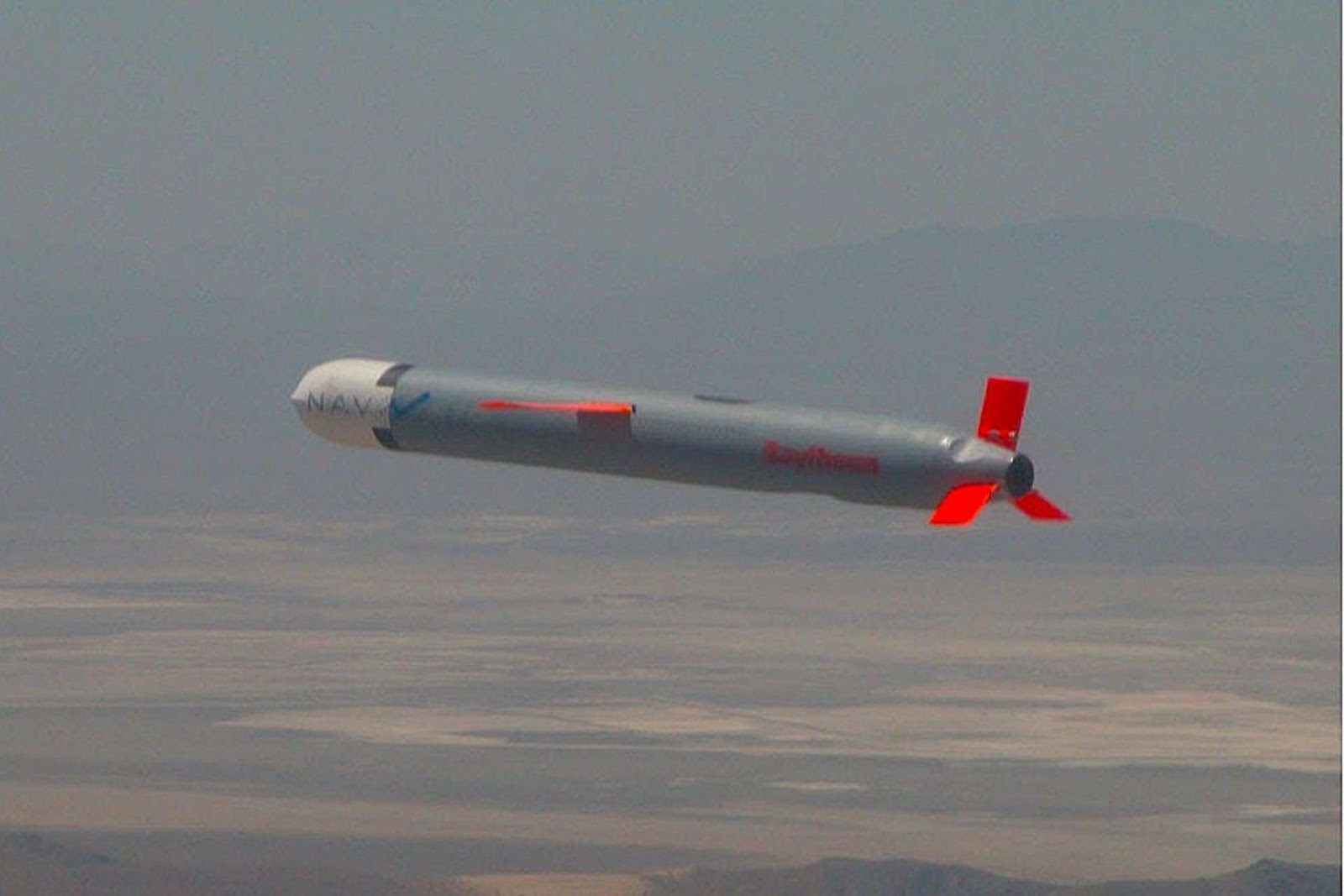
After Pentagon has given clearance for Tomahawk to Ukraine, all eyes are now on Trump to take the Final Call.

On Friday, 31st October 2025, the Pentagon’s Joint Staff has told the White House it sees no operational risk in transferring long-range Tomahawk cruise missiles to Ukraine, leaving the political decision to President Donald Trump.
The report follows several weeks of Ukrainian lobbying and comes despite Trump’s earlier remark about not “giving away” capabilities the US may need. There is still no official confirmation from the Pentagon or the White House, so the option remains indicative rather than formal. The Pentagon’s assessment that US stockpiles would not be affected nevertheless makes the information relevant for Kyiv, for European partners tracking US policy, and for Russia, which has signalled it is attentive to any move to supply Tomahawks to Ukraine.
The US assessment was delivered to the White House shortly before Trump’s 17th October meeting with President Volodymyr Zelensky, where Ukraine again argued that only a weapon with a reach of roughly 1,000 miles (up to 1,600 km in modernised Block V baselines) would allow Ukraine to hold at risk Russian oil, energy and command-and-control infrastructure far beyond the current envelope of ATACMS or Storm Shadow.
The Tomahawk is traditionally a sea-and submarine-launched cruise missile; however, US services have already demonstrated several land-based solutions that would make employment by Ukraine technically feasible. At AUSA 2025, Oshkosh Defense showed the X-MAV, a mobile, autonomy-ready launcher carrying four Tomahawks on an off-road chassis, essentially the kind of “shoot-and-scoot” platform that could be supplied or replicated for partners.
The US Army’s Typhon mid-range capability, already fired in Japan and Australia, uses a containerised Mk 41 derived launcher with the same four-round Tomahawk loadout, proving that the missile can be operated from the ground without a navy. These demonstrations, give both US and Ukraine a ready set of technical options if the political go-ahead is issued.
Even with the stockpile issue resolved, US officials quoted that Ukraine would still have to work on the thorough training, mission-planning and integration questions before the weapon could be used effectively, especially if US decided not to transfer US Army or Marine Corps launchers alongside the missiles.
Here, European officials note that Ukrainian engineers already reverse-engineered a solution to fire UK supplied Storm Shadow from ageing Soviet era aircraft, and therefore expect Ukraine to be able to adapt a ground platform or to integrate a US-supplied one with minimal US “hands-on” presence. Zelensky has openly said on X that Ukraine intends to expand its long-range strike portfolio before this year’s end, which suggests that the country is preparing the intelligence, target-development and deconfliction architecture in parallel with the US decision cycle. In other words, the Pentagon’s green light removes the logistical veto, but the operational burden, training, siting of launchers, force protection, and assured communications, will fall largely on Ukraine and on those European allies prepared to help.
Strategically, Tomahawks for Ukraine would mark a qualitative step beyond previous long-range transfers, because a 1,000-mile cruise missile launched from western or central Ukraine can reach critical nodes around Moscow, St. Petersburg and deep rear energy facilities, exactly what Russian President Vladimir Putin warned would “trigger a new level of escalation” earlier in October.
Russian officials have been communicating with the US that such strikes would not alter the battlefield balance but would severely damage US-Russia relations, an argument that appears to have resonated with Trump after his phone call with Putin, and may explain why he told Zelensky the US “needs” those missiles, at least for now.
At the same time, European governments read the Pentagon’s assessment as removing one of US long cited constraints and making it harder, politically, for the US to say no if Russia continues to use long range systems of its own, including the 9M729, which Ukraine demands that it has already been used against their country. In that context, giving Ukraine Tomahawks would be less an escalation than a rebalancing of strike reach in Europe, but it would also force allies to harden air defences in depth and to prepare for Russian attempts to interdict Ukrainian launchers on NATO territory, even if those launchers remain inside Ukraine.
Nothing in this sequence of developments guarantees that Tomahawk missiles will be delivered to Ukraine: the Pentagon’s technical assessment is complete, but any transfer still depends on a presidential decision that has not been made public.
At the same time, the elements described as a positive stockpile review, the availability of land-based launch solutions demonstrated at AUSA 2025, and Ukraine’s stated intention to expand its long-range strike options, indicate that, should a decision be taken, the integration pathway already exists.
In that scenario, Tomahawks would provide Ukraine with an additional deep-strike tool against targets in the Russian rear, while remaining subject to the political, operational and escalatory parameters that Washington and its allies continue to evaluate.
Team Maverick







Trump Vows Continued Military Pressure on Iran, Expresses Doubts Over Diplomacy
Washington, Aug 2026: US President Donald Trump has vowed to maintain military pressure on…

Trump Vows Continued Military Pressure on Iran, Expresses Doubts Over Diplomacy
Washington, Aug 2026: US President Donald Trump has vowed to maintain military pressure on …