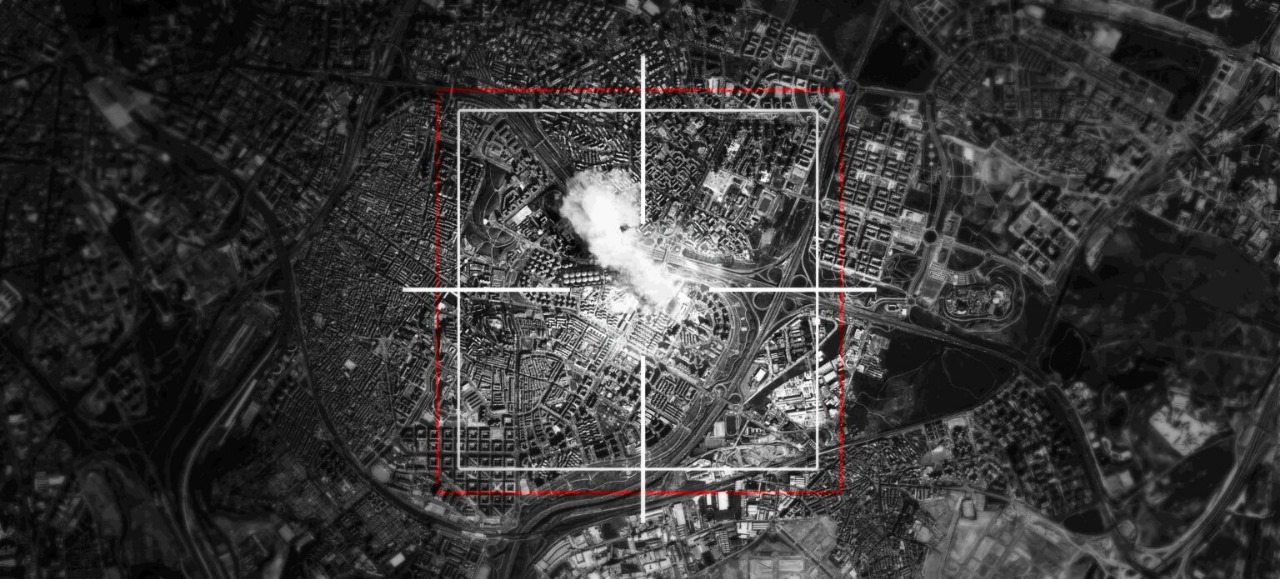
While is Israel Attacking Nuclear Facilities of Iraq, Syria and Iran persistently?

Over the past 44 years, Israel has used its intelligence and air force capabilities to attack
and incapacitate the weapons-oriented nuclear programs of Iraq, Syria, and Iran.
In June 2025, Israel and the United States have attacked Iran’s nuclear weapons-oriented facilities. For Israel, this was the third such assault in 44 years. Like its strikes on Iraq in 1981 and Syria in 2007, Israel’s strike on Iran adhered to its inherent doctrinal principle of destroying the illegitimate nuclear faculties possessed by its enemies. (It is worthy of note that in contrast to the intelligence that led up to these strikes, Israel’s intelligence community did not detect a progressing Libyan military nuclear program that was ultimately foiled by the US and UK in 2003)
Back to Iraq, Syria and Iran. Israel’s destruction of Iran’s nuclear capacities was a composite strike in that it targeted three facilities rather than one. Over the course of several days, the IAF struck active and highly fortified facilities along with additional strategic installations. The attack was somewhat expected, as it took place one day after the expiration of a 60-day deadline President Trump had given Iran to renew a nuclear agreement.
The Iran strike was complemented, vitally, by a US military blow. While no retaliation was delivered by Iraq or Syria, Iran retaliated massively against Israel (though largely without result), targeting both civilian and strategic sites. Among the latter, the most conspicuous were the Nuclear Research Center in Dimona and the Biological Research Center in Ness Ziona. It is uncertain whether or not Iran’s retaliation has ceased, considering its cyber warfare capabilities.
The following chart offers a comparative analysis of the strikes against Iraq, Syria and Iran.
- Targeted Nuclear Facility:
| Iraq | Syria | Iran | |
| Type of facility | French-supplied Osiris-class reactor (plutonium-capable) | North Korean-designed gas-cooled plutonium reactor | Uranium enrichment facilities (centrifuges) |
| Stage of completion | Near-complete but not operational | Near-operational | Operational, advanced with redundancy |
| Fuel/weapons potential | Not yet fuelled; preventive | Not yet fuelled; preventive | Enriched uranium already stockpiled (some >60%) |
- Israeli Motivation:
| Iraq | Syria | Iran | |
| Strategic concern | Saddam Hussein’s open threats; fear of eventual bomb | Covert reactor with N. Korean assistance; weapons-oriented | Existential threat; public vow to prevent Iranian nuclear capability |
| Doctrine applied | Fixed doctrine of preventing enemy nukes | Persistent preventive doctrine | Aggravated preventive conception stemming from Iranian maliciousness |
| Urgency | Imminent fuelling; a later strike would have risked radioactive fallout | Same as Iraq – pre fuel window | High due to unpredictability of Iranian inception of final weaponisation phase. |
- Enabling and Timing:
| Iraq | Syria | Iran | |
| Chief intelligence supplier | Head of IDF Intelligence Directorate (M.G. Yehoshua Sagi) | Head of IDF Intelligence Directorate (M.G. Amos Yadlin) | Head of IDF IntelligenceDirectorate (M.G. Shlomi Binder) |
| Attack Provider | Air Force Commander (M.G. David Ivri) | Air Force Commander (M.G. Eliezer Shkedi) | Air Force Commander (M.G. Tomer Bar) |
| Timing | June 1981, just before fuelling | September 2007, just before activation | June 2025 – probably amid worsening diplomacy and IAEA deadlock; one day after the 60 days granted by Trump to Iran to reach a nuclear agreement |
- Strike Forces and Modes of Attack:
| Iraq | Syria | Iran | |
| Strike force | 8 F-16s with F-15 escorts | 4 F-15Is (Ra’am) + EW support | Likely a mix of F-35Is (stealth), drones, missiles, cyber and sabotage |
| Range & logistics | Long-range strike, ~1,100 km | ~600 km, in/out rapidly | ~1,200-1,500 km with complex logistics (air refuelling and/or forward basing) |
| Support measures | Precise air-to-ground bombs, minimal electronics | Extensive EW (jamming Syrian radar) | Likely integrated: cyber-attacks, air defence jamming, long-range munitions (Rampage, Spice bombs) |
- Results of the Strikes:
| Iraq | Syria | Iran | |
| Immediate outcome | Reactor destroyed; program set back indefinitely | Reactor flattened; program fully halted | Severe damage but not complete elimination |
| Casualties | 10 Iraqi personnel | Unknown, probably very low | Likely some Iranian military/technical casualties |
| Visibility | Publicly acknowledged by Israel | Silent for a year; then Israel acknowledged | Overt, mostly in real time |
- Strategic and Political Impact:
| Iraq | Syria | Iran | |
| International reaction | Global condemnation, even from US; UN censure | Minimal backlash; US quietly cooperated | Divided: Western states muted; Russia and China condemn |
| Effectiveness | Set back Iraqi bomb by decades; Iraq never went nuclear | Termination of highly secret program | Mixed: appreciable delay, but may accelerate clandestine weaponization or justify breakout |
| Long-term impact | Justified preventive doctrine in Israeli security ethos | Confirmed the effectiveness of the doctrine | Possible regional escalation; shift in Iran’s nuclear posture; internal deterrence logic recalibration |
- Overall Estimate:
| Iraq | Syria | Iran | |
| Surgical precision | High | Extremely high | Satisfactory; might have required even greater precision due to dispersed and hardened targets |
| Diplomatic fallout | Severe but manageable | Minimal due to global silence and Syrian denial | Expected to be bearable; depends on unstable geopolitical climate |
| Doctrine evolution | Implementation of Israeli preventivestrike doctrine | Refined, clandestine enforcement | Maximalist application under existential threat calculus |
The effort by Libya, a Muslim enemy country, to run a military nuclear program was completely missed by Israeli intelligence. This failure yielded essential lessons that were laboriously projected onto the Iranian and Syrian arenas, where exceptionally meticulous intelligence monitoring was conducted by Israel. That monitoring enabled the early tracing of non-civilian nuclear elements and their eventual destruction without generating environmental pollution, a highly consequential element.
The three strikes tightly followed the long-term Israeli fundamental concept of disabling the acquisition by a foe of nuclear weapons, no matter how difficult the circumstances (distance to the targeted facilities; likely diplomatic fallout; expected retaliation by the attacked country). This cardinal rule was made manifest through pinpointed, surgical strikes, carefully timed and anchored in arduous intelligence.
With that said, there are important differences between the three cases. While the actual strikes against Iraq and Syria (rather than the intelligence operations that led up to them) were relatively uncomplicated, the attack on the Iranian nuclear alignment was extraordinarily challenging in many respects, indicating increased Israeli intelligence faculties, offensive capacities, and operational manoeuverability. The attack also required utmost cooperation with the US military, which participated in the attack. The involvement of the Americans was a vital factor that differentiated the Iran strike from the earlier strikes on Iraq and Syria. In addition to assisting in the success of the strike, it had a mitigating effect on negative international reactions and diplomatic fallout, as it was a direct signal of Washington’s unwillingness to tolerate Iran’s pursuit of nuclear weapons.
While Iraq and Syria have since ceased their quest for nuclear weapons, Iran is now at a crossroads in this regard. We should expect that no matter what its true intentions may be, the Iranian regime will continue to publicly claim that it does not seek nuclear weapons.
Team Maverick







Maharashtra Shuts Schools Across Several Districts as Heavy Rain Alert Triggers Safety Measures
Mumbai, July 2026: Authorities across several districts in Maharashtra have declared a hol…

Maharashtra Shuts Schools Across Several Districts as Heavy Rain Alert Triggers Safety Measures
Mumbai, July 2026: Authorities across several districts in Maharashtra have declared a holiday for …