No Govt Post After Retirement, Says CJI Gavai

New Delhi, Nov 2025 : Outgoing Chief Justice of India (CJI) B.R. Gavai, who is set to demit office on November 23, made it unequivocally clear that he will not accept any government position after retirement, underlining his long-standing commitment to judicial independence and public service.
Speaking informally with journalists on the eve of his retirement, CJI Gavai touched upon a range of significant issues — from reservation policy reforms and judicial neutrality to the growing challenge posed by social media narratives and the Supreme Court’s recent advisory opinion in the Presidential reference.
“I Will Not Take Any Government Post”
Reflecting on life after retirement, Justice Gavai said he intends to take “ten days of rest” before finalising his next steps. However, one aspect is certain: his continued engagement in social service.
“Social work is in our blood… I intend to work in tribal areas,” he said, reinforcing his longstanding connection with marginalised communities and his desire to contribute beyond the judiciary.
Calls for Extending Creamy Layer Rule to SC/ST Quotas
In a notable and bold comment on the reservation framework, CJI Gavai advocated extending the creamy layer principle — currently applied to OBC reservations — to SC/ST categories as well. He argued that such a step would ensure the benefits of affirmative action reach those most in need.
Affirming that reservation must continue to uplift the weakest sections, he said reforms should also ensure “equitable distribution” within beneficiary groups.
Declines Comment on Controversial Issues
Asked about the ongoing debate surrounding Justice Yashwant Varma and whether an FIR should be lodged immediately if cash is recovered from a judge’s residence, Justice Gavai steered clear, remarking that both issues lie outside the judiciary’s domain at this stage.
“These matters are now with Parliament,” he said, emphasising institutional boundaries.
Social Media: A Growing Distortion Machine
CJI Gavai voiced strong concerns about the rising influence — and distortive tendencies — of social media.
“Social media has become a problem for all three organs of the State,” he said, referring to the executive, legislature, and judiciary.
He highlighted how misinformation spreads easily online: “Things we do not even say are written and shown.”
Judicial Independence Not Defined by Rulings Against Government
Responding to commentary that judges are seen as “pro-government” when verdicts favour the administration, Justice Gavai rejected the premise altogether.
“It is not correct to say that if you rule in favour of the government, you are not an independent judge,” he said. Judicial independence, he added, is rooted in constitutional duty — not public perception.
Clarifies Supreme Court Opinion on Presidential Reference
CJI Gavai also addressed concerns regarding the Supreme Court’s recent opinion on the Presidential reference involving pending bills before Governors and the President. He stressed that the Constitution Bench had not overturned the earlier two-judge bench verdict.
“We have only clarified what the constitutional position shall be in future,” he said.
“Swadeshi Interpretation” in Recent Judgments
His remarks came a day after the ceremonial bench where he highlighted the Supreme Court’s growing emphasis on Indigenous (‘Swadeshi’) jurisprudence.
Solicitor General Tushar Mehta praised the Bench for its clear articulation of India’s unique constitutional identity, noting: “A fresh breeze of Indian-ness has started flowing in the judgments.”
Justice Gavai added that the recent Constitution Bench opinion did not cite any foreign judgments, marking a deliberate shift toward home-grown legal reasoning.

Trump Declares Strait of Hormuz Reopened Under US Protection, Imposes Full Blockade on Iranian Shipping
Washington, July 2026 : US President Donald Trump on Tuesday announced that the Strait of …
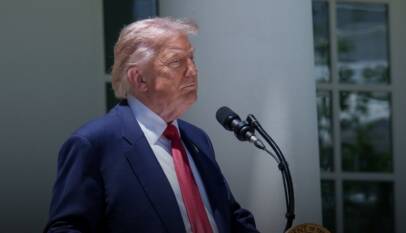
Trump Declares Strait of Hormuz Reopened Under US Protection, Imposes Full Blockade on Iranian Shipping
Washington, July 2026 : US President Donald Trump on Tuesday announced that the Strait …