Bhagwant Mann Government’s Road Revolution: 44,920 km of Roads Being Built at a Cost of ₹16,000 Crore

Chandigarh, Nov 2025 : A quiet revolution is underway in Punjab. It is not the noise of slogans, but the sound of construction. The smell of fresh asphalt fills the air in village after village. The hum of JCB machines echoes across farmlands. Tractorloads of gravel and the rhythmic thump of road rollers have become the new heartbeat of Punjab. Chief Minister Bhagwant Mann has transformed roads from political showpieces into genuine development meant for the people.
Work was already underway on 19,373 kilometres of rural roads. Now, the government has set an ambitious goal of building a 44,920-kilometre road network in one sweeping phase. This is not just an announcement — it is a roadmap visible on the ground.
Mann has not merely awarded contracts — he has changed the rules of the game. Sweeping aside the old politics of commissions and cuts in tenders, he laid down a clear message: “Build good roads, you will be paid on time. But if you cheat, you will face strict action.” This warning has now turned into an administrative system.
A special flying squad has been formed to check every aspect of road construction — depth, thickness, bitumen quality and more — right at the site. If a video emerges from any village, the government’s response reaches the location immediately. Earlier, the system acted after receiving complaints; now it stays alert even before a complaint arises.
In several places, poor-quality material was detected. Tenders were cancelled, and officials were suspended. In one case, a wall was being constructed like a bland dish with no spice; as soon as the government learnt about it, the work was halted on the spot. The contractor’s agreement was cancelled and new orders were issued. For the first time, contractors are thinking twice — whether to build the road properly or face consequences.
And when responsibility lies with contractors, when people become inspectors, and when the Chief Minister issues warnings instead of promises — the life of the road becomes stronger naturally. Each contractor is responsible not only for construction but also for five years of maintenance, ensuring the road doesn’t deteriorate in a year or two.
Today, village sarpanches are not just panchayat leaders; they are guarantors of road quality. Payments are released only after their approval. If villagers send videos showing substandard materials, the Mann government acts on that footage instantly. This is a new development model — the public is not just a beneficiary but a supervisor, and the government stands with them.
The inauguration of 19,000 kilometres of roads in Tarn Taran Sahib on October 17 was not just another event; it set the direction for the next decade of Punjab’s progress. The Mandi Board, PWD, municipal corporations and councils — all are working together toward one large objective. Punjab’s development is no longer limited to paperwork — it is visible on Google Maps.
Traders are saving hours in transport, farmers are reaching mandis on time, youth are able to travel to cities for work and return the same day, ambulances move without delays, and potholes are giving way to smooth roads. This new pace reflects Punjab’s rising confidence.
Politics has seen many speeches and many schemes, but what is happening today is writing a new record. Everyone sees it — the opposition, party workers, villagers, traders — but most importantly, the people understand that this is not just development; it is the transformation of how development is done.
No grand announcements — only machines working on the ground. These long black lines of asphalt on Punjab’s map are not promises for tomorrow — they are proof of what is happening today. Roads in Punjab are not just being built, they are being built to last.




Maharashtra Shuts Schools Across Several Districts as Heavy Rain Alert Triggers Safety Measures
Mumbai, July 2026: Authorities across several districts in Maharashtra have declared a hol…
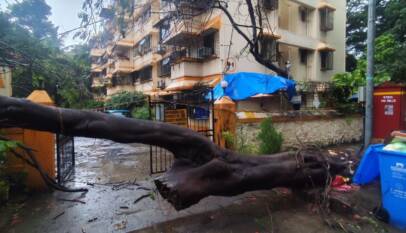
Maharashtra Shuts Schools Across Several Districts as Heavy Rain Alert Triggers Safety Measures
Mumbai, July 2026: Authorities across several districts in Maharashtra have declared a holiday for …