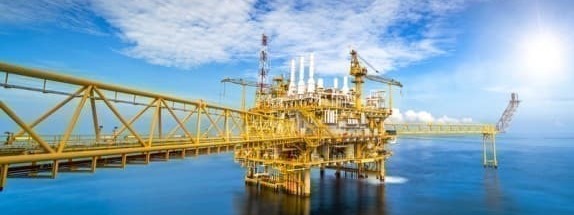
Pakistan and Russia Inches Towards Oil Procurement Deal.

December 2025: Pakistan and Russia are discussing a potential cooperation agreement in the oil sector, including in exploration, production, and refining, Pakistani Finance Minister Muhammad Aurangzeb told media reporters on Tuesday. “All of these areas are Russia’s strengths. And we would be very happy if Russia agreed on an agreement in this sector with Pakistan“, Aurangzeb had said in an interview when asked about wider cooperation in exploration, production and refining between the two countries.
Russia also discussed upgrading a refinery in Pakistan with Russian companies involved, Russian Energy Minister Sergei Tsivilev had said in November. Pakistan has stepped up engagement with Russia in recent years as the country has sought new energy markets after Western sanctions over Ukraine, and Islamabad looked to lower import costs. Pakistan began buying Russian crude in 2023.
Aurangzeb also said Russia and Pakistan are looking into building another steel plant in Pakistan.
Russia and Pakistan have deepened their energy ties in recent years, as Russia seeks new outlets for its oil banned in the West and cash-strapped Pakistan seeks cheaper crude supply and developing its own oil, gas, and minerals industry. Pakistan started importing Russian crude in 2023, paying in Chinese Yuan for the deliveries.
On the 12th June 2023, Pakistan’s Petroleum Minister Musadik Malik, had asserted the fact that Pakistan had accomplished the sales return vide Chinese Yuan, for its first imports of discounted Russian crude in Chinese currency. According to Malik, the purchase, the first government-to-government (G2G) deal between Pakistan and Russia, consisted of 100,000 tons, of which 45,000 tons have already docked at Karachi port.
The decision to pay in Chinese currency instead of the traditional U.S. dollar comes after Russia last year said it will no longer accept the American currency as payment for its energy commodities but will instead switch to Chinese and Emirati currencies. Further, Russia was cut off from the US Dollar Dominated Global Payments Systems following sweeping sanctions off the Ukraine war.
On its part, the new arrangement is convenient for Pakistan considering that the country is facing a severe shortage of foreign exchange reserves and risks defaulting on its debt obligations. Pakistan has long been a close Western ally and an estranged offspring of Mother India, which itself has massively ramped up imports of cheap Urals.
Pakistan’s Petroleum Minister Ali Pervaiz Malik discussed cooperation with Gazprom at an energy forum in Russia in October 2025, a month after Pakistani Prime Minister Shehbaz Sharif and Russian President Vladimir Putin met in Beijing and reaffirmed their commitment to expand energy and trade cooperation.
Malik’s talks with top Russian executives and officials at the Saint Petersburg International Gas Forum in October focused on investment opportunities for Russia in Pakistan’s minerals and energy sectors, including technology transfers and digital solutions for exploration and production efficiency. The two countries have also held a high-level meeting at the end of November, which centered on cooperation in the oil and gas sectors, and opportunities in LNG and LPG supply.
Pakistan, meanwhile, is advancing plans to boost exploration and signed early this month 05 deals for oil and gas exploration with local private and state-owned companies that will develop 03 offshore and 02 onshore blocks. The companies that will be involved in the development of the 05 blocks include Mari Energies, Oil & Gas Development Company Limited, Pakistan Petroleum, Fatima Petroleum, Government Holdings Limited, and Turkish Petroleum Overseas Company. Last month, the Pakistani government auctioned 40 offshore blocks and got 23 bids from four consortia involving local energy companies and Turkey’s state-owned energy major Türkiye Petrolleri Anonim Ortakl.
The 04 consortia have committed $80 million in investments for the exploration phase of the blocks’ development, with potential total investments that could reach $1 billion if they move on to the production phase.
An earlier report cited Turkish energy minister Alparslan Bayraktar as saying the Turkish state energy firm had inked deals for the development of the five blocks with local Pakistani companies and was planning on beginning exploration activities in 2026. The official also highlighted President Recep Tayyip Erdogan’s earlier visit to Pakistan, which set a target of boosting bilateral trade to $5 billion. Energy and mining collaboration, Bayraktar said, will be critical in reaching, and potentially surpassing that goal. The two countries are also exploring a joint procurement model for energy products, including LNG, to leverage scale and reduce costs.
Earlier this year, Pakistan also inked an energy deal with the United States, with President Trump saying U.S. companies will take part in the development of Pakistani oil and gas resources.
“We have just concluded a deal with the country of Pakistan, whereby Pakistan and the United States will work together on developing their massive oil reserves”, Trump wrote on Truth Social in August, following the signing of the deal. “We are in the process of choosing the Oil Company that will lead this partnership. Who knows, maybe they’ll be selling Oil to India someday!”
Last month, on 04th November, the Pakistani government auctioned 40 offshore blocks and got 23 bids from four consortia involving local energy companies and Turkey’s state-owned energy major TPAO in its first bidding round in 18 years, marking a significant increase in investor interest in the country’s energy sector. The government awarded the offshore blocks to four consortiums, led by major local energy
The Turkish energy giant Anonim Ortakl signed a joint bidding agreement with PPL earlier this year to explore the country’s offshore prospects. These consortiums have pledged an initial $80 million for the exploration phase, with total investment possibly reaching up to $1 billion if drilling proceeds. The successful bids for the offshore blocks covering around 53,500 square kilometres have come as the Southern Asian nation desperately tries to ramp up domestic oil and gas production in a bid to lower its energy import bill and enhance energy security.
Back in April, OGDCL, PPL, TPAO and Mari Energies signed a Joint Bidding Agreement to jointly participate in offshore oil and gas exploration in Pakistan’s territorial waters. The partnership aims to attract foreign investment and leverage international technology for exploring Pakistan’s offshore oil resources. Pakistan has a total of 300,000 square kilometre offshore zone, bordering the United Arab Emirates, Oman and Iran.
As per official international sources, Pakistan has just drilled 18 wells since the country gained its existence after being crafted from India in 1947, making it difficult to fully assess its hydrocarbon potential. Pakistan currently imports 85% of its crude oil, 29% of its natural gas, 50% of its LPG, and 20% of its coal. The country saw its energy import bill skyrocket to $17.5 billion in 2023, a figure that’s projected to nearly double by 2030.
In June, the Pakistan Oilfields Limited (POL) and OGDCL announced the successful testing of the Makori Deep 03 Offshore Development Well, yielding 2,112 barrels per day of condensate and 22.08 million standard cubic feet of gas per day (MMSCFD) after reaching a final depth of 3,887 metres. Whereas local media described the discovery as one of the largest in the region, unlocking Pakistan’s offshore hydrocarbon potential will not come cheap, with experts estimating that exploration alone could require upwards of $5 billion in investment. Further, Pakistan needs an estimated $25 billion to $30 billion in investment over the next decade to extract just 10% of its total 235 trillion cubic feet (TCF) of natural gas reserves and reduce foreign exchange outflows.
However, Pakistan will have to grapple with persistent security risks that have dogged the country for years, including terrorism and political instability. Insecurity complicates the country’s energy investment outlook by deterring foreign direct investment (FDI), increasing project costs and delays, and hindering the development of indigenous resources. International investors have been hesitant to commit to long-term projects due to the perceived high risk associated with an unstable political and security environment. Security challenges, particularly in provinces with significant natural resources like Balochistan and Sindh, have disrupted project development and construction.
The security threats posed to the Iran-Pakistan gas pipeline project and the need for a dedicated Special Security Division for CPEC projects illustrate the tangible impact of security issues on project timelines and implementation. China-Pakistan Economic Corridor (CPEC), is Beijing’s flagship $62 billion infrastructure initiative in Pakistan. CPEC has achieved significant milestones, primarily in developing energy infrastructure to alleviate power shortages and building extensive transportation networks to improve connectivity. It has also operationalized the Gwadar Port and generated thousands of jobs.
Several successful coal, hydro, wind, and solar power projects in Pakistan have been credited to CPEC. These include the 1,320 MW Sahiwal and Port Qasim coal-fired power plants; the 720 MW Karot Hydropower Project, and several wind farms including in Jhimpir and Thatta. CPEC has also played a role in improving the country’s transmission infrastructure, including the 660 kV Matiari-Lahore HVDC Transmission Line project, designed to evacuate 4,000 MW of power from generating units in the south of Pakistan to urban load centres in Punjab province.
Suvro Sanyal
Team Maverick.



India Make Two Changes for Must-Win Fourth T20I as Shreyas Iyer Opts to Bat Against England
Bristol, July 2026 : India made two significant changes to their playing XI as captain Shr…

India Make Two Changes for Must-Win Fourth T20I as Shreyas Iyer Opts to Bat Against England
Bristol, July 2026 : India made two significant changes to their playing XI as …