It Is A Crime In Belarus, Fighting For The Ukrainians Against Russia.

January 2026: Under Lukashenko, Belarus is Russia’s close military ally and has backed Moscow’s war against Ukraine, providing logistical support and echoing Kremlin threats toward NATO. Yet since Russia launched its full-scale invasion in February 2022, hundreds of Belarusians have crossed into Ukraine to fight on Kyiv’s side.
“Punishing and sentencing people who fought for Ukraine is more likely Lukashenko’s own decision than the result of pressure from the Kremlin”, said Artsyom Shraybman, a Belarusian political analyst who lives abroad. “Lukashenko understands these people are very ideological and principled in being anti-Russian, and, by extension, very likely anti-regime”, said Shraybman, a nonresident scholar at the Berlin-based Carnegie Russia Eurasia Center, meaning the state assumes they oppose Lukashenko and the authorities under him.
In Belarus, IT specialist Ihar Karatkou has been imprisoned with a five-year sentence at Corrective Colony No. 2, a prison in Babruysk, southeast of Minsk, because of the reason that he had donated about $10 (INR 900 Rs.) only to the Kastus Kalinouski Regiment, a unit of Belarusian volunteers fighting on Kyiv’s side in the Russian war against Ukraine.
Another, Vasil Hrachykha was also sentenced to five years in prison earlier this year, but his where abouts are still unknown; his fault remains in fighting with the Kalinouski Regiment for a few weeks in May-June 2022, according to the regiment and the Belarusian Prosecutor-General’s Office. But a state television report showed a man purported to be Hrachykha being detained in an unidentified swampy area by armed officers of the KGB, the Belarusian security agency, and taken away by helicopter with a bag over his head.
Karatkou, 37, and Hrachykha, 44, are amongst the 200 Belarusians those who were pronounced guilty, along with imprisoned for violating a law against “participation or preparing to participate in hostilities on foreign soil” as well as recruiting for, training for, and financing such activities, among other things.
Many of them, including Karatkou and Hrachykha, are on the list of people prominent Belarusian human rights group Vyasna has designated as political prisoners under authoritarian leader Aleksandr Lukashenko, who has been in power since 1994.
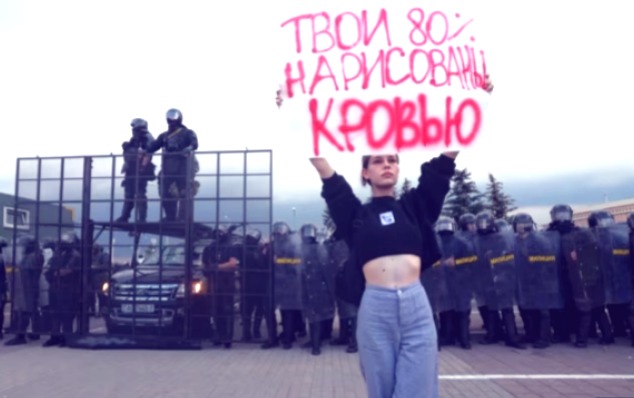
In December, there were more than 1,130 names on that list, even after a series of prisoner releases that analysts say is part of an effort by Lukashenko to improve ties with the West despite his government’s support for Russia in its war on Ukraine and an ongoing state crackdown that started as a brutal police response to mass protests over an August 2020 election that extended his rule. Millions in Belarus and beyond dismissed the vote as a sham.
After the United States had agreed to cease the sanctions against Belarusian fertiliser exports, on December 13th, Belarus freed 123 prisoners including some prominent opposition figures.
Among those released was Alyaksey Kaplich. In March 2025, after attaining the age of 18, he set out to travel to Ukraine to fight on Kyiv’s side but was detained at the airport in Minsk before he could board a flight to Tbilisi, the first leg of an abortive journey to the front. They had put “a sack over my head, handcuffs, and drove me in a minibus, lying down” with the boots of a special forces officer pressing on his back and legs, Kaplich told Media Reporters in an interview in Vilnius on December 22nd. Kaplich, who have learned in 2020 that he is a second cousin of exiled Belarusian opposition leader Svyatlana Tsikhanouskaya, who was convicted that summer and sentenced to 02 years in prison. Now that he is free, he plans to make the trip to Ukraine and join a unit there.
While the Russian’s have repeatedly denied that they have targeted civilians despite mounting civilian casualties and many direct hits by drones, missiles, and guided bombs on apartment buildings, shopping malls, and other civilian facilities, often far from the front lines since the start of the full-scale invasion in February 2022.
It was unclear whether any other prisoners convicted of planning to fight in Ukraine or otherwise supporting its defense were among those released along with Kaplich and 122 others. “No individuals who had directly participated in hostilities as members of armed forces were released on December 13th”, Maryna Kasinerava, a representative of the human rights group Dissidentby, told reporters.
Belarusian citizens and permanent residents are prohibited from participating in any foreign armed organisations on any side in a war or taking part in armed conflicts without state authorisation. The relevant statute also outlaws “recruiting, training, preparation” and “financing or other material support for such activity”. However, Kasinerava says, the law is applied selectively.
“Mercenaries fighting for Russia are not prosecuted in Belarus”, she said. By contrast, she said, those linked to Ukraine may face systematic repression, including pressure on relatives, violence, and in some cases torture. An example is Dzianis Urbanovich, who has been fighting in Ukraine since the early in the full-scale war. He said his father in Belarus has repeatedly had his home searched and was forced to write an appeal to his son to return, and security forces have also visited other relatives and friends. Belarusian human rights groups, which largely operate in exile, continue to hope for the release of more people in the future.
Team Maverick.


Shivakumar Says Congress United, Assures Women Will Get Cabinet Berth
Bengaluru, Aug 2026 : Karnataka Chief Minister D.K. Shivakumar on Monday sought to dismiss…
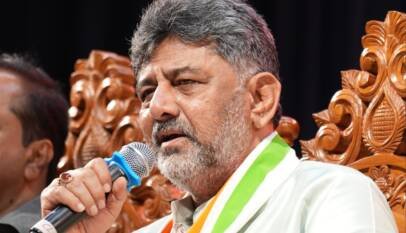
Shivakumar Says Congress United, Assures Women Will Get Cabinet Berth
Bengaluru, Aug 2026 : Karnataka Chief Minister D.K. Shivakumar on Monday sought to dismiss …