New Delhi, Aug 2026 : India’s space economy has expanded rapidly in recent years, reaching an estimated $9 billion and projected to grow to $40–45 billion over the next decade, driven by policy reforms, rising private investment and the emergence of a vibrant space-startup ecosystem.
As the country observed National Space Day on Sunday, latest government data highlighted the transformation of India’s space sector from a largely government-led programme into a broader ecosystem involving private companies, startups, investors and technology developers.
The number of registered space startups has increased dramatically from just one in 2014 to around 440 in 2026, as of August. The growth reflects the impact of reforms introduced to encourage private participation in satellite manufacturing, launch systems, space applications and other segments of the space value chain.
Private investment has also recorded a substantial rise. Investments in the Indian space sector increased nearly six-fold from $100.5 million in 2021-22 to $618.5 million by March 31, 2026. Of this, around $187 million was invested during 2026 alone, underlining growing confidence among investors in India's emerging space economy.
By mid-2026, 113 authorisations had been granted to 52 Non-Government Entities (NGEs), including 18 startups, for activities covering satellite operations, payload development and launch services.
A major turning point came in 2020, when India opened its space sector to private participation. The move enabled companies and startups to enter areas that had traditionally been dominated by government institutions. The Indian Space Policy 2023 subsequently strengthened this framework by encouraging private participation across the entire space value chain.
The policy also clarified the roles of NewSpace India Limited (NSIL) and the Indian National Space Promotion and Authorisation Centre (IN-SPACe). NSIL, the commercial arm of ISRO, provides launch, satellite and space-based services while facilitating the transfer of ISRO technologies to Indian industry.
NSIL's growing commercial footprint is reflected in its financial performance. Its revenue increased from Rs 321.77 crore in 2021-22 to more than Rs 3,000 crore in 2024-25, highlighting the expanding commercialisation of India's space programme.
Meanwhile, IN-SPACe has emerged as a key facilitator for private companies through its single-window mechanism. As of January 31, 2026, it had facilitated the transfer of 71 ISRO technologies to industry and startups, helping private players gain access to technologies and expertise.
The government has also liberalised foreign investment rules to attract global capital. Under the revised FDI framework introduced in February 2024, up to 74 per cent foreign investment is permitted automatically in satellite manufacturing and operations, 49 per cent in launch vehicles and spaceports, and up to 100 per cent in satellite and ground-segment components.
Several financing initiatives are further strengthening the private ecosystem. The IN-SPACe Seed Fund Scheme supports early-stage startups, while the Rs 1,000-crore Venture Capital Fund provides growth capital. A Rs 500-crore Technology Adoption Fund aims to encourage wider deployment of space technologies, while Rs 75 crore has been allocated under the Satellite Bus as a Service scheme.
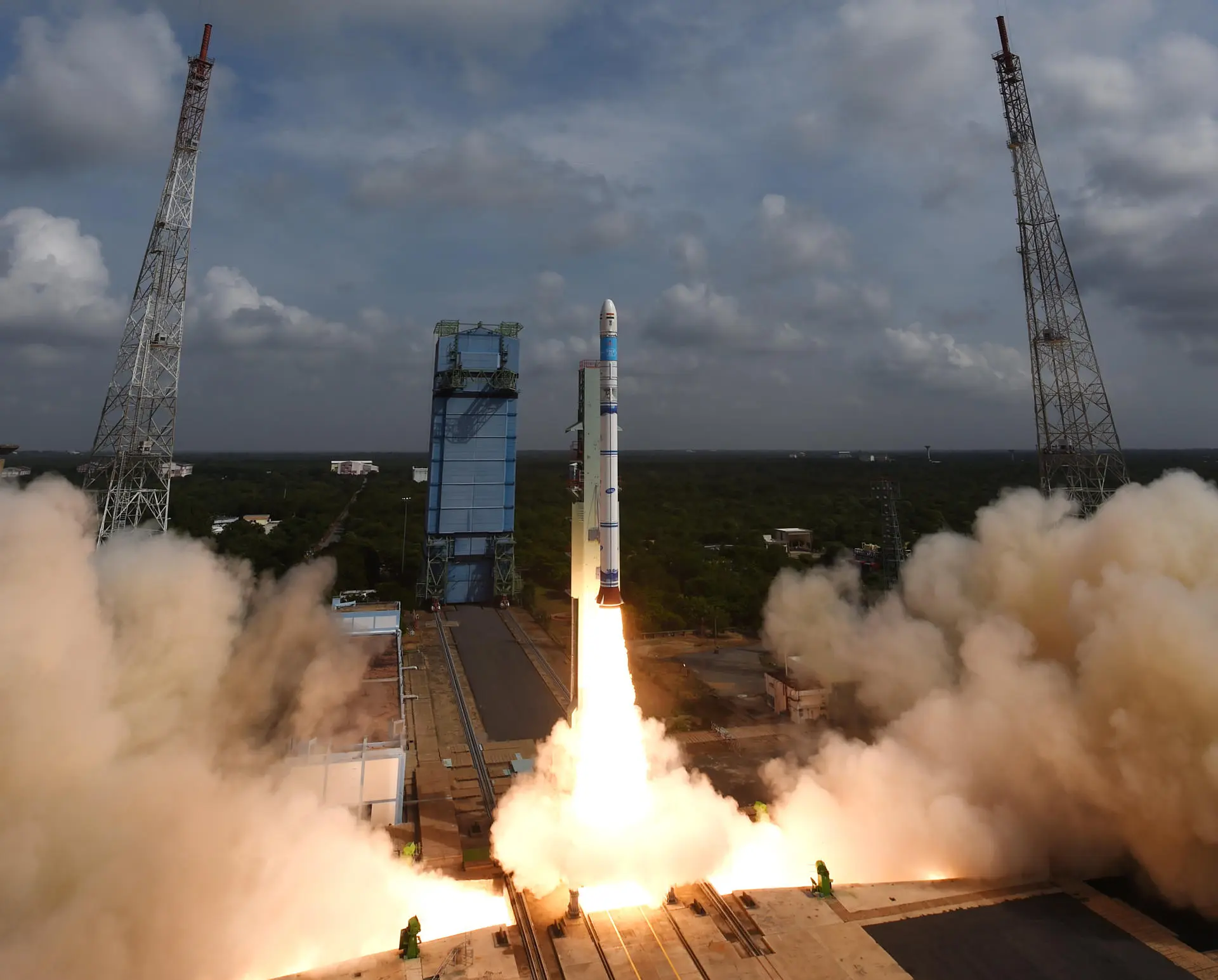
India's launch capabilities have also remained strong. Between July 2023 and June 2026, the country successfully completed 12 launch-vehicle missions, carrying 11 national satellites and nine satellites for international customers.
Together, these developments underline India's growing ambition to emerge as a major global space power, with the private sector playing an increasingly important role alongside ISRO.