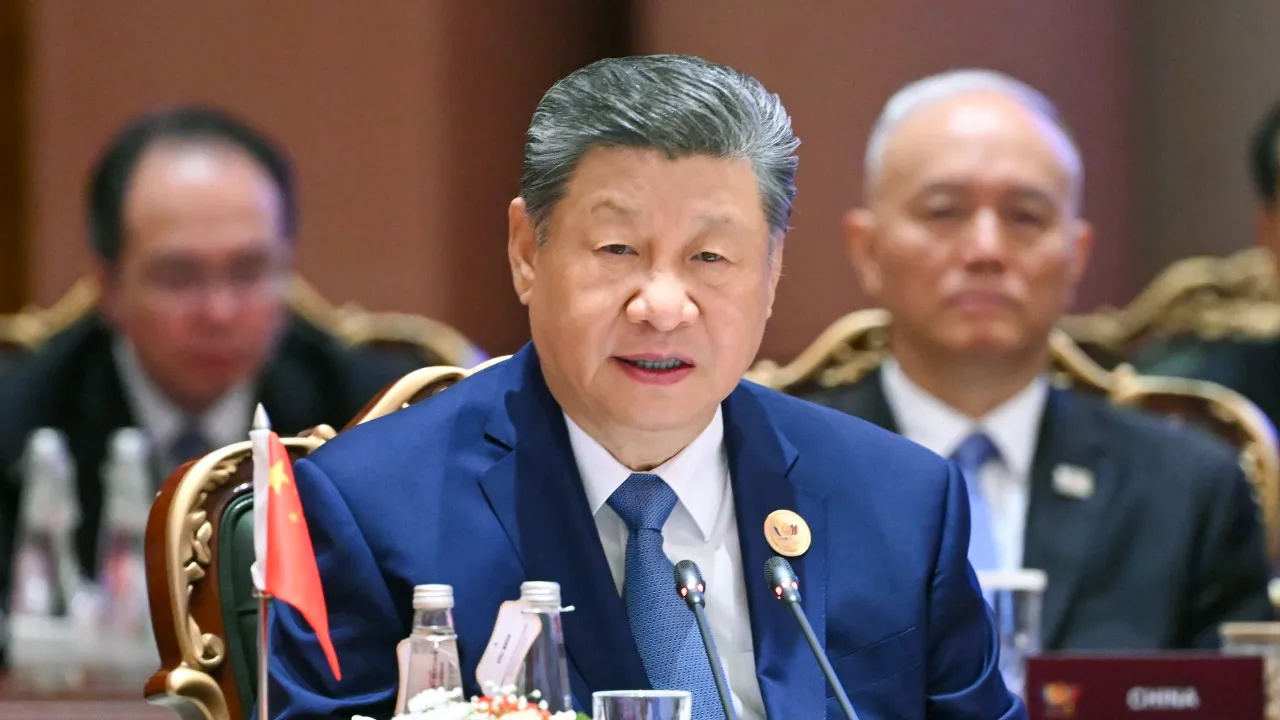
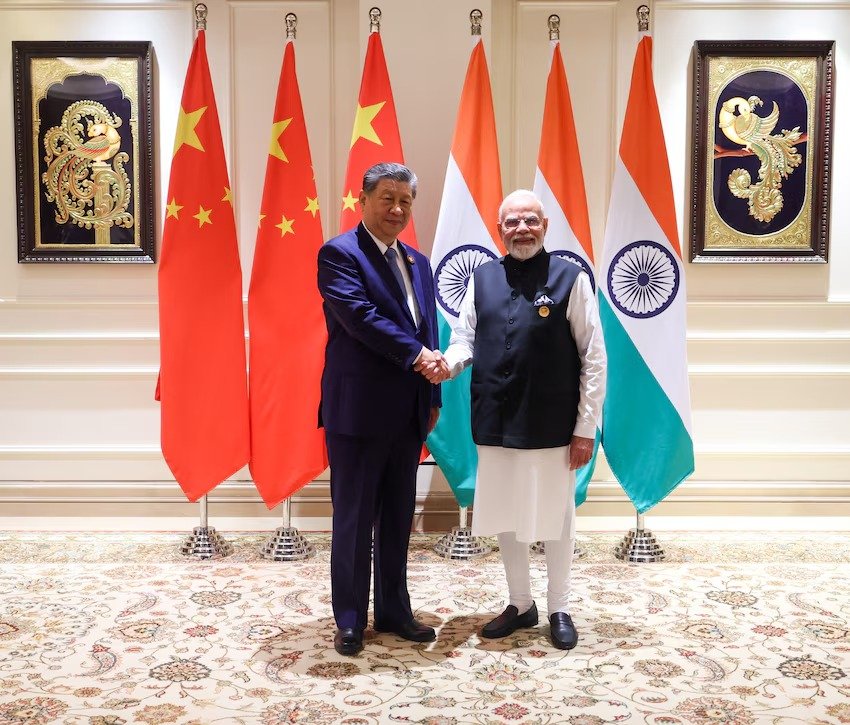
New Delhi, Sept 2026 : Prime Minister Narendra Modi and Chinese President Xi Jinping on Saturday emphasised the need for a strategic and long-term perspective in India-China relations, stressing that differences between the two countries should not turn into disputes.
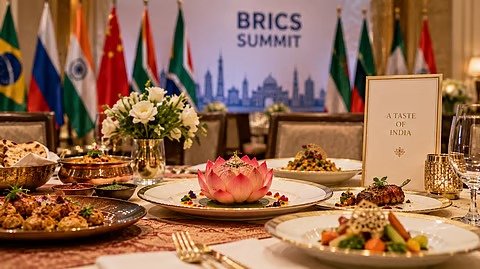
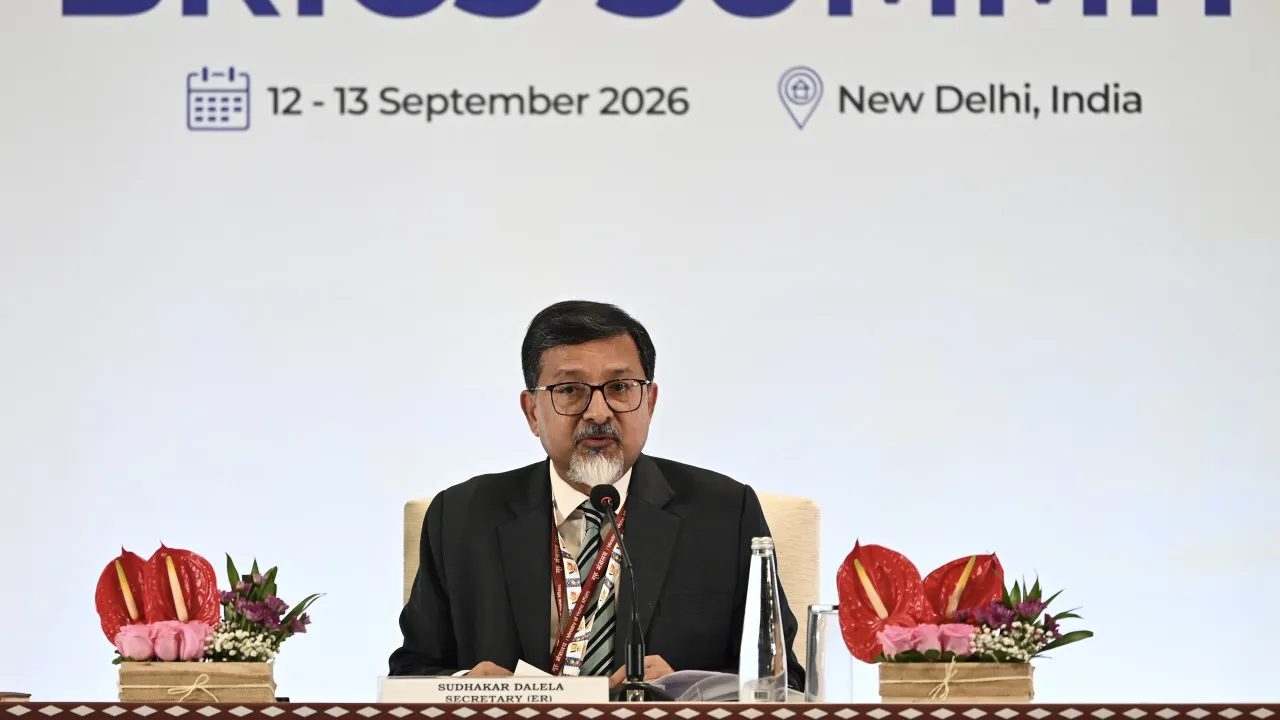
The two leaders held a bilateral meeting on the sidelines of the 18th BRICS Summit at Bharat Mandapam in New Delhi, where they reviewed the steady progress in bilateral ties since their last meeting in Tianjin in August 2025.
According to a statement issued by the Ministry of External Affairs (MEA), Modi and Xi welcomed the improvement in bilateral relations and reaffirmed their commitment to taking a strategic and long-term view of the relationship.
“The two leaders welcomed the steady progress in India-China bilateral relations since their last meeting in Tianjin in August 2025. They reaffirmed that both countries should take a strategic and long term perspective of their ties. Differences should not become disputes,” the MEA said.
Modi underlined that the relationship should be guided by three principles — mutual respect, mutual sensitivity and mutual interest.
“Prime Minister highlighted that both sides must be guided by three mutuals- mutual respect, mutual sensitivity and mutual interest,” the statement said.
A major focus of the discussions was the situation along the India-China border. Modi stressed that peace and tranquillity in the border areas remain an essential basis for the continued development of bilateral relations.
The Prime Minister also underlined the importance of both sides adhering to existing agreements and understandings concerning border-related matters.
“The two leaders expressed commitment to a fair, reasonable, and mutually acceptable resolution of the boundary question proceeding from the political perspective of their overall bilateral relations and the long-term interests of the two peoples,” the MEA said.
The emphasis on maintaining peace along the border assumes significance against the backdrop of the deadly Galwan clashes of 2020, following which India and China have undertaken sustained diplomatic and military-level efforts to stabilise the situation.
The two leaders also discussed people-to-people relations and agreed on the importance of strengthening cultural exchanges, business connections and mobility between the two countries.
Economic and trade ties featured prominently in the talks, with both sides recognising the need to address concerns relating to the structural trade imbalance and supply chain issues. They also stressed the importance of meaningful and predictable market access.
“On economic and trade relations, they underlined the need to address each other’s concerns, including structural trade imbalance and supply chain issues, and facilitation of meaningful and predictable market access,” the MEA statement said.
India’s trade deficit with China has risen considerably in recent years. It increased to $112.16 billion in 2025-26 from $99.21 billion in 2024-25.
India’s exports to China rose 36.62 per cent to $19.47 billion in 2025-26 from $14.25 billion a year earlier. However, imports from China increased 16.03 per cent to $131.63 billion from $113.46 billion, resulting in the wider trade deficit.
Overall merchandise trade between the two countries rose 18.31 per cent to $151.10 billion during 2025-26, with China overtaking the United States as India’s largest trading partner.
However, the trade imbalance is also linked to India’s dependence on China for industrial inputs, components and capital goods. According to a GTRI report cited in the background, electronics, machinery, computers and organic chemicals account for around 66 per cent of India’s imports from China.
China supplies approximately 43 per cent of India’s electronics imports and around 40 per cent of machinery and computer imports. These products are significant for domestic manufacturing, rather than being limited to finished consumer goods.
India also sources more than 40 per cent of six key critical minerals from China, creating vulnerabilities for sectors such as renewable energy, electric vehicles and defence. Restrictions or disruptions in the supply of these materials could consequently affect Indian manufacturing and strategic supply chains.
The GTRI assessment has highlighted the exposure of India’s clean energy, electronics and pharmaceutical sectors to potential disruptions involving critical raw materials and Chinese supply chains.
At the same time, China is expected to seek greater access to India’s rapidly expanding market, including through easing investment restrictions for Chinese companies.
During Saturday’s meeting, Xi said China-India relations had developed with both sides keeping in mind the long-term development of bilateral ties from a strategic perspective. He noted that although the two countries were different, they had been able to support and help each other in achieving common development.
Modi, meanwhile, thanked China for its support during India’s BRICS chairship.
“I express my gratitude for the support and cooperation received from China during India's BRICS chairmanship. We now have the opportunity to discuss bilateral cooperation,” Modi said.
The meeting marked Xi’s first visit to India in nearly seven years and the third consecutive year in which the two leaders have met, following their meetings in Kazan and Tianjin.
The leaders also agreed that India and China should continue expanding common ground on regional and global issues and work together to address emerging challenges.
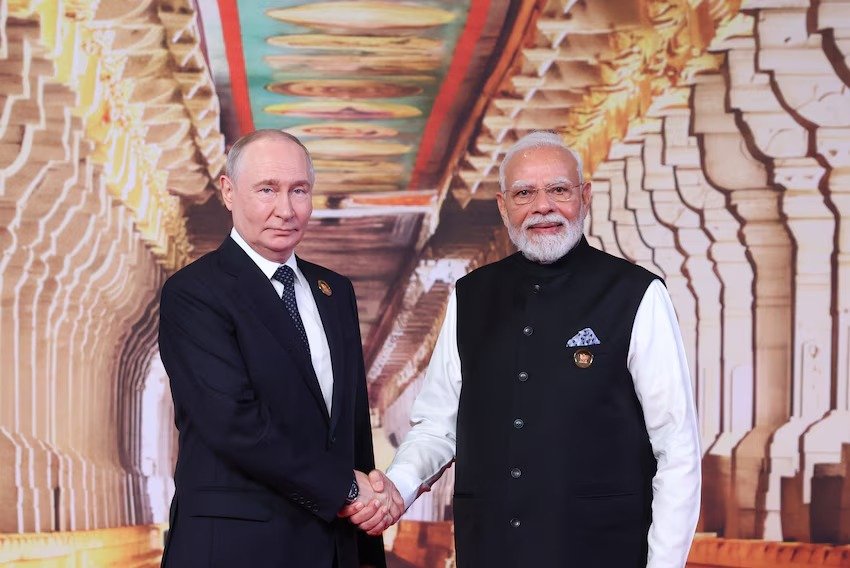
Earlier, Modi warmly welcomed Xi and other BRICS leaders at the summit venue, where the iconic Ramanathaswamy Temple in Rameswaram was featured as the backdrop for the ceremonial welcome. Modi was also seen explaining the significance of the temple to Xi.
External Affairs Minister S Jaishankar, National Security Advisor Ajit Doval and other senior officials attended the bilateral meeting.
The latest talks are being viewed as another step in efforts by India and China to stabilise their relationship, with border peace, balanced trade, supply-chain resilience and greater people-to-people exchanges emerging as key elements in shaping the next phase of bilateral ties.