Washington, Aug 2026 : Indian drone manufacturers and component suppliers could face significantly higher tariffs in the US market after the Trump administration introduced a new preferential tariff framework that excludes India from a group of countries eligible for lower duty rates.
US President Donald Trump signed a proclamation on Thursday aimed at addressing what his administration described as a national security risk arising from the United States' dependence on foreign-made drones and critical unmanned aircraft components.
Although India has not been specifically named in the measure, Indian-made drones and components do not qualify for the preferential rates extended to selected US partners. Products from the European Union, Japan, Liechtenstein, South Korea, Switzerland and Taiwan will face tariffs of up to 15 per cent if they meet specified conditions, while qualifying products from the United Kingdom will be subject to a maximum duty of 10 per cent.
The preferential treatment is linked to the origin of critical components and technology. Products will qualify for the lower tariffs only if substantially all critical components and technologies are sourced from the US or designated partner economies. The US Commerce Department will determine whether individual products satisfy the requirements.
For Indian manufacturers, the exclusion could have significant commercial implications. Unless covered by another exemption or an approved US manufacturing arrangement, affected Indian products will be subject to tariffs determined by their weight, capabilities and classification.
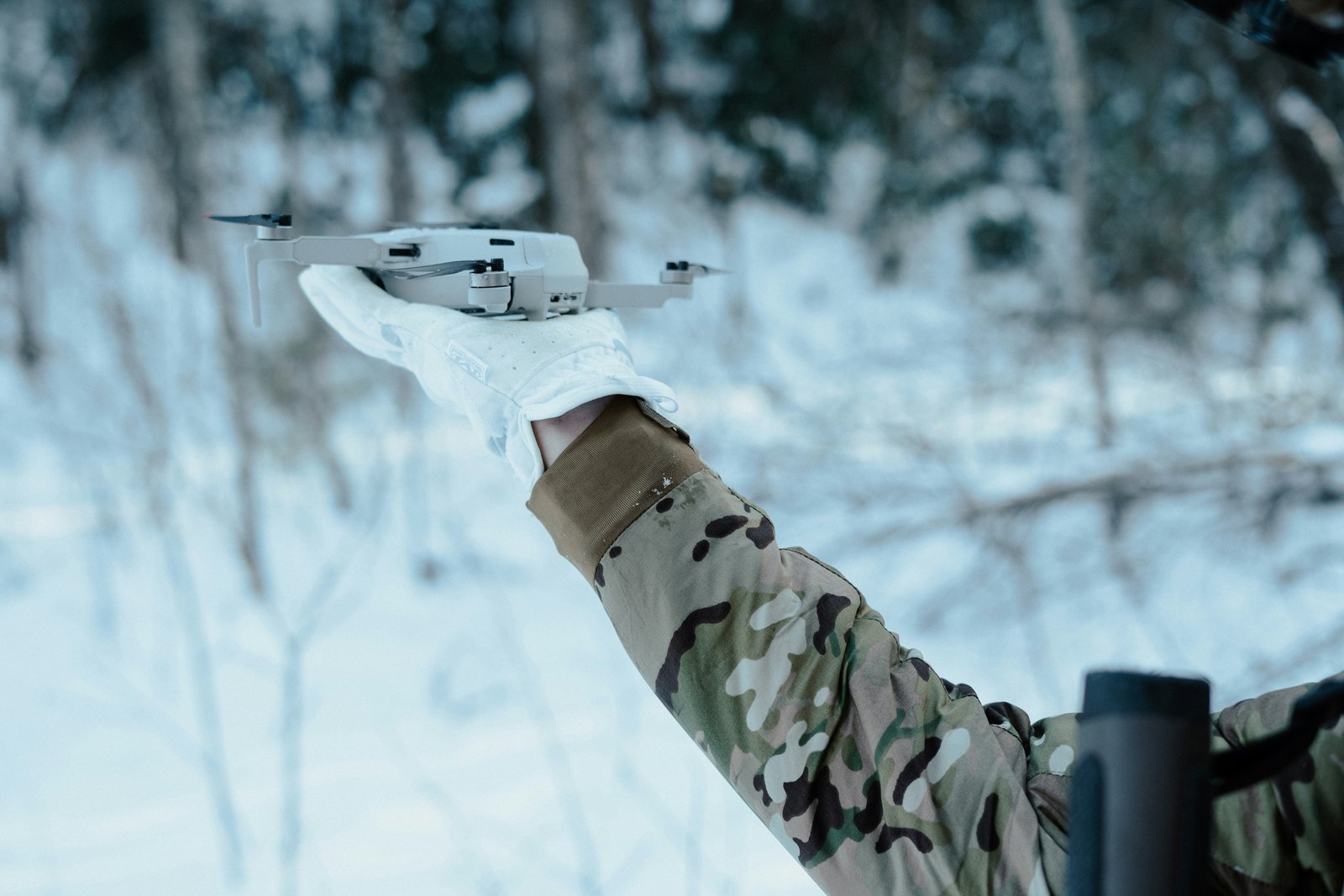
The highest tariff, at 100 per cent, will apply to drones weighing more than 25 kg, unmanned aircraft equipped with thermal imaging capabilities, docking stations and certain critical components. Specific parts used in larger drones will also attract the higher rate.
However, the proclamation provides exemptions for certain components intended for retail delivery, agricultural applications or sale to the US Department of War.
Smaller drones weighing 25 kg or less and without thermal imaging systems will face a 25 per cent tariff. The principal tariff provisions are scheduled to come into effect on September 3.
Additional components covered by the measure will attract a 25 per cent duty beginning February 9, 2027. The delayed implementation is intended to provide US manufacturers with additional time to expand domestic production and develop alternative supply chains.
Certain products appearing on specified Department of War and Federal Communications Commission-approved lists will receive a 180-day delay in the application of the tariffs. The Commerce Secretary has also been given authority to add other components to the tariff regime if their importation is subsequently determined to pose national security risks.
The proclamation, however, provides an alternative pathway for foreign companies, including Indian manufacturers, willing to establish production facilities in the US. Under the onshoring programme, companies constructing, refurbishing or expanding American manufacturing facilities may receive exemptions from the new Section 232 duties on covered products, supply-chain inputs and production equipment during the construction phase.
Companies seeking such benefits must commit to completing construction before January 20, 2029.
The new tariff policy follows a US Commerce Department investigation that highlighted America's dependence on foreign suppliers for critical drone components, including motors, electronic speed controllers, lithium-ion batteries and docking stations.
US authorities have also raised concerns about the cybersecurity implications of imported drones, particularly the possibility that software embedded in unmanned systems could transmit sensitive data to overseas manufacturers.
The move could therefore encourage Indian drone companies to expand manufacturing operations in the US to remain competitive, while also accelerating efforts to develop more domestic component supply chains. For India's rapidly expanding drone industry, the new US regime presents both a tariff challenge and a potential opportunity to deepen its manufacturing presence in the American market.