After Ajit Pawar—A Leadership Vacuum, NCP’s Future, and Maharashtra’s Shifting Political Axis

Mumbai, Jan 2026 : The sudden demise of Maharashtra Deputy Chief Minister and Nationalist Congress Party (NCP) president Ajit Pawar has created a profound void in the state’s political landscape. More than the loss of a senior leader, his passing marks the end of a political pivot around which power, organisation, and strategy revolved for decades. In the aftermath, Maharashtra’s politics stands at a crossroads, grappling with unanswered questions and far-reaching implications.
Foremost among these is the future of the NCP. Who will now lead the party? Will the faction led by Sharad Pawar and the Ajit Pawar group reunite, or will the split that emerged in recent years become permanent? With the 2029 Assembly elections on the horizon, this decision is not merely organisational—it could reshape the balance of power in the state.
Sharad Pawar, who is set to retire from the Rajya Sabha in April, is unlikely to return to the Upper House. He has consistently avoided a direct alliance with the Bharatiya Janata Party (BJP). While in the 1980s his Socialist Congress Progressive Democratic Front included the BJP, his later, firm anti-BJP stance drew many progressive and secular-minded workers to his fold. That ideological positioning continues to define the Sharad Pawar faction even today.
Recent local body elections, however, hinted at a possible shift. In the Pune and Pimpri-Chinchwad municipal polls, both NCP factions contested together. The same cooperation was seen in the ongoing Pune district council and panchayat samiti elections. These experiments suggested that at the grassroots level, workers preferred unity over division. Ajit Pawar’s sudden death has complicated this trajectory, raising the question of whether cooperation will evolve into a full merger or remain a tactical electoral arrangement.
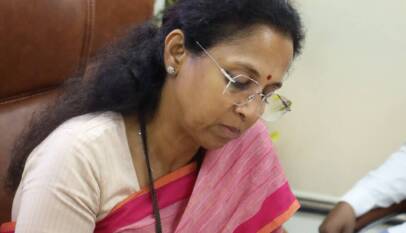
If a merger does occur, leadership will be a critical issue. Will Supriya Sule be given a larger role at the national level? Before the party split in July 2023, there was an unwritten understanding: Ajit Pawar would manage state politics, while Supriya Sule would represent the party’s voice in New Delhi. After Ajit Pawar formed his own faction, Sharad Pawar’s grandson Rohit Pawar became more active in state politics, though he is still considered relatively inexperienced compared to Ajit Pawar’s stature.
Ajit Pawar’s decision to align with the BJP was among the most controversial chapters of his career. Critics accused him of compromising on secular principles, while supporters argued that remaining in power was essential to deliver development and address the needs of constituencies and party workers. This pragmatic approach—prioritising results over ideology—became his defining political formula.
The 2024 Lok Sabha elections, however, delivered a setback. Sunil Tatkare was the only MP elected from Ajit Pawar’s faction. In Baramati, his wife Sunetra Pawar lost to Supriya Sule, a defeat widely viewed as a significant moment in the Pawar family’s internal political contest. Yet Ajit Pawar managed to recover in the Assembly elections, where his group secured the third-highest number of seats in the state. The Mahayuti alliance won a decisive mandate, while the opposition was weakened.
Recognising that confrontation with the BJP would be counterproductive, Ajit Pawar maintained cordial working relations with Chief Minister Devendra Fadnavis, Prime Minister Narendra Modi, and Home Minister Amit Shah. At the same time, he repeatedly asserted that despite being a ruling partner in the Mahayuti government, he would not compromise on his secular identity or on the ideals of Shivaji, Phule, Ambedkar, and Shahu Maharaj. This balancing act helped limit any lasting damage to his public image.
Ajit Pawar’s political journey spanned nearly four decades at the heart of Maharashtra’s politics. He began his career in 1982 as a director of a cooperative sugar mill, emerging from the cooperative movement that shaped rural Maharashtra. In 1991, he became chairman of the Pune District Central Cooperative Bank, a post he held for 16 years. That same year, he was elected to the Lok Sabha from Baramati, the Pawar family stronghold, and entered the state Cabinet the following year.
He went on to serve a record six terms as Deputy Chief Minister and was elected seven times to the Maharashtra Assembly from Baramati, each victory marked by a growing margin. His working style was famously direct: if a task was possible, he would say “yes” and ensure it was done immediately; if not, he would say “no” without ambiguity. Meeting officials and party workers from as early as 6 a.m. was part of his daily routine, reinforcing his reputation for accessibility and decisiveness.
Despite building a vast organisation and enjoying sustained popularity—particularly in rural areas—many of his supporters regret that he never became Chief Minister. His political relationship with his uncle, Sharad Pawar, defined much of his career. On November 23, 2019, he briefly rebelled and took oath as Deputy Chief Minister, a move that collapsed within days. Later, on July 2, 2023, he again broke away to join the BJP-Shiv Sena government. With the majority of NCP MLAs backing him, the party split formally, and Ajit Pawar returned as Deputy Chief Minister.
Now, with his untimely passing, the question of who will inherit Ajit Pawar’s political legacy looms large. Will the NCP reunite and reclaim a central role in Maharashtra’s politics, or will this vacuum create opportunities for rival parties to consolidate their influence? The coming months will be crucial in answering these questions—and in determining the next chapter of Maharashtra’s evolving political story.
(The content of this article is sourced from a news agency and has not been edited by the Mavericknews30 team.)


Trump Denies Israeli Intelligence Triggered Iran Assassination Plot Warning
Washington, July 2026 : US President Donald Trump has dismissed reports suggesting that Is…
Trump Denies Israeli Intelligence Triggered Iran Assassination Plot Warning
Washington, July 2026 : US President Donald Trump has dismissed reports suggesting that Israel …