Rahul Gandhi’s China Remarks in Parliament Trigger Fierce Political Row Over National Security Narrative

New Delhi, February 2026 : Remarks made by Leader of Opposition in the Lok Sabha Rahul Gandhi during the ongoing Budget Session, in which he quoted from what he described as an “unpublished work” of former Army Chief General M.M. Naravane (retd) while questioning India’s position on the border standoff with China, have sparked a sharp political confrontation both inside and outside Parliament.
Gandhi’s comments, delivered during the discussion on the President’s Address, immediately led to disruptions in the House and have since escalated into an intense war of words between the Congress and the ruling Bharatiya Janata Party (BJP). The controversy has placed issues of parliamentary privilege, national security, and the Armed Forces at the centre of a fresh political debate.
According to the BJP, Gandhi misused his position as Leader of Opposition by referring to selective and allegedly unverified material to raise doubts about India’s handling of the 2020 Ladakh standoff with China. BJP National Executive member and in-charge of the party’s National Information and Technology Department, Amit Malviya, launched a scathing attack on the Congress leader, accusing him of undermining the morale of the Armed Forces.
“Rahul Gandhi has once again chosen to misuse Parliamentary privilege to malign the Indian Armed Forces and place India’s national security narrative under a cloud of suspicion. This is not new,” Malviya said in a post on X. He argued that such remarks during a crucial parliamentary session were irresponsible and damaging.
Gandhi, however, stood by his statement in the House and questioned why the Union government appeared “so scared” of references to accounts of the Ladakh standoff. He claimed that the excerpts he cited revealed uncomfortable truths about the situation on the Line of Actual Control (LAC) and demanded clarity from the government.
The controversy intensified when Lok Sabha Speaker Om Birla intervened and ruled against Gandhi reading from a magazine or external publication, citing parliamentary rules and conventions. The Speaker’s ruling led to protests by Congress MPs, who alleged that the opposition was being denied the opportunity to raise legitimate concerns.
BJP MPs countered strongly, accusing the Congress of politicising national security. Senior BJP leader Nishikant Dubey argued that Gandhi should study established historical records before making allegations, pointing to what he described as policy failures and concessions to China during the tenure of former Prime Minister Jawaharlal Nehru in the 1950s.
Outside Parliament, the BJP sharpened its attack. In another post on X, Malviya accused Rahul Gandhi of reading “concocted things” about China and warned that such conduct sets a dangerous precedent. He asserted that India had not lost any territory during the Ladakh standoff and cited statements made by General Naravane himself to support this claim.
“Not an inch of land has been lost,” Malviya reiterated, adding that the former Army Chief had publicly and unequivocally stated the same on multiple occasions. The BJP’s official X handle shared video clips of General Naravane, in which he is heard saying, “We have not lost out on any territory. We are where we were before this thing started.”
Malviya further elaborated on India’s military and diplomatic response to the crisis, explaining that negotiations with China followed a “step-by-step” approach, with disengagement as the immediate priority. “Talks will continue to narrow down differences and arrive at an acceptable solution,” he said, stressing that the approach was strategic and aimed at preventing escalation.
He also referred to another public statement by General Naravane in which the former Army Chief said that India’s response sent a strong message not only to the People’s Liberation Army (PLA) but also to the international community. “Indian Army, and India as a country, showed that it is possible to take on a neighbourhood bully. We showed it can be done,” Naravane had said, according to Malviya.
Taking the argument further, the BJP leader cited the published account of Lieutenant General Y.K. Joshi (retd), who was the Northern Army Commander during the 2020 standoff and directly responsible for operations in Eastern Ladakh. Malviya noted that Lt Gen Joshi was reporting directly to then Army Chief General Naravane and had provided a first-hand account of events in his book, Who Dares Wins: A Soldier’s Memoirs.
“In his published book, Lieutenant General Joshi has unequivocally confirmed the success of India’s operations in Eastern Ladakh,” Malviya said. He recalled that the PLA had made aggressive advances into the Galwan Valley, followed by incursions near the northern bank of Pangong Tso and later in the Tsogtsalu and Hot Springs sectors.
According to Malviya, these provocations were met with firm, calibrated, and decisive responses by the Indian Army. Quoting from Joshi’s memoir, he said: “We completely took the PLA by surprise, brought them back to the negotiation table and forced them to beat a hasty retreat. This was Operation Snow Leopard.”
Questioning Gandhi’s approach, Malviya asked why the Congress leader chose to selectively quote from what he claimed was an unpublished or magazine-based account, while ignoring a detailed, published, and first-hand narrative by a senior Army commander who was directly involved in the operations.
“The question then is obvious: why does Rahul Gandhi selectively lift excerpts from a magazine article while ignoring a published, first-hand account by an Army Commander who was on the ground and has clearly affirmed India’s success?” Malviya wrote.
He concluded by stating that while selective quotations may suit a political narrative, they do not serve the truth, the Armed Forces, or the nation. The BJP maintains that raising doubts about the military’s actions without full context risks undermining public confidence in national institutions.
The Congress, meanwhile, has defended Gandhi’s right to raise questions in Parliament, arguing that accountability and transparency are essential in a democracy. As the Budget Session continues, the confrontation has underscored the deep political divide over national security discourse and the boundaries of parliamentary debate.
(The content of this article is sourced from a news agency and has not been edited by the Mavericknews30 team.)

Dera Chief Ram Rahim Walks Out Of Jail On 30 Days Parole.
Sirsa, Haryana; May 2026: Today (26th May 2026) Dera Sacha Sauda chief Gurmeet Ram Rahim S…
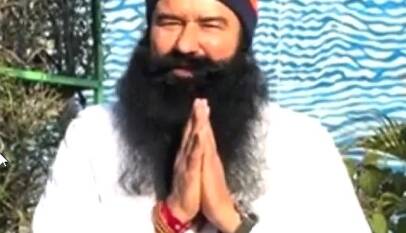
Dera Chief Ram Rahim Walks Out Of Jail On 30 Days Parole.
Sirsa, Haryana; May 2026: Today (26th May 2026) Dera Sacha Sauda chief Gurmeet Ram …