South African President Advocates Adhering To The 1.5 Degree Warming Above Pre-Industrial Levels.

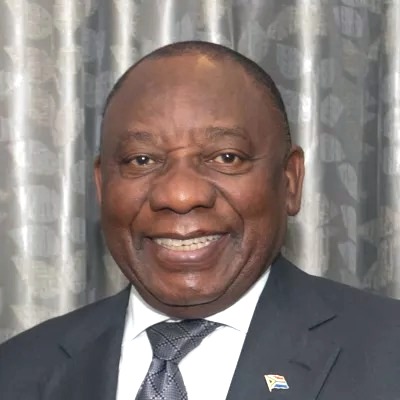
Pretoria; February 2026: South Africa’s President Cyril Ramaphosa have reiterated that climatic change is an existential threat to the future of humanity and the planet. He has further advocated to remain vigil, while acting with others across the globe to ensure that South Africa doesn’t breach the 1.5 degree warming above pre-industrial levels.
While addressing the Presidential Climate Commission, Cyril Ramaphosa have asserted, “We must reduce carbon emissions at a pace and scale that is appropriate to our national circumstances. We must simultaneously climate-proof our development and infrastructure while strengthening resilience and disaster management capabilities. Climate action and development must be aligned and support our growth and prosperity”.
South Africa is already experiencing the effects of climate change, and these are predicted to increase rapidly as the country approach the end of this decade and beyond. This could significantly impede growth and collective prosperity. It is also likely to undermine the country’s efforts in addressing inequality, poverty and unemployment. Addressing climate change must therefore go hand in hand with improving living conditions for all.
The President has further stressed the need to mitigate the vulnerabilities of climate change, including protecting the women, children, people with disabilities, the poor and the unemployed, alongwith protecting workers’ jobs and livelihoods parri-passu.
Simultaneously, South Africa has set ambitious goals for climate action, aiming to reduce greenhouse gas emissions and adapt to the impacts of climate change; defining a clear roadmap for the commission, by ensuring a just transition to a low-carbon economy while helping South Africa become more resilient, strengthening the global competitiveness, and reducing poverty, inequality and unemployment.
The birth of the Presidential Climate Commission in December 2020 marked a turning point in South Africa’s climate agenda. For the first time, the country created a permanent, independent, multi-stakeholder body to advise on its response to climate change. The country needed an independent, credible body that could convene diverse voices, provide sound evidence and help the country navigate one of the most complex policy challenges in its democratic history.
The Presidential Climate Commission (PCC) was established to ensure that South Africa’s climate transition is just, inclusive and responsive to the needs of vulnerable communities, and that it is based on the best available scientific evidence. At the last session of this Commission’s first term, in December last year, a report outlining what the Commission had done in its first five years was published. That report lays a basis for a broad scope of what the government’s priorities should be for the next five years until 2030.
Since its inception, the PCC has played a central role in South Africa’s climate policy landscape. Most importantly, the PCC has emerged as an important platform for consensus-building in South Africa’s just transition journey. By bringing together government, business, labour, civil society, youth and academia, the PCC has fostered inclusive dialogue and solutions to some of the country’s most complex and contested climate and development challenges.
It has helped to align diverse interests around common goals such as the phasing down of coal, investment in renewables and the protection of livelihoods. The PCC was sought to ensure that policy decisions are both evidence-based and also socially legitimate and widely supported. The just transition is ben looked upon as an opportunity to rebuild trust with communities and to deal with practical issues relating to jobs, local economies, skills, social support and governance, among others.
“We gather at a pivotal moment in South Africa’s energy transition. Energy security and climate action must be mutually reinforcing. A stable, diversified electricity system is the foundation of growth, investment and job creation, especially as we propel the country towards green industrialisation. The Just Energy Transition Partnership must now move from commitment to delivery. We must translate pledges into visible progress on the ground”, the President said.
While further adding, “Among other things, we need to accelerate renewable energy deployment, strengthen and expand transmission infrastructure, enable storage solutions and create space for greater private sector participation. We look to this Commission for guidance on how to ensure that our energy transition advances energy security, while reducing emissions and maximising the opportunities for our economy from a low carbon transition, at the same time we look to this commission for guidance on how our communities can adapt and be more resilient to the ever-increasing effects of climate change”.
As mentioned earlier, the roadmap to the targets set out in the Nationally Determined Contribution (NDC) must reinforce growth, inclusion and job creation. As South Africa strives to seek sufficient financial investment to reduce carbon emissions, the share of funding for adaptation must be augmented, which is omnipotent to secure the development gains the country has achieved. As the country works to reduce its carbon footprint, it has to be vigilised that this shift does not disproportionately affect the most vulnerable, such as those who are dependent on industries like coal mining for their livelihoods.
This will require inclusive social dialogue and unprecedented levels of cooperation between government, business, labour and communities. By bringing together voices from all sectors of society, the PCC is set to promote consensus on the implementation of economic, social and environmental policies needed to achieve our decarbonisation targets.
As this new Commission begins its work, attending the redevelopment of the community of Komati in Mpumalanga who, in the aftermath of the decommissioning of the power station, were left with no economic recovery plan. A collaborative effort, in which all government departments at all levels to continue to be cooperative, supportive and receptive to the views of the Commission, alongwith taking forward the PCC’s recommendations and work collaboratively on awareness and social dialogue, enabling local action and adjusting policy measures where necessary. For the transition to be just, it must be redistributive, restorative and procedurally just.
All citizens should be empowered to participate in this transition, not as passive beneficiaries of government services and corporate social responsibility grants, but as economic actors. This must be a transition to a transformed, inclusive and more equal economy.
The President concluded by reminding that, “Commissioners to work in close partnership with our key Ministers and their departments to ensure that climate action is fully integrated into our national priorities, from energy and finance to trade, labour and cooperative governance. Through coordinated leadership and shared accountability, we can undertake climate action in a manner that advances development, protects livelihoods and unlocks new opportunities for our people”.
Team Maverick.
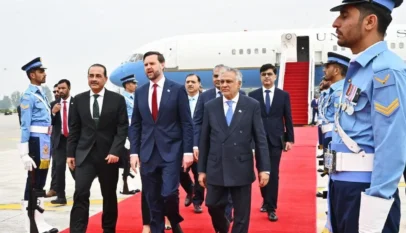





US Holds Marathon Trilateral Talks with Pakistan and Iran as Trump Claims Strategic Edge
Washington, April 2026 : The United States is engaged in prolonged high-level trilateral n…
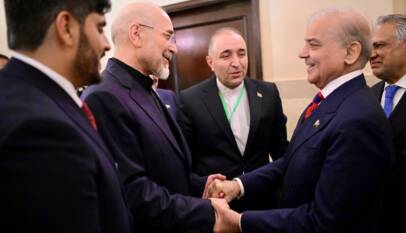
US Holds Marathon Trilateral Talks with Pakistan and Iran as Trump Claims Strategic Edge
Washington, April 2026 : The United States is engaged in prolonged high-level trilateral negotiations …