Trump Insists India Trade Framework Remains Unchanged Despite US Supreme Court Tariff Ruling

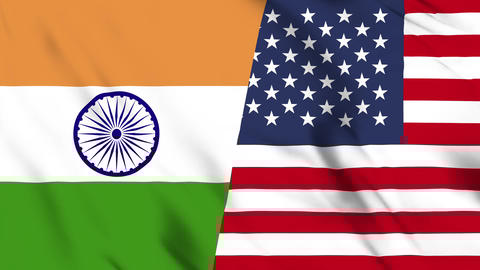
Washington, Feb 2026 :US President Donald Trump has asserted that the trade framework between the United States and India will remain firmly in place, despite a recent ruling by the US Supreme Court that struck down his use of a specific tariff authority. Speaking at a news conference on Friday, Trump dismissed concerns that the verdict could affect negotiations with New Delhi, declaring emphatically, “Nothing changes.”
Responding to a question about the trade framework expected to be signed with India in the near future, Trump said, “Nothing changes, nothing changes, they’ll be paying tariffs, and we will not be paying tariffs.” He insisted that the court’s decision would not alter the substance of the arrangement his administration has pursued with India, portraying the deal as a significant shift from previous trade dynamics.
Trump went on to praise Narendra Modi, describing him as “a great gentleman, a great man actually,” while also suggesting that India had previously held the upper hand in trade negotiations with Washington. “As you know, India, and I think Prime Minister Modi is a great gentleman, a great man actually, but he was much smarter than the people that he was against in terms of the United States,” Trump remarked.
According to the US President, his administration had managed to reverse that perceived imbalance. “We made a deal with India, and it’s a fair deal now, and we are not paying tariffs to them, and they are paying tariffs. We did a little flip,” he said, framing the arrangement as a recalibration of leverage in favour of the United States.
Trump was also asked whether he planned to travel to India for the upcoming Quad Summit and how he viewed the broader bilateral relationship. He responded positively, saying, “I think my relationship with India is fantastic, and we’re doing trade with India.” His comments underscored his continued emphasis on personal diplomacy alongside transactional trade policies.
The remarks came against the backdrop of India’s repeated clarification that trade discussions with the US are unrelated to regional security issues. Despite Trump’s occasional references linking tariffs and broader geopolitical tensions, New Delhi has made it clear that there is no connection between trade negotiations and the India-Pakistan conflict. Indian officials have reiterated that the conflict ended at Pakistan’s request after it suffered significant losses, and that the trade framework with the US is the outcome of year-long negotiations conducted through established diplomatic and commercial channels.
Much of Trump’s news conference focused on the Supreme Court ruling, which curtailed his ability to impose sweeping tariffs under a particular emergency authority. Nonetheless, the President returned repeatedly to the argument that trade tools remain central to his foreign policy approach. “This was an important case to me more as a symbol of economic and national security,” he said earlier, signalling that he views tariffs as instruments of strategic influence rather than merely economic measures.
Trump also downplayed suggestions that the ruling would weaken his negotiating position with foreign partners. “All the deals are just — we’re just going to do it a different way,” he said, adding that his administration had “great alternatives” to achieve its objectives. The comments suggested that while the legal pathway may change, the White House intends to continue using trade pressure to extract concessions.
The US Supreme Court, as the highest judicial authority in the country, sets binding interpretations of federal law and presidential powers. In matters of trade, its rulings play a crucial role in defining how far a president can go without fresh authorisation from Congress. The latest decision is therefore seen as a significant moment in the ongoing debate over executive authority in economic policymaking.
Even so, Trump’s remarks indicated confidence that the broader trajectory of US-India trade ties would remain unaffected. By stressing continuity and repeatedly asserting that “nothing changes,” the President sought to reassure both domestic and international audiences that his administration’s approach to India — combining praise for its leadership with hard-nosed trade demands — is set to continue.
(The content of this article is sourced from a news agency and has not been edited by the Mavericknews30 team.)


FIFA Chief Infantino Hails Messi’s ‘Timeless Brilliance’ After Record-Equalling World Cup Feat
New Delhi, June 2026 : FIFA President Gianni Infantino has showered praise on Lionel Messi…

FIFA Chief Infantino Hails Messi’s ‘Timeless Brilliance’ After Record-Equalling World Cup Feat
New Delhi, June 2026 : FIFA President Gianni Infantino has showered praise on Lionel …