Donald Trump Signs 10% Global Tariffs After US Supreme Court Ruling.

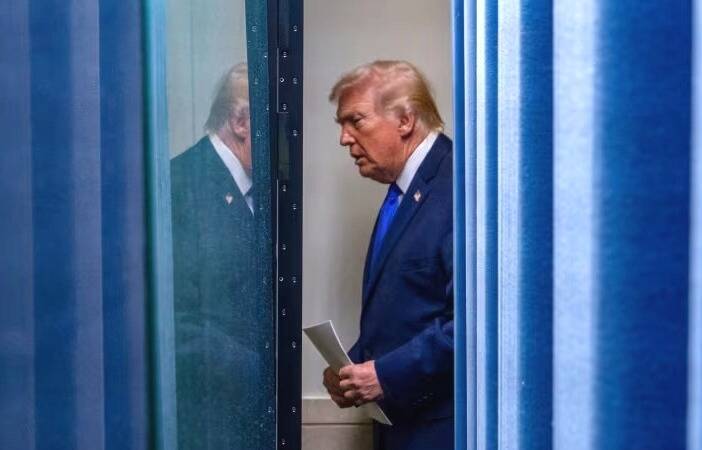
Washington DC; February 2026: US President Donald Trump today early morning IST (Friday late evening AST) has signed an executive order imposing 10% Global Tariff on all countries effective almost immediately.
Rebuking President Donald Trump’s ambitious assertion of presidential tariff authority, the Supreme Court has struck down the defining policy of Trump’s second term. The tariffs are no more momentarily, anyway. Invoking other legal authorities, Trump announced at a news conference that he will apply a 10% global tariff to replace what the Court struck down.
Most noteworthy is the fact that the Supreme Court decision did not affect all of Trump’s tariffs. In this case, the Court did not consider those tariffs directed at specific sectors like steel and aluminum or those levied on China over claims of unfair trade practices. The Court has, however, unraveled the bulk of Trump’s “Liberation Day” tariff suite affecting most of the world.
Tariffs are not just Trump’s signature domestic economic policy; they’re his signature international policy, too. Trump has used tariffs to threaten allies and enemies. He has imposed the tariffs to pressure warring parties to agree to ceasefires. Trump’s tariffs have carried huge implications for the global economy, shifting the developed world away from free trade and toward protectionism
The US law firm Reed Smith, which maintains a Trump tariff tracker, counts 21 US trade deals made since the US President have levied tariffs on “Liberation Day” in early April 2025.
The reasons are complicated. Trump is right that he has other tariff authorities to use. The Court ruled (basically) that Congress has the authority to raise revenue, which tariffs do. Because of that clear separation of powers, Congress would have to give the president clear and explicit permission to use tariffs on his own, even in cases of emergency. (This involves the “major questions doctrine”, which holds that government agencies should not assume permission from Congress, if there’s doubt, when a policy change is broad and historic in nature.)
But what is important is the fact that Trump indeed has alternative tariff authorities at his disposal. Section 122 of the Trade Act of 1974 allows him to levy 15% tariffs for up to 150 days, when there’s a large, serious trade deficit that needs correcting. Trump’s new 10% global tariff will likely assert a broad problem in the US net trade deficit and an equally broad solution, covering most of the world with this new tariff rate. As of now it is uncertain, whether Trumps 10% tariff decision clears the legal muster, but it would take the US court system at least 150 days to decide. Section 301 of the same law lets Trump initiate investigations of unfair trade practices, via the Office of the US Trade Representative. As he wields tariffs as a cudgel in diplomatic negotiations around the world, Trump will have some things to threaten.
Harvard Law professor Noah Feldman agrees; given Trump’s alternative legal authorities, “it’s probable that tariffs in some form will ultimately be upheld”, Feldman writes. More broadly, it’s an inflection point for Trump and the Court. The president could abide by the ruling, using other legal avenues carefully to get tariffs back in place. Or he could harangue the Court and attempt to skirt its decision, “emboldening the justices to strike down additional Trump initiatives that violate longstanding legal precedent”, Feldman writes.
For Trump, tariffs are several things. They raise revenue. They achieve his protectionist vision of a US economy supported by its own industries, although manufacturing has not yet boomed in the way Trump and his supporters hoped. And, as importantly, tariffs are a means to pressure other countries. Trump has used them like sanctions, threatening tariffs on countries that “send oil to Cuba or buy it from Russia”. Those foreign-policy priorities don’t have anything to do with the US economy, but Trump has used tariffs to pursue them.
Refunds to already-paid tariffs will require their own adjudication. When it comes to the diplomatic leverage of tariff threats, however, Trump will “have to pivot to something” else besides claiming unilateral authority to set new rates, Majerus says—but Trump does have other tariff powers to pivot to.
Meanwhile, the Learned Supreme Court didn’t rule on a larger question: whether Trump had the authority to declare a national-security emergency over trade deficits, which is how he justified his tariffs in the first place under the 1977 International Emergency Economic Powers Act (IEEPA).
Trump has declared lots of emergencies during his second term, last year. For instance, the president claimed the US is under invasion by a Venezuelan gang; that purported emergency allowed him to deport Venezuelan nationals to a notorious prison in El Salvador, despite serious human-rights concerns.
Excerpts From The Latest Situation Post Supreme Court Decision –
- Doubling down on tariffs: President Donald Trump says he’s signed a 10% global tariff on top of the levies already in place after the Supreme Court ruled that his sweeping emergency tariffs are illegal.
- Sharp criticism of justices: Trump called those who ruled against his tariffs a “disgrace to our nation.” Justices Amy Coney Barrett and Neil Gorsuch joined with Chief Justice John Roberts and the three liberal justices in the 6-3 ruling.
- Iran negotiations: Trump says he’s considering a limited military strike to pressure Tehran into a nuclear deal, but top Democrats are urging the administration not to strike without congressional approval.
- Government ministers in South Korea will meet on Saturday afternoon after the US Supreme Court ruled Friday that President Donald Trump’s sweeping emergency tariffs are illegal. The leaders of “relevant ministries” are set to review the high court ruling and newly announced executive order by Trump imposing a new 10% global tariff during an inter-ministerial meeting Saturday afternoon, the Foreign Ministry said in a statement. South Korea is one of the United States’ top sources of foreign goods, shipping $132 billion worth of goods to the country in 2024, according to Commerce Department data. Top exports to the US include cars and car parts as well as semiconductors and electronics.
- President Donald Trump singled out three conservative Supreme Court justices who voted to strike down his sweeping emergency tariffs, calling them out by name for the first time in a Friday night social media post.
“What happened today with the two United States Supreme Court Justices that I appointed against great opposition, Neil Gorsuch and Amy Coney Barrett, whether people like it or not, never seems to happen with Democrats,” the president wrote on Truth Social. “They vote against the Republicans, and never against themselves, almost every single time, no matter how good a case we have.”
Gorsuch and Barrett, whom Trump appointed in his first term, joined with Chief Justice John Roberts and the three liberal justices in the 6-3 decision.
“At least I didn’t appoint Roberts,” he added, accusing the chief justice of having “led the effort to allow Foreign Countries that have been ripping us off for years to continue to do so”. Earlier today, the President called the justices who ruled against his tariff policy a “disgrace to our nation”.
Team Maverick.




Bhagwant Mann Govt’s Mukh Mantri Sehat Yojana Provides Cashless Respiratory Care to 14,032 Patients, CoversTreatment Worth ₹37.30 Crore in 6 Months
Adults & Senior Citizens Account for Over 80% of Chronic Lung Disease and Thoracic Sur…
Bhagwant Mann Govt’s Mukh Mantri Sehat Yojana Provides Cashless Respiratory Care to 14,032 Patients, CoversTreatment Worth ₹37.30 Crore in 6 Months
Adults & Senior Citizens Account for Over 80% of Chronic Lung Disease and Thoracic …