US Supreme Court Strikes Down Trump’s Broad Tariffs, Delivering Major Blow to Executive Trade Powers

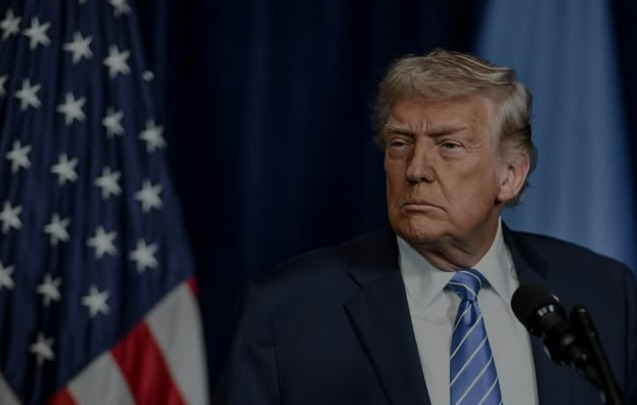
Washington, Feb 2026 :In a significant setback to the economic agenda of former US President Donald Trump, the US Supreme Court on Friday struck down most of his sweeping import tariffs, ruling that he lacked the legal authority to impose them under a 1977 emergency law. The decision invalidates broad tariffs levied on America’s trading partners across the globe, including India, and marks a rare instance of the conservative-led court curbing presidential use of executive power in economic policymaking.
In a 6–3 verdict, the court ruled that Trump’s reliance on the International Emergency Economic Powers Act (IEEPA) to restructure global trade through tariffs was unlawful. According to US media reports, the ruling represents a major repudiation of a central pillar of Trump’s economic programme, which relied heavily on aggressive tariff measures to reduce trade deficits and pressure foreign governments.
Writing for the majority, Chief Justice John Roberts held that the president’s asserted authority under the emergency statute was far broader than Congress ever intended. “The President asserts the extraordinary power to unilaterally impose tariffs of unlimited amount, duration, and scope,” Roberts wrote. “In light of the breadth, history, and constitutional context of that asserted authority, he must identify clear congressional authorization to exercise it.” The chief justice concluded that the 1977 law fell short of providing such approval.
The court found that Trump’s expanded interpretation of IEEPA went beyond its original purpose. Enacted during the Cold War era, the statute allows the president to regulate economic transactions during a national emergency arising from an “unusual and extraordinary” foreign threat. Historically, it has been used primarily to impose sanctions, freeze assets, or restrict financial dealings with hostile actors—not to impose sweeping, across-the-board import tariffs.
In its judgment, the court emphasized that it was not weighing in on the wisdom of tariffs as an economic tool. “We claim no special competence in matters of economics or foreign affairs,” Roberts wrote. “We claim only, as we must, the limited role assigned to us by Article III of the Constitution.” Within that constitutional role, the court held that IEEPA does not authorize the president to impose broad tariffs on imports.
Trump had declared national emergencies related to fentanyl trafficking and persistent trade deficits in order to justify tariffs on countries including Canada, China, and Mexico. He also imposed what he described as “reciprocal tariffs” on dozens of trading partners worldwide. India was among the affected countries, facing an 18 percent tariff under the now-invalidated measures.
Legal analysts noted that Trump was the first US president to attempt to use IEEPA to impose tariffs in the nearly five decades since the law was enacted. The court’s decision effectively dismantles that precedent and reinforces Congress’s constitutional authority over taxation and trade policy.
Notably, the ruling does not affect sector-specific tariffs imposed under separate legal authorities. Duties on steel, aluminium, and copper—implemented under different statutes—were not challenged in this case and therefore remain in force.
The judgment is expected to have far-reaching economic and legal consequences. Companies that paid billions of dollars in tariffs under the struck-down measures are now likely to seek refunds. In anticipation of the ruling, major corporations including Costco, parts of the Toyota Group, Revlon, and hundreds of other firms had filed lawsuits to preserve their claims for recovery.
Despite the scale of the defeat, options remain available to the administration. Congress retains clear constitutional authority to impose tariffs through legislation, and a president may still attempt to justify duties under other existing trade laws. However, the ruling significantly narrows the scope for unilateral executive action in reshaping global trade through emergency powers.
The case represents one of the most consequential judicial tests of presidential authority over trade in modern US history. By drawing firm limits around the use of emergency economic powers, the Supreme Court has reaffirmed the separation of powers and underscored that sweeping changes to trade policy require explicit congressional backing rather than broad assertions of executive authority.
(The content of this article is sourced from a news agency and has not been edited by the Mavericknews30 team.)




Deschamps Admits France Fell Short as Spain End World Cup Dream with 2-0 Semifinal Win
Arlington (Texas), July 2026 : France head coach Didier Deschamps admitted his side was ou…

Deschamps Admits France Fell Short as Spain End World Cup Dream with 2-0 Semifinal Win
Arlington (Texas), July 2026 : France head coach Didier Deschamps admitted his side was …