Tariffs to Remain Cornerstone of Trump’s Economic Strategy Despite Supreme Court Ruling: US Treasury Secretary

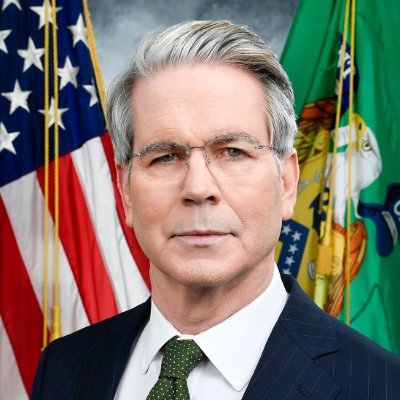
Washington, Feb 2026 : US Treasury Secretary Scott Bessent has underscored that tariffs will continue to be a central pillar of Donald Trump’s economic strategy, even after a recent ruling by the US Supreme Court restricted the administration’s ability to impose them under one specific legal authority. Speaking at the Economic Club of Dallas, Bessent sought to dispel notions that the verdict marked a retreat from the White House’s tariff-driven approach to trade and economic security.
Addressing the court’s decision directly, Bessent explained that the ruling was narrowly focused. “Six Justices simply ruled that IEEPA authorities cannot be used to raise even one dollar of revenue,” he said, referring to the International Emergency Economic Powers Act. According to Bessent, the judgment did not strike at the heart of the administration’s broader tariff framework, but merely limited the use of one statutory route.
He pushed back forcefully against critics who portrayed the ruling as a major defeat for the Trump administration. “Despite the misplaced gloating from Democrats, ill-informed media outlets, and the very people who gutted our industrial base, the Court did not rule against President Trump’s tariffs,” Bessent said. His remarks reflected the administration’s determination to frame the decision as a procedural adjustment rather than a substantive loss.
Emphasising continuity, Bessent made it clear that alternative legal mechanisms would be deployed to maintain tariff levels. “This Administration will invoke alternative legal authorities to replace the IEEPA tariffs,” he said. He pointed to other provisions of US trade law, including Section 232 and Section 301, which allow tariffs on national security grounds and in response to unfair trade practices. These tools, he noted, have been tested and upheld through extensive legal scrutiny over the years.
Bessent added that internal Treasury estimates indicate the overall revenue impact will be minimal. According to him, the combined use of Section 122 authority, along with potentially enhanced Section 232 and Section 301 tariffs, is expected to result in “virtually unchanged tariff revenue in 2026.” This assessment was intended to reassure supporters that the administration’s fiscal and trade objectives remain firmly on track.
Beyond the legal mechanics, Bessent framed tariffs as part of a broader “economic security” agenda. “Economic security is the foundation that allows a country to fulfill its most basic obligation of safeguarding its people,” he said. He argued that the United States must rebuild industrial capacity at home and reduce vulnerabilities created by decades of dependence on overseas supply chains.
Referring to what economists often call the “China Shock,” Bessent highlighted the scale of industrial decline the US has faced. He said the country lost nearly six million manufacturing jobs between 1999 and 2011, a period he described as deeply damaging to strategic industries and long-term productive resilience. This erosion, he argued, justified a more assertive use of trade tools to protect domestic manufacturing.
“Our policies have compelled firms to reassess their sourcing strategies and pour trillions in new investment back into American manufacturing and strategic sectors,” Bessent said, crediting tariffs and trade enforcement with driving a reorientation of corporate investment decisions.
For America’s trading partners, the message was unambiguous: tariffs will remain a key instrument of US economic statecraft, even if the legal pathways evolve. Countries such as China, which has frequently been targeted under national security and unfair trade provisions, are likely to continue facing pressure through these mechanisms.
For India, which has been engaged in ongoing trade negotiations and sector-specific discussions with Washington, Bessent’s remarks suggest that economic security considerations will remain closely intertwined with US trade policy. While talks may focus on market access and cooperation, tariffs are set to remain part of the negotiating landscape.
In recent years, the United States has increasingly framed trade, supply chains and industrial production as matters of national security rather than purely economic concerns. Under Trump’s second term, that linkage appears poised to deepen further, with alternative legal authorities ready to preserve both tariff revenue and negotiating leverage.
Taken together, Bessent’s comments signal that while the legal framework governing tariffs may shift in response to judicial scrutiny, the broader direction of US trade policy — assertive, security-driven and backed by tariffs — remains unchanged.
(The content of this article is sourced from a news agency and has not been edited by the Mavericknews30 team.)



FIFA Chief Infantino Hails Messi’s ‘Timeless Brilliance’ After Record-Equalling World Cup Feat
New Delhi, June 2026 : FIFA President Gianni Infantino has showered praise on Lionel Messi…

FIFA Chief Infantino Hails Messi’s ‘Timeless Brilliance’ After Record-Equalling World Cup Feat
New Delhi, June 2026 : FIFA President Gianni Infantino has showered praise on Lionel …