Trump’s Iran Strikes Follow Weeks of Diplomacy, Intelligence Alerts and Regional Pressure

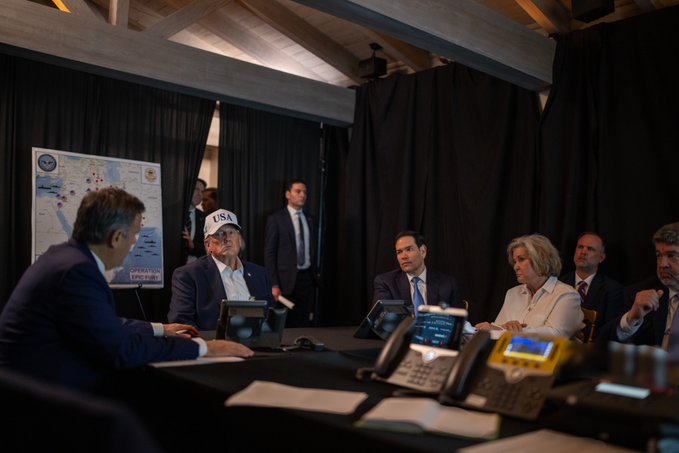
Washington, March 2026 : US President Donald Trump’s decision to authorise sweeping military strikes against Iran was the culmination of weeks of intense diplomatic engagement, intelligence briefings, and mounting pressure from key regional allies, according to detailed reconstructions published by major American media outlets. The reports suggest that the operation was neither impulsive nor sudden, but rather the result of a narrowing set of choices shaped by intelligence assessments and geopolitical calculations.
The Wall Street Journal reported that US and Israeli intelligence agencies had been monitoring Iranian leadership movements for an extended period, waiting for what officials described as a rare operational opening. Intelligence officers reportedly identified not just one but three separate meetings where senior Iranian political and military leaders were expected to gather simultaneously. Crucially, agencies had also established the presence of Supreme Leader Ali Khamenei, Iran’s ultimate decision-maker, making the moment exceptionally significant.
According to the Journal, the confluence of high-value targets in a single location was so unusual that planners opted for an unprecedented approach. US and Israeli warplanes launched strikes in full daylight, underscoring the confidence of military planners in their intelligence and air superiority, and signalling a deliberate show of force rather than a covert operation.
The Washington Post offered additional context, reporting that Trump moved ahead despite US intelligence assessments indicating that no immediate or imminent threat to the American mainland had been detected. Nevertheless, regional allies strongly pressed Washington to act, arguing that delay would only strengthen Tehran’s strategic position. The Post said Saudi Crown Prince Mohammed bin Salman had placed multiple calls to US officials, forcefully advocating decisive military action against Iran.
In the days leading up to the strikes, Trump’s public rhetoric grew increasingly ominous. Addressing supporters in Texas, he hinted at the gravity of the situation without revealing specifics. “We have a very big decision to make,” he said, repeatedly emphasising the difficulty and consequences of the choice before him. The remarks, in retrospect, appeared to foreshadow the imminent military escalation.
Behind closed doors, the administration pursued what Politico described as a “dual-track strategy.” While military assets were quietly repositioned across the Middle East, diplomatic efforts continued in parallel. Envoys Steve Witkoff and Jared Kushner were dispatched to explore whether Tehran might be persuaded to halt its nuclear ambitions through negotiations, even as the Pentagon prepared for possible combat operations.
By the end of the week, Trump made what senior officials described as the final and irreversible decision to proceed with military action. According to three administration sources cited by Politico, the president concluded that Iran was unwilling to make a binding commitment to abandon the pursuit of nuclear weapons. A senior official told the Washington Post that talks collapsed because Tehran insisted on preserving its uranium enrichment capability, which Washington viewed as a pathway to a future nuclear bomb.
Politico further reported that Trump had demanded Iran publicly and unequivocally renounce nuclear weapons. When such a commitment failed to materialise, officials said the diplomatic window effectively closed. At that point, military planning accelerated.
The Wall Street Journal said Trump authorised the largest buildup of American firepower in the Middle East in nearly two decades. Aircraft carriers, guided-missile destroyers, and advanced combat aircraft were deployed to bases surrounding Iran, creating what officials described as overwhelming deterrence and strike capacity.
During the operation, Vice President JD Vance monitored developments from the White House Situation Room, while Trump oversaw the unfolding events from Mar-a-Lago, his private residence in Florida, according to the Washington Post.
Not all lawmakers were convinced of the necessity or urgency of the strikes. Democratic Senator Mark R. Warner publicly questioned the rationale, asking what imminent threat Iran posed to the United States. “I don’t know the answer,” he admitted, reflecting broader concerns among some members of Congress about escalation and oversight.
Trump, however, framed the action as long overdue. He pointed to decades of hostility, accusing Iran of orchestrating attacks on US personnel and interests through proxies across the region. “You can’t put up with it too long,” he said, arguing that repeated provocations had left Washington with little alternative.
The strikes marked the most expansive US military confrontation with Tehran in years. They reflected a calculated belief that sustained air power, combined with coordination among regional partners, could significantly alter the strategic balance without committing American ground troops. The episode also highlighted the enduring volatility of US-Iran relations, which have remained adversarial since the 1979 Islamic Revolution and the hostage crisis at the US Embassy in Tehran, with tensions repeatedly flaring over Iran’s nuclear programme and regional influence.
(The content of this article is sourced from a news agency and has not been edited by the Mavericknews30 team.)
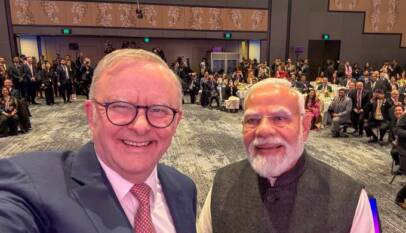




PM Modi, Australian Opposition Leader Angus Taylor Reaffirm Bipartisan Commitment to Stronger India-Australia Ties
Melbourne, July 2026 : Prime Minister Narendra Modi on Friday met Australian Opposition Le…
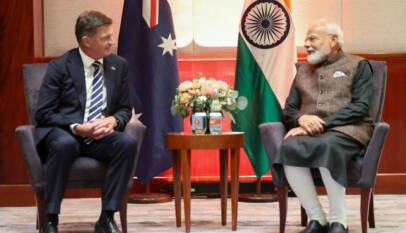
PM Modi, Australian Opposition Leader Angus Taylor Reaffirm Bipartisan Commitment to Stronger India-Australia Ties
Melbourne, July 2026 : Prime Minister Narendra Modi on Friday met Australian Opposition Leader …