Iran Sets Transition in Motion After Khamenei Assassination as Tensions With US and Israel Escalate

Tehran, March 2026 : Iran’s top security leadership on Sunday announced that the process to manage the country’s political transition following the assassination of Supreme Leader Ayatollah Ali Khamenei would begin later in the day, even as the region braced for further military escalation and sharp rhetoric between Tehran, Washington and Tel Aviv.
Iran’s security chief Ali Larijani said state institutions were moving swiftly to activate constitutional mechanisms to ensure continuity of governance. Speaking to state television, Larijani confirmed that an interim leadership arrangement would be put in place pending the selection of Iran’s next supreme leader.
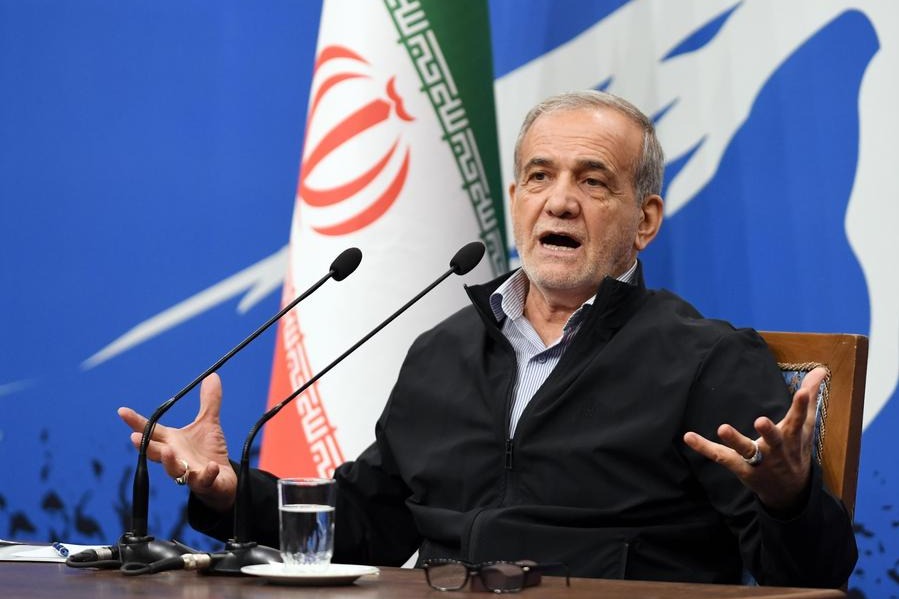
According to Iran’s official news agency IRNA, the country will be guided during the transitional period by President Masoud Pezeshkian, Chief Justice Gholam-Hossein Mohseni-Eje’i, and a senior jurist drawn from the Guardian Council. The Guardian Council plays a central role in Iran’s political system by ensuring that legislation conforms to Sharia law and the Iranian Constitution.
Larijani, who also heads Iran’s Supreme National Security Council and previously served as an adviser to Khamenei, said an interim leadership council would be constituted without delay. “The president, the head of the judiciary and a jurist from the Guardian Council will assume responsibility until the election of the next leader,” he said, adding that efforts were underway to establish the council “as early as today.”
Meanwhile, Iranian Parliament Speaker Mohammad Bagher Ghalibaf said the country was prepared for “all scenarios,” including the political and security challenges that may arise in the aftermath of Khamenei’s death. Quoted by state media, Ghalibaf accused US President Donald Trump and Israeli Prime Minister Benjamin Netanyahu of crossing Iran’s “red lines,” warning that both leaders would “face the consequences.”
The remarks came against the backdrop of increasingly sharp exchanges between Washington and Tehran. Trump has warned Iran against launching any further military action, threatening overwhelming retaliation. In a public statement, Trump said Iran had indicated it might strike “harder than they have ever hit before,” and cautioned that any such move would be met with “a force never been seen before.”
At the same time, Iran’s Islamic Revolutionary Guard Corps (IRGC) issued its own stark warning following the confirmation of Khamenei’s death by state television. In a statement posted on its official Telegram channel, the IRGC vowed to punish what it described as the “murderers” of the Supreme Leader, promising what it called the “most ferocious offensive operation in history” against the United States and Israel.
“The hand of revenge of the Iranian nation for a severe, decisive and regrettable punishment for the murderers of the Imam of the Ummah will not let go of them,” the statement said. It added that the IRGC, along with Iran’s armed forces and the Basij militia, would “powerfully continue the path of their leader,” defend his legacy and confront what it described as internal and external plots against the Islamic Republic.
Escalating the military dimension further, the IRGC announced that it had launched the fifth wave of “Operation True Promise 4,” targeting American vessels across the region. According to the statement, the targets included US ships operating in the Indian Ocean, as well as vessels involved in transporting ammunition and refuelling tankers.
The unfolding developments mark a critical and volatile moment for Iran, as the country grapples simultaneously with the unprecedented loss of its supreme leader, the challenge of managing a constitutional transition, and the risk of a widening regional conflict. As Iran’s leadership signals both institutional continuity at home and defiance abroad, the coming days are likely to shape not only the country’s political future but also the broader balance of power across the Middle East.
(The content of this article is sourced from a news agency and has not been edited by the Mavericknews30 team.)



Trump Says Iran Open to Nuclear Deal, Claims U.S. Pressure Has Weakened Tehran
Washington, June 2026 : U.S. President Donald Trump has claimed that Iran is prepared to a…
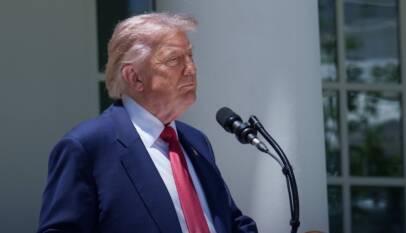
Trump Says Iran Open to Nuclear Deal, Claims U.S. Pressure Has Weakened Tehran
Washington, June 2026 : U.S. President Donald Trump has claimed that Iran is prepared …