
Canada And India Deepens Educational Collaboration With New Talent And Innovation Strategy.

Mumbai; Ontario; February 2026: On 28th February 2026, the Honourable Anita Anand, Minister of Foreign Affairs, celebrated the launch of the new Canada-India Talent and Innovation Strategy, including the signing of 13 new partnerships, during her visit to Mumbai, India.
Launched today by Universities Canada and Colleges and Institutes Canada, this strategy represents over 20 of Canada’s top institutions, deepens cooperation with India and strengthens the people-to-people ties that continue to anchor the bilateral relationship. India is central to Canada’s Indo‑Pacific Strategy, and education and research partnerships with that country create innovation ties and long‑term cooperation.
Minister Anand welcomed the new strategy, which will facilitate research, student exchanges, hybrid campuses, and AI centres of excellence between Canada and India. We have vast human capital, with students and faculty already deeply connected on cutting-edge research. This agreement will reinforce collaboration through opportunities for students and researchers, drive economic growth and deepen the strong people-to-people ties that connect our two countries.
The strategy is based on four key pillars:
• embedding Canadian capability in India’s priority sectors,
• translating knowledge and talent into economic outcome,
• rebalancing and deepening the talent relationship,
• demonstrating credibility through speed and delivery.
Earlier, during a recent visit to India, the Honourable Evan Solomon, Minister of Artificial Intelligence and Digital Innovation witnessed the signing of a memorandum of understanding between the University of Waterloo and India-based Tata Consultancy Services. This reflected the broad trend toward deepening academic and commercial ties between the two countries, accelerating skills development and business expansion between Canada and India.
It is of omnipotent importance that, Canada and India share more than 75 years of diplomatic relations and deep people-to-people ties. While, Canada’s academic and research institutions remain highly attractive to Indian students and partners, abundance of opportunities exist to expand joint research, vocational training and innovation partnerships in priority fields, such as health, clean technology and digital technologies.
India remains a key partner as Canada strengthens its economic links to the Indo-Pacific under a comprehensive strategy for the region. The new strategy is on the heels of a February 2026 visit more than 20 Canadian university presidents to India for a historic first Canada’s largest academic delegation ever to the country, symbolising a new era of deepened partnership and long‑term commitment between our two nations.
Launched in 2022, Canada’s Indo-Pacific Strategy commits to advancing five strategic objectives: from security and trade to sustainability, people-to-people ties and regional engagement. It reflects Canada’s commitment to inclusive growth and partnerships that create shared prosperity with Indo-Pacific economies.
Major Memorandum Of Understanding (MOU) those which have been signed:
• MOU between the University of British Columbia and O.P. Jindal Global University: The two universities have signed a MOU to facilitate student and faculty exchanges and research.
• MOU between Simon Fraser University and O.P. Jindal Global University: This MOU establishes a framework to explore faculty and student mobility, joint academic programming, and research collaboration between the universities, including potential transnational education and academic exchange opportunities.
• MOU between the University of the Fraser Valley and Punjab University: This MOU will enable faculty and student mobility and exchanges, joint academic programming, as well as expanded research exchanges. Student mobility will be focused on a cohort-based model for student mobility.
• MOU between Algoma University and Parul University: This MOU will support broad academic cooperation, including research collaboration, student and faculty exchanges, and short or summer courses. The partnership also supports the creation of pathway agreements for eligible Parul School of Computer Science and Engineering students to transition into designated Algoma University programs
• MOU between Algoma University and Chandigarh University: Broadening and deepening an existing partnership, this MOU will support broad academic cooperation, including research collaboration, student and faculty exchanges, and short or summer courses. The partnership also supports multiple pathway agreements that allow eligible students from Chandigarh University’s psychology, computer applications, and management departments to transition directly into designated Algoma University programs.
• MOU between Dalhousie University and SRM Institute of Science and Technology: This MOU will support a Nursing Dual Degree Program that includes 25 Indian Nursing Council approved supernumerary seats, dual credentials, and embedded clinical experience in Canada. The agreement also supports academic cooperation, student mobility, and a potential pathway to nursing practice in Nova Scotia.
• MOU between Dalhousie University and the Indian Council of Agricultural Research: This MOU will support collaboration in digital agriculture, climate-resilient agriculture, horticulture, aquaculture, and animal husbandry. The agreement focuses on joint research and broader academic cooperation across these priority areas.
• MOU between the University of Guelph and O.P. Jindal Global University: The two universities have signed a MOU to facilitate student and faculty mobility for training and research.
• MOU between Brock University and O.P. Jindal Global University: This MOU will support faculty collaborations and short three-year exchanges to work on specific areas such as public health and sports management business.
• MOU between Royal Roads University and O.P. Jindal Global University: The two universities have signed a MOU to support faculty and students exchange.
• MOU between Simon Fraser University and the Hydrogen Association of India: This MOU will facilitate collaboration with Indian academic and research institutes to advance joint hydrogen research, innovation, and technology development, supporting clean-energy solutions and deeper Canada-India academic partnerships.
• MOU between the University of Toronto and the Indian Institute of Science: The Indian Institute of Science is one of India’s leading universities. This AI-focused MOU will advance collaboration in AI research and education. The partnership involves the Temerity Centre for AI Research and Education in Medicine and other University of Toronto AI researchers who will take part in joint initiatives under this agreement.
• MOU between the University of Toronto and the Jio Institute: The University of Toronto has renewed its MOU with the Jio Institute, a multidisciplinary higher education institution established as a philanthropic initiative. The agreement supports collaboration in areas such as AI and management, with a focus on student exchanges and visiting faculty.
Team Maverick.




Bengal to Receive Over ₹1,700 Crore for Rural Roads and Employment Schemes, Says Suvendu Adhikari
New Delhi, June 2026 : Senior West Bengal BJP leader Suvendu Adhikari on Monday announced …
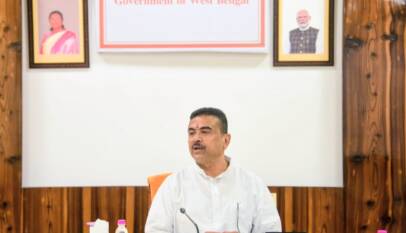
Bengal to Receive Over ₹1,700 Crore for Rural Roads and Employment Schemes, Says Suvendu Adhikari
New Delhi, June 2026 : Senior West Bengal BJP leader Suvendu Adhikari on Monday …