Iran Announces Temporary Strait of Hormuz Closure Amid Nuclear Talks Confirmed

Tehran, Feb 2026 : Iran on Tuesday announced the temporary closure of the Strait of Hormuz for live-fire military drills, signalling a rare but pointed show of force even as diplomatic efforts continued through indirect negotiations with the United States over Tehran’s disputed nuclear programme. The announcement immediately drew global attention due to the strait’s strategic importance to international energy markets and regional security.
Iranian state media reported that the country’s armed forces fired live missiles toward the Strait of Hormuz and would suspend maritime traffic for several hours, citing safety and navigational concerns. Nearly 20 per cent of the world’s oil supply passes through the narrow waterway, making it one of the most critical energy chokepoints globally. Any disruption, even a temporary one, has the potential to unsettle markets and heighten geopolitical anxieties.
This marked the first time in recent years that Tehran publicly declared a closure of the strait, a move analysts described as a significant escalation. While Iran has frequently conducted military exercises in the region, openly announcing a shutdown raised concerns that tensions in an already volatile Middle East could spiral rapidly if miscalculations occurred.
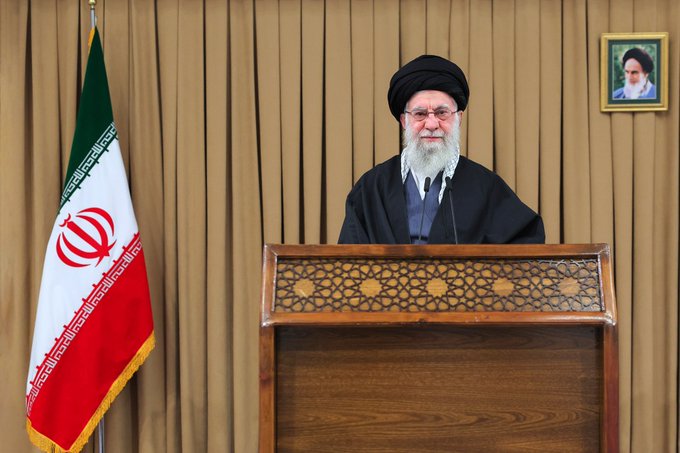
Iran’s Supreme Leader, Ali Khamenei, issued a stern warning in remarks carried by state media. Without directly naming the United States, he cautioned that “the strongest army in the world might sometimes receive such a slap that it cannot get back on its feet.” He also warned Washington against attempting to dictate the outcome of negotiations, signalling Tehran’s resistance to external pressure.
In contrast to the hardline rhetoric at home, Iran’s diplomatic messaging abroad appeared more conciliatory. Foreign Minister Abbas Araghchi, speaking in Geneva, said a “new window has opened” for diplomacy. The indirect talks with US representatives were held at the residence of Oman’s envoy, underscoring Muscat’s long-standing role as a regional mediator. Araghchi expressed cautious optimism that negotiations could lead to a sustainable and mutually beneficial agreement, while reiterating that Iran remained prepared to defend itself against any aggression.
Oman had earlier hosted a previous round of discussions on February 6, laying the groundwork for the latest engagement. On the American side, envoys Steve Witkoff and Jared Kushner led the delegation. US Vice President JD Vance said the talks went well “in some ways,” though he acknowledged that President Donald Trump had set clear “red lines” that Iran had yet to fully address.
A senior US official indicated that while incremental progress had been made, several key issues remained unresolved. Iran is expected to submit more detailed proposals in the coming weeks, suggesting that negotiations are far from concluded.
The diplomatic manoeuvring unfolded against a backdrop of heightened military activity across the region. The United States has recently increased its naval presence in the Middle East, while Iran has intensified exercises involving the Islamic Revolutionary Guard Corps. Last week, US forces reportedly shot down an Iranian drone that approached a US aircraft carrier, while Iran attempted to stop a US-flagged vessel transiting the Strait of Hormuz.
Iranian drills have extended beyond the strait to the Persian Gulf and the Gulf of Oman. Experts noted that although Tehran routinely conducts military exercises in these waters, publicly declaring a closure of the strait represents a notable escalation. Iran last effectively closed the waterway during the 1980s war with Iraq, when it mined the channel amid intense hostilities.
Despite the heightened tensions, global oil markets reacted with cautious optimism following the conclusion of the talks. Prices fell modestly, reflecting investor hopes that diplomacy could prevent a wider conflict. US crude slipped 1.3 per cent to $62.06 per barrel, while Brent crude declined 2.3 per cent to $67.03 per barrel.
The Trump administration is seeking an agreement that would curb Iran’s nuclear programme and prevent it from developing nuclear weapons. Tehran, however, insists its nuclear activities are peaceful and has resisted demands to halt uranium enrichment or relinquish its stockpile of highly enriched uranium. Prior to a brief but intense conflict with Israel in June, Iran had been enriching uranium to 60 per cent purity, technically close to weapons-grade levels.
With Gulf Arab nations warning that any direct confrontation could escalate into a broader regional war, analysts say the coming weeks will be crucial. Whether diplomacy can keep pace with rising military tensions will determine not only the future of Iran’s nuclear talks but also the stability of one of the world’s most strategically sensitive regions.
(The content of this article is sourced from a news agency and has not been edited by the Mavericknews30 team.)





Yamal Unfazed by Goal Drought as Spain March into World Cup Semi-finals
Los Angeles, July 2026 : Spain’s teenage sensation Lamine Yamal has dismissed concerns ove…

Yamal Unfazed by Goal Drought as Spain March into World Cup Semi-finals
Los Angeles, July 2026 : Spain’s teenage sensation Lamine Yamal has dismissed concerns over …