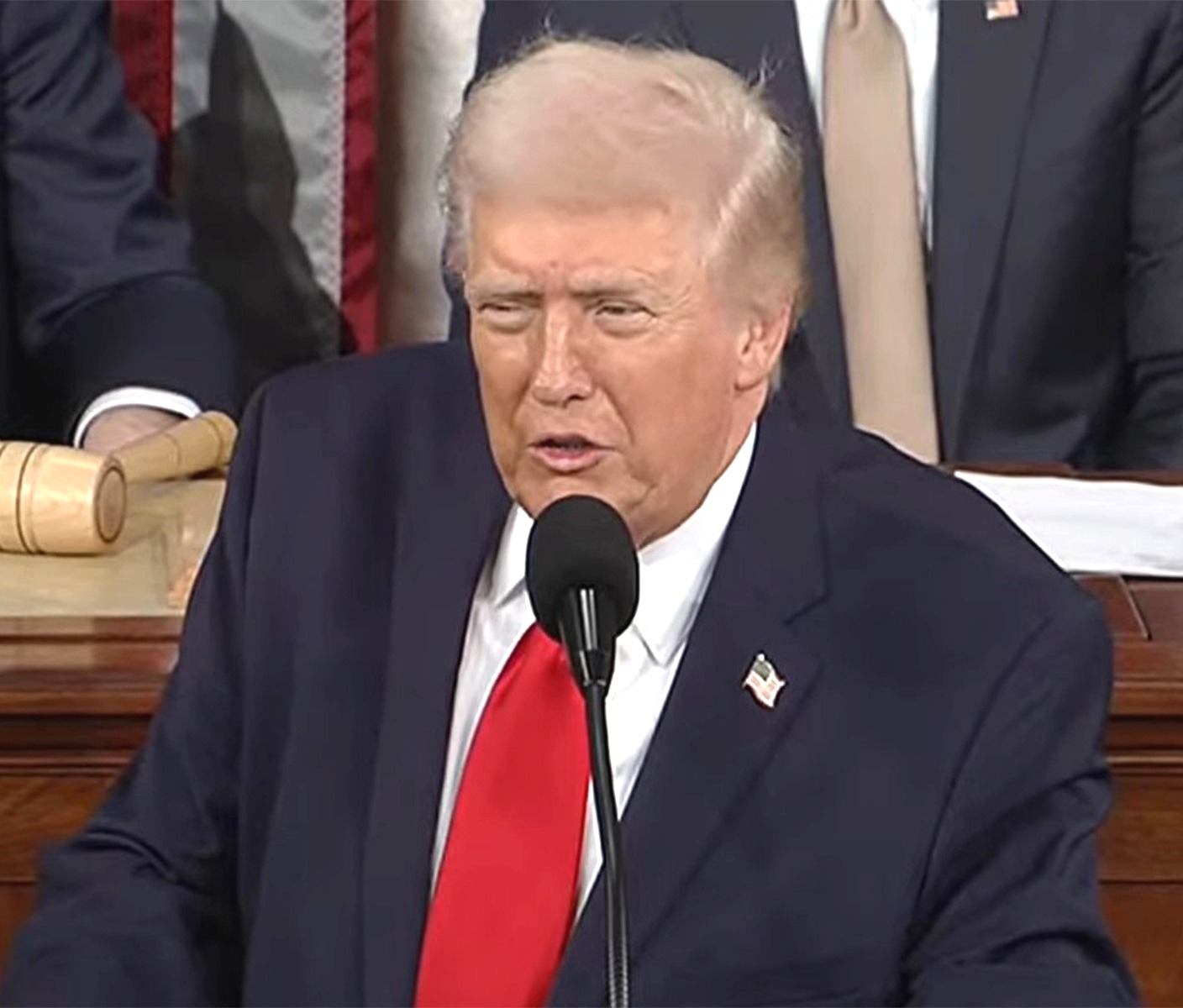
US Officials Say Intelligence Left No Alternative as Washington Defends Strike on Iran

Washington, March 2026 : Senior officials in the administration of Donald Trump mounted a detailed and forceful defence on Saturday of the United States’ decision to carry out a deadly military strike against Iran, arguing that intelligence assessments on missile threats and nuclear activity left Washington with “no choice” but to act.
Speaking on condition of anonymity, multiple senior administration officials said the operation, codenamed Epic Fury, was conceived as a pre-emptive and defensive measure rather than retaliation. They asserted that the immediate trigger for action was Iran’s growing conventional missile capability, particularly in its southern regions, combined with longer-term concerns about Tehran’s nuclear ambitions.
“The president decided he was not going to sit back and allow American forces in the region to absorb attacks from conventional missiles,” one senior official said, stressing that intelligence suggested Iran might deploy those weapons pre-emptively. According to the official, waiting to be struck first would have resulted in “substantially higher” casualties and far greater damage to US forces and facilities.
Another official echoed that sentiment, saying Washington refused to be placed in a reactive posture. “We are not going to be held hostage by them, and we are not going to let them hit us first,” the official said, underlining what the administration described as a decisive shift toward deterrence through action.
Officials further accused Iran of deliberately targeting civilian infrastructure in response to the US strikes. One senior official alleged that Iranian missiles and drones had struck non-military sites, including hotels and airports. “They have now struck multiple civilian sites unrelated to military targets,” the official said, citing incidents in Kuwait and Abu Dhabi as examples of what the administration described as reckless escalation.
Beyond missile threats, officials said a central driver of the decision to strike was Iran’s continued progress on its nuclear programme. According to US intelligence, Tehran had been systematically rebuilding nuclear facilities damaged in a previous operation known as Operation Midnight Hammer. Officials claimed Iran was reconstructing uranium enrichment and conversion sites and expanding its centrifuge manufacturing capacity.
Particular concern was expressed about Iran’s development of advanced IR-6 centrifuges, which officials described as among the fastest available for uranium enrichment. These machines, they said, dramatically shorten the time needed to enrich nuclear material to weapons-grade levels.
One senior official pointed to Iran’s existing stockpiles, claiming that roughly 450 kilograms of uranium enriched to 60 per cent purity could be “only one week away” from reaching the 90 per cent level required for nuclear weapons. Such enrichment levels, officials argued, had no credible civilian justification.
Concerns were also raised about activities at the Tehran Research Reactor. A senior official said intelligence obtained from the International Atomic Energy Agency showed that Iran had not used the reactor’s fissionable material to produce medical isotopes, undermining Tehran’s long-standing claims of peaceful intent.
“These are all violations,” one official said, referring to enrichment at both 20 per cent and 60 per cent levels. “And for every one of the three violations we’ve identified, we’ve got five more.”
Administration officials insisted that diplomacy had been exhausted before military action was taken. They said President Trump had pushed for what they described as a “real deal” that would permanently prevent Iran from acquiring nuclear weapons. According to officials, US negotiators offered stringent guardrails and even proposed providing Iran with “free nuclear fuel forever” if it abandoned uranium enrichment entirely.
“They basically said that didn’t work for them. They needed to enrich uranium,” one senior official said, describing Iran’s refusal as a clear signal of its true intentions.
Officials added that Iran consistently refused to engage on other key issues, including its ballistic missile programme and support for regional proxy groups. “They will not even talk about it,” one official said of missile negotiations, accusing Tehran of fuelling instability through armed proxies across the Middle East.
The negotiation process, officials claimed, was marked by stalling tactics and bad-faith manoeuvres. While acknowledging that a temporary agreement might have been possible, one senior official said such a deal would have failed to address the long-term threat. “We could have made another short-term bad deal,” the official said. “It wouldn’t have dealt with the long-term issue of Iran.”
With missile capabilities, enrichment thresholds and proxy networks now converging, the administration made clear it is signalling a harder line. Officials framed the choice starkly: act now, or confront a far more dangerous and entrenched threat later.
(The content of this article is sourced from a news agency and has not been edited by the Mavericknews30 team.)






Gautam Adani Becomes Asia’s Richest, Surpasses Mukesh Ambani in Global Rankings
New Delhi, April 2026 : Billionaire industrialist Gautam Adani, Chairman of the Adani Grou…

Gautam Adani Becomes Asia’s Richest, Surpasses Mukesh Ambani in Global Rankings
New Delhi, April 2026 : Billionaire industrialist Gautam Adani, Chairman of the Adani Group, …