HPV Vaccination Drive Launched in Maharashtra on International Women’s Day

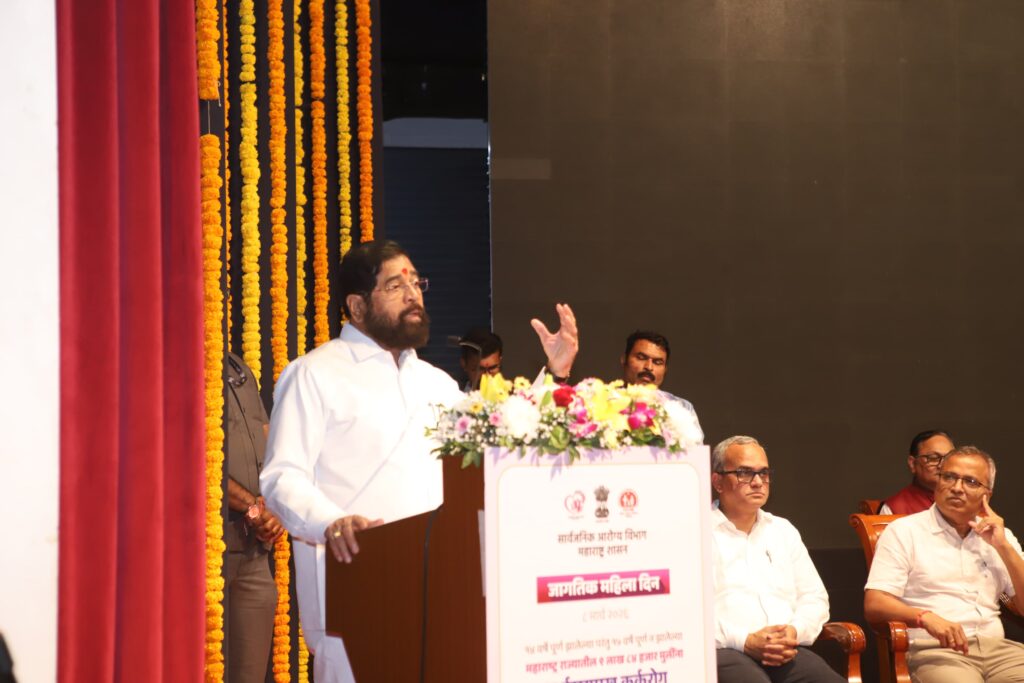
Mumbai, March 2026 : On the occasion of International Women’s Day, Maharashtra Deputy Chief Minister Eknath Shinde launched a major HPV vaccination campaign aimed at protecting young girls from cervical cancer. The initiative, started by the state’s Health Department in Mumbai, will provide the Human Papillomavirus (HPV) vaccine to nearly 9.84 lakh girls between the ages of 9 and 14 across the state.
Speaking at the launch event, Shinde emphasized the importance of preventive healthcare. He said that in today’s fast-paced lifestyle, changing food habits and increasing stress levels are contributing to a rise in serious diseases such as cancer. Therefore, instead of focusing only on treatment after illness occurs, it is essential to take preventive measures.
“Prevention is better than cure. The HPV vaccination campaign is an important step in that direction,” he said.
Shinde explained that the large-scale vaccination drive will help significantly reduce the risk of cervical cancer, one of the most common cancers affecting women. At a time when cancer has become a major global health concern, the state government is actively implementing measures to protect citizens, especially women and girls.
Recalling the initiative “Mata Surakshit Tar Kutumb Surakshit” (If the mother is safe, the family is safe), which was implemented during his tenure as Chief Minister, Shinde said that the program had led to health screenings of nearly three crore women across the state. During these screenings, early signs of cancer were detected in around 10,000 women. Because the disease was identified at an early stage, many lives were saved.
He also highlighted the recent introduction of mobile mammography units, which are travelling across villages to conduct breast cancer screenings. So far, about 2.91 crore women have undergone health examinations through these initiatives. The government is also considering increasing the number of such vehicles if required, and funding may be arranged through sources such as the state health budget and district development funds.
Shinde further stated that several hospital construction projects across the state are already 60 to 70 percent complete, and efforts are underway to ensure they are finished soon. The government is also exploring financial assistance from international institutions such as the Asian Development Bank (ADB) and the World Bank to support healthcare infrastructure projects.
Additionally, the government has approved the development of healthcare facilities under the Public Private Partnership (PPP) model, allowing reputed institutions to collaborate in building modern health infrastructure that will benefit ordinary citizens.
Referring to the earlier “Shasan Aaplya Dari” (Government at Your Doorstep) campaign, Shinde said that around five crore citizens benefited from various welfare schemes through the initiative. Inspired by this success, the government is now planning a new campaign called “Arogya Aaplya Dari” (Healthcare at Your Doorstep) to deliver healthcare services directly to people, especially in remote areas.
Sharing his experiences from visiting remote regions while serving as Health Minister, Shinde mentioned travelling to villages like Rangubeli near the state border. Local residents had told him that no minister had visited their area since independence. Such experiences, he said, highlighted the urgent need to strengthen healthcare services in tribal and remote regions.
He also revealed that during his tenure as Chief Minister, the Chief Minister’s Relief Fund provided assistance of about ₹450 crore to nearly 70,000 to 80,000 patients requiring medical treatment. Even today, under the leadership of Chief Minister Devendra Fadnavis, the fund continues to support many patients.
Shinde reaffirmed the state government’s commitment to women’s empowerment, mentioning schemes such as Mukhyamantri Majhi Ladki Bahin Yojana, Ladki Lakhpati Yojana, and the 50 percent concession for women in state transport bus travel. He also referred to the historic decision allowing individuals to include their mother’s name along with their own.
“Women’s health is the foundation of a strong family and society. Mothers, sisters and wives are the backbone of every household. Therefore, taking care of women’s health is our collective responsibility,” he said.
On the occasion of International Women’s Day, several women doctors, surgeons, nurses and healthcare workers who have made significant contributions to public health were also honoured.
Shinde praised the contributions of great women leaders in Indian history such as Jijabai, Ahilyabai Holkar and Savitribai Phule. He also expressed pride that India’s President, Droupadi Murmu, is a woman.
He thanked Prime Minister Narendra Modi for initiating the nationwide HPV vaccination campaign to protect women from cervical cancer.
Calling the vaccination program a major public health initiative, Shinde congratulated the Health Department’s officers, doctors, nurses and staff for their dedication.
“If even one life is saved through our efforts, an entire family is protected. The health department truly works to save lives,” he said, extending his best wishes for the success of the campaign.
Health Minister Prakash Abitkar, Minister of State for Health Meghna Bordikar, Principal Secretary of the Health Department Nipun Vinayak, Health Commissioner Dr. Kandabari Balkawade and several senior officials were also present at the event.



BJP Workers Are Full-Time Politicians, Rahul Gandhi Is Part-Time: Nitin Nabin in Telangana
Hyderabad, June 2026 : Bharatiya Janata Party (BJP) national president Nitin Nabin on Mond…
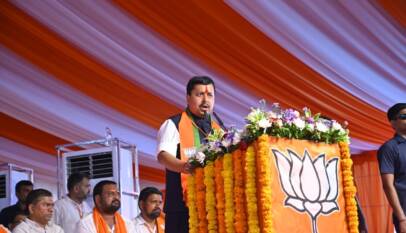
BJP Workers Are Full-Time Politicians, Rahul Gandhi Is Part-Time: Nitin Nabin in Telangana
Hyderabad, June 2026 : Bharatiya Janata Party (BJP) national president Nitin Nabin on Monday …