Rastriya Swatantra Party Sweeps Nepal Elections, Set for Historic Two-Thirds Majority

Kathmandu, March 2026 :Nepal’s parliamentary elections have delivered a stunning political shift, with the Rastriya Swatantra Party (RSP) emerging as the dominant political force in the country. As vote counting concluded in 163 out of 165 constituencies under the First-Past-the-Post (FPTP) system by Monday evening, the party secured an overwhelming victory, winning 125 seats in the House of Representatives of Nepal.
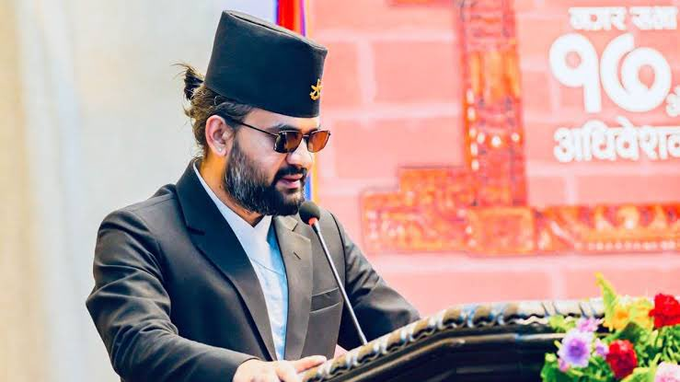
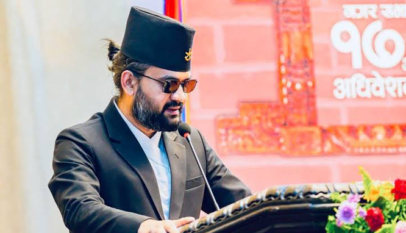
The sweeping result marks a historic moment in Nepal’s political landscape. Founded only three-and-a-half years ago, the RSP is led by party president Rabi Lamichhane, with Balen Shah serving as the party’s prime ministerial candidate. Their campaign capitalized on widespread public dissatisfaction with traditional political parties, which have dominated Nepal’s governance for decades.
The election results revealed the scale of the political upheaval. Several prominent leaders from established parties were defeated, including former Prime Minister K. P. Sharma Oli, who lost to Balen Shah in Jhapa-5 constituency in eastern Nepal. Shah secured a record-breaking 68,348 votes, the highest vote tally achieved by any candidate in Nepal’s parliamentary election history. The constituency had long been considered a political stronghold of Oli, making the defeat particularly symbolic of the changing political mood in the country.
Two constituencies remained unresolved as counting ended in most areas. In one, Arjun Kumar Karki of the Communist Party of Nepal (Unified Marxist–Leninist) (CPN-UML) was leading against RSP candidate Mingma Sherpa. Meanwhile, the election in Dhanusa-1 constituency in Madhesh Province remains under legal dispute after the Election Commission of Nepal disqualified the RSP candidate for being blacklisted by the Credit Information Bureau of Nepal.
Beyond its victories under the FPTP system, the RSP is also leading in the proportional representation vote count, securing more than 48 percent of the vote share by Monday evening. If this trend continues, the party is expected to win around 184 seats in the 275-member lower house, giving it a rare two-thirds majority in Parliament.
Such a majority is extremely uncommon in Nepal’s political history. Since the restoration of multiparty democracy in 1991, no single political party has secured a two-thirds majority in the House of Representatives. The closest instance occurred during the 2017 parliamentary elections when the Communist Party of Nepal (Unified Marxist–Leninist) and the Communist Party of Nepal (Maoist Centre) formed an electoral alliance and came close to achieving such dominance.
In 2018, the two communist forces merged to form the Nepal Communist Party (NCP). At the time, the government led by the party enjoyed near two-thirds support in Parliament. However, the alliance later collapsed amid internal power struggles between the co-chairpersons K. P. Sharma Oli and Pushpa Kamal Dahal, commonly known as Prachanda.
The last time a single party secured a two-thirds majority was during Nepal’s first democratic election in 1959, when the Nepali Congress won 74 out of 109 seats. However, analysts say the RSP’s potential two-thirds majority would be even more remarkable because 40 percent of seats in the House are allocated through proportional representation, making it harder for any single party to dominate the chamber.
Political analysts believe the election results reflect widespread frustration among voters with the established political elite. According to political analyst Rajendra Maharjan, the verdict represents public anger toward traditional parties that have governed the country for years.
“The people’s verdict reflects anger against established parties for misrule,” Maharjan said, noting that state institutions had often been filled with individuals loyal to political parties rather than competent professionals. He compared the current situation to earlier periods in Nepal’s political history, including the Panchayat system in Nepal, when power was concentrated under the monarchy.
Analysts also point to the Gen-Z protests in Nepal 2025 as a major turning point. The protests, which erupted in September last year, led to the collapse of a coalition government led by K. P. Sharma Oli and served as an early indication of growing public dissatisfaction with traditional political leadership.
Despite these warning signs, established parties failed to implement meaningful leadership reforms. Following the protests, Oli consolidated his authority within his party through a general convention. Meanwhile, former Prime Minister Sher Bahadur Deuba faced internal political battles within the Nepali Congress before a special general convention eventually elevated Gagan Thapa to the party’s leadership in January.
However, Thapa’s rise did little to reverse the party’s fortunes. Despite being named the Nepali Congress’ prime ministerial candidate, he lost his parliamentary contest in Sarlahi-4 constituency in Madhesh Province to RSP candidate Amaresh Kumar Singh.
According to analyst Arun Subedi, the leadership changes came too late to influence voters. “By the time Gagan Thapa launched the campaign after his election as party president, public opinion had already turned strongly against traditional parties,” Subedi observed.
For nearly two decades, Nepal’s political power has alternated mainly among three parties: the Nepali Congress, the Communist Party of Nepal (Unified Marxist–Leninist), and the Communist Party of Nepal (Maoist Centre). Their leaders — Sher Bahadur Deuba, K. P. Sharma Oli, and Pushpa Kamal Dahal — have dominated national politics for nearly a decade.
Economic frustrations also played a key role in the rise of the RSP. Nepal’s economy has struggled in recent years, with limited job creation and slow growth. As a result, large numbers of young people have migrated abroad in search of employment opportunities. Many voters blame the long-standing political establishment for failing to address these economic challenges.
Subedi added that dissatisfaction with the country’s foreign policy direction and governance also contributed to the demand for an alternative political force. Some observers believe that democratic nations were also interested in the emergence of a new political movement capable of reshaping Nepal’s political trajectory.
Taken together, analysts say the combination of public frustration, economic hardship, youth activism, and leadership fatigue within traditional parties created the conditions for the meteoric rise of the Rastriya Swatantra Party. With the party now on the verge of securing a historic parliamentary majority, Nepal may be entering a new phase in its political evolution.

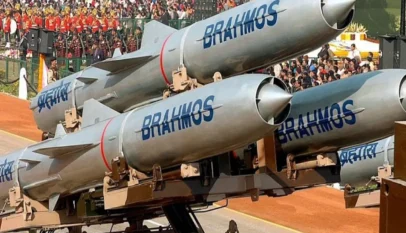
Indonesia Signs Deal with India to Purchase BrahMos Missile System
New Delhi, March 2026 : Indonesia has signed an agreement with India to procure the BrahMo…
Rastriya Swatantra Party Sweeps Nepal Elections, Set for Historic Two-Thirds Majority
Kathmandu, March 2026 :Nepal’s parliamentary elections have delivered a stunning political shift, with the …