Iran Launches Drone Strikes on Gulf States as Trump Warns of Retaliation and Global Oil Fears Mount

March 2026 : Iran launched a series of coordinated attacks across the Gulf region early Friday, targeting several Arab states with waves of drones and missiles, including dozens aimed at Saudi Arabia. The escalation came shortly after Iran’s new Supreme Leader, Mojtaba Khamenei, warned Gulf nations against hosting American military bases, raising fears of a wider regional conflict involving the United States and its allies.
The latest strikes have intensified tensions already inflamed by ongoing hostilities between Iran, Israel, and the United States. The attacks also triggered fresh concerns about global energy supply disruptions and the safety of critical shipping routes in the region.
Trump Threatens Retaliation, Criticises U.S. Media
Reacting sharply to the developments, U.S. President Donald Trump warned that Washington would respond forcefully to Iranian aggression. Speaking in a strongly worded statement, Trump declared that the United States was dismantling Iran’s capabilities across multiple fronts.
“We are totally destroying the terrorist regime of Iran — militarily, economically, and otherwise,” Trump said.
The U.S. president also criticised prominent American media organisations, accusing them of misrepresenting the situation on the battlefield. He singled out outlets such as CNN and The New York Times, alleging that their reporting downplayed Iran’s military setbacks.
“Iran’s Navy is gone, their Air Force is no longer, missiles, drones, and everything else are being decimated; and their leaders have been wiped from the face of the earth,” Trump said. “Yet if you read the failing New York Times, you would incorrectly think that we are not winning.”
In an unusually harsh remark directed at critics, Trump also wrote on social media that observers should “watch what happens to these deranged scumbags today,” referring to those questioning the administration’s handling of the conflict.
Iran Vows Revenge
The heightened rhetoric followed the first public address by Iran’s new supreme leader, Mojtaba Khamenei, who vowed retaliation for Iranian casualties suffered during the conflict.
In a televised speech from Tehran on Thursday, Khamenei declared that Iran would “not refrain from avenging the blood” of Iranians killed in recent strikes.
He also issued a stark warning to Gulf countries hosting American forces, saying they should immediately shut down U.S. military bases on their soil. According to him, the notion that the United States could protect regional allies was “nothing more than a lie.”
The remarks were widely interpreted as a signal that Iran would expand its attacks to countries perceived as supporting U.S. military operations in the region.
Airstrikes Hit Tehran as Protests Continue
Hours after the speech, explosions were reported around Tehran as a new wave of airstrikes targeted sites near the Iranian capital.
Israel said its air force struck more than 200 targets across Iran within a 24-hour period, focusing on military infrastructure, weapons depots, and suspected missile launch sites.
Despite the ongoing bombardment, tens of thousands of Iranians gathered for the annual Quds Day rallies, a pro-Palestinian demonstration held across the country. Protesters marched through major cities carrying Iranian and Palestinian flags while chanting slogans against Israel and the United States.
The rallies came after calls from Khamenei urging citizens to show unity and defiance against foreign attacks.
Oil Markets Jittery as Hormuz Threat Looms
Meanwhile, global markets reacted nervously to the escalating conflict. Energy analysts warned that any disruption to shipping in the region could trigger a severe oil supply shock.
Prices of Brent crude — the international benchmark — have surged above $100 per barrel, with spikes reaching nearly $120 amid fears that Iran may block the strategically vital Strait of Hormuz.
Roughly one-fifth of the world’s oil supply passes through this narrow maritime corridor each day. Any restriction could dramatically affect global energy markets.
Iranian officials suggested that access to the strait could be restricted if attacks against the country continue. Khamenei said maintaining pressure on international shipping routes could serve as a deterrent against further strikes.
IRGC Claims Major Regional Operation
Iran’s powerful military force, the Islamic Revolutionary Guard Corps (IRGC), claimed responsibility for a large-scale retaliatory operation targeting Israeli and American positions across the region.
According to an IRGC statement, the campaign was conducted in honour of several prominent resistance figures, including Qasem Soleimani, Hassan Nasrallah, Ismail Haniyeh, and Yahya Sinwar.
The IRGC claimed the operation targeted Israeli-controlled locations such as Kiryat Shmona, Haifa, and Hadera.
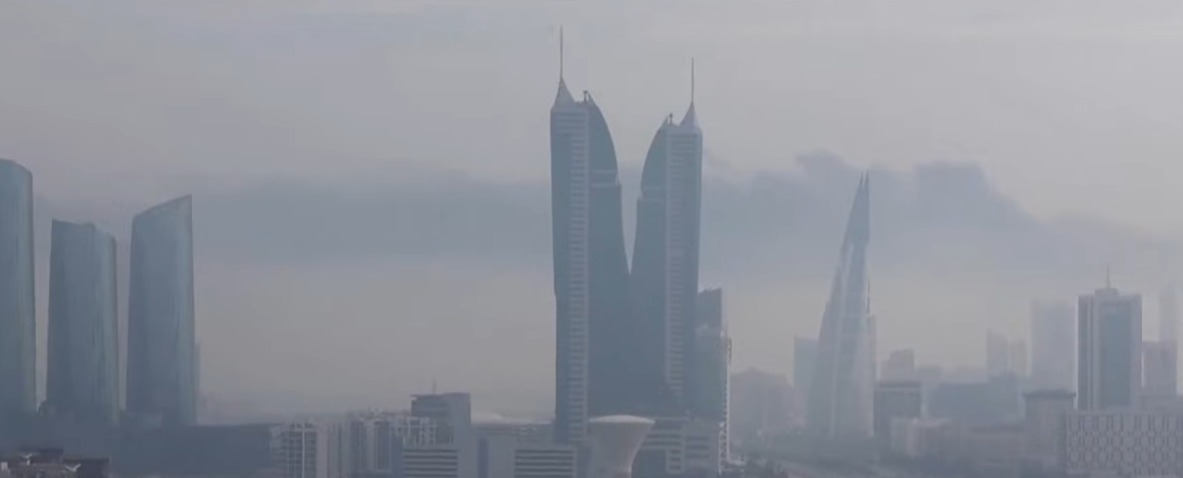
In addition, the group said it struck American military installations across the Middle East, including the headquarters of the U.S. Navy’s Fifth Fleet in Bahrain.
Iran’s navy also claimed that missiles and drones successfully struck the U.S. aircraft carrier USS Abraham Lincoln, forcing it to withdraw from regional waters after sustaining serious damage.
The U.S. Central Command has not confirmed the claim.
Iranian officials said the strike occurred roughly 340 kilometres from the country’s maritime borders in the Sea of Oman and involved advanced long-range missiles and drone technology.
U.S. Aircraft Crash in Iraq
Elsewhere in the region, recovery teams continued searching the crash site of a U.S. military tanker aircraft in western Iraq.
The KC-135 refuelling aircraft went down during operations linked to the conflict, according to U.S. Central Command.
Iran-aligned resistance groups claimed responsibility for the incident, saying they shot down the aircraft using a surface-to-air missile. All six crew members aboard were reported killed.
The crash marks the fourth U.S. aircraft loss during the current military campaign. Earlier in the week, three American fighter jets were mistakenly shot down by friendly fire from air defence systems in Kuwait.
Gulf Infrastructure Targeted
Iranian drones also targeted key infrastructure across the Gulf region, raising alarm among regional governments.
Authorities in Saudi Arabia said their air defences intercepted nearly 50 drones launched in multiple waves before they could strike oil facilities.
In Oman, two people were killed when drones crashed into an industrial zone in the city of Sohar, according to the Oman News Agency.
Air-raid sirens also sounded across Bahrain as defence systems were activated against incoming threats.
In Dubai, black smoke was seen rising from an industrial district after debris from intercepted drones ignited a fire.
Officials said falling fragments damaged a building within the Dubai International Financial Centre (DIFC), a major global financial hub housing international banks, investment firms, and wealth management companies.
Iran had previously warned that financial institutions could become targets after an airstrike earlier this week destroyed a bank in Tehran.
Fighting Spreads Across the Region
Violence has also intensified along Israel’s northern frontier. Nearly 60 people were injured when Hezbollah launched several rocket barrages toward northern Israel and Israeli troops stationed in southern Lebanon.
Most of the injuries were reported to be minor, though authorities warned that the attacks could escalate if cross-border clashes continue.
International Forces Drawn Into Conflict
The widening conflict has begun affecting troops from multiple countries stationed in the region.
French President Emmanuel Macron confirmed that a French soldier was killed during an attack targeting a military position near Erbil in northern Iraq.
Earlier reports said six French soldiers were wounded in a drone strike in the same area.
British officials also reported that several U.S. personnel sustained minor injuries when drones struck a base in Erbil housing both British and American troops.
Italy confirmed that a military base hosting Italian forces in Erbil had also been hit earlier in the week, although no casualties were reported. Italian troops stationed there are training Kurdish security forces at the request of the Iraqi government.
Growing Fears of Wider War
As the conflict spreads across multiple fronts — from the Persian Gulf to Iraq and Israel’s northern border — international observers fear the crisis could evolve into a broader regional war.
With drone attacks escalating, airstrikes continuing, and global oil markets on edge, diplomats and analysts warn that the coming days could prove decisive in determining whether the confrontation remains contained or spirals into a far larger conflict involving major world powers.
(The content of this article is sourced from a news agency and has not been edited by the Mavericknews30 team.)




Trump Declares Strait of Hormuz Reopened Under US Protection, Imposes Full Blockade on Iranian Shipping
Washington, July 2026 : US President Donald Trump on Tuesday announced that the Strait of …
Trump Declares Strait of Hormuz Reopened Under US Protection, Imposes Full Blockade on Iranian Shipping
Washington, July 2026 : US President Donald Trump on Tuesday announced that the Strait …