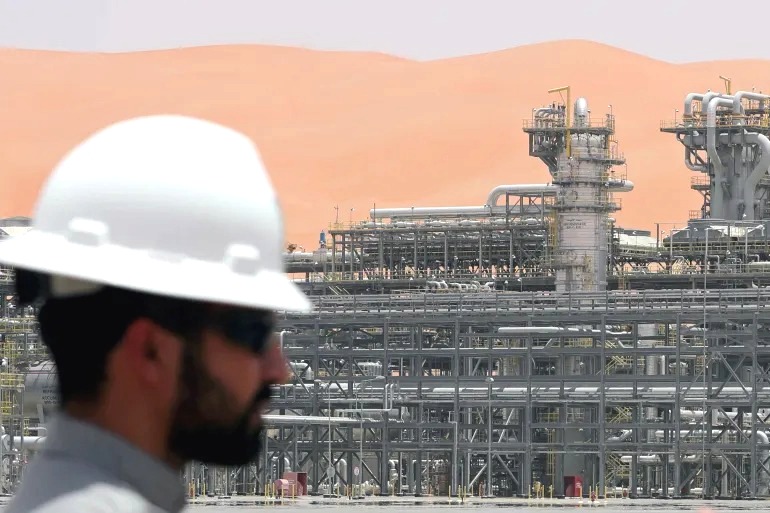
Iran Confident Of Restoring Their Refining Capabilities Within 02 Months.

Tehran; April 2026: While reiterating that, since the Israel-US attacks on February 28th 2026, almost 200 million barrels of oil has been wiped out, Iran is confident about restoring all their refining and distribution facilities to about 70% to 80% of prior capacity over the next two months, Deputy Minister of Oil Mohammad Sadegh Azimifar have briefed the media outlets after the peace meeting in Islamabad failed to yield any results.
Azimifar said Iran’s refineries, transmission lines, oil depots and aircraft refuelling facilities were “repeatedly attacked in all parts of the country”. Teams have been deployed to remove debris and replace damaged equipment, including at a refinery on Lavan Island, Azimifar said. Officials plan to relaunch operations at part of the refinery within the next 10 days, he added.
Crude Oil exports from 06 Arab States fell from 469 million barrels in February 2026 to 263 million barrels in March 2026, which is a drop of 206 million barrels (44%).
Saudi Arabia on the otherside have asserted that it is very much important to restore the Ease-West Pipeline. Dozens of oil facilities have been targeted across the Gulf, and in a statement earlier, the Saudi Ministry of Energy have said, “we have restored full pumping capacity for the East-West pipeline.
We have to remember this is an extremely important pipeline for Saudi Arabia. It’s been able to circumvent the closure in the Strait of Hormuz”.
Saudi Arabia has the benefit of having the Yanbu port, in the west, on the Red Sea, from where they’ve been able to export oil. Just a few days ago, on 09th of April 2026, they said that the pipeline was damaged and lost about 600,000 barrels per day in capacity. They’ve also restored capacity to the Manifa oilfield, which caused 300,000 bpd of lost capacity, and are still working on the Khurais oilfield to restore production there.
Kuwait doesn’t have any other alternative except the Strait of Hormuz. Production has gone from around 3 million barrels per day to just about 5,00,000 after the latest attacks. It just goes to show the importance of the Gulf that this ceasefire has: the oil sector, which is the beating heart of these economies, can start to repair all the damage and start to reach normal capacity.
The East-West Pipeline is also known as the Petroline and is operated by Saudi oil giant Aramco. Aramco is one of the world’s largest companies with a market capitalisation exceeding $1.7 trillion and annual revenues of $480 billion. The oil giant controls 12% of global oil production with a capacity of more than 12 million barrels per day (bpd).
The 1,200 kilometres (745 miles) pipeline runs from the Abqaiq oil processing centre close to the Gulf in Saudi Arabia to the Yanbu port on the Red Sea on the other side of the country. However, the pipeline does not have the capacity to fully make up for the Hormuz closure. The East-West Pipeline has the capacity to transport up to 7 million bpd. On March 10, Aramco said about 05 million bpd could be made available for exports while the rest could supply local refineries.
Since the US-Israeli war on Iran began on February 28, Saudi Arabia has ramped up its oil flow through this pipeline. In January and February, an average of 770,000 bpd flowed through the pipeline, according to data from Kpler, a data and analytics company. By Tuesday (24th March 2026), this had increased to an average of 2.9 million bpd.
In 2024, about 20 million bpd passed through the Strait of Hormuz, according to data from the United Nations. Crude oil and condensate made up 14 million bpd of this while petroleum was the remaining 6 million bpd.
Team Maverick.



President Of India Reviews Passing Out Parade at Indian Military Academy, Dehradun.
Dehradun; June 2026: The Supreme Commander of the Armed Forces and President of India, Dro…

President Of India Reviews Passing Out Parade at Indian Military Academy, Dehradun.
Dehradun; June 2026: The Supreme Commander of the Armed Forces and President of India, …