UNHCR: Community Centres Provide Lifeline Amid Displacement In Lebanon.

Beirut; April 2026: On 08th April, a wave of over 100 Israeli airstrikes hit Beirut and multiple locations across Mount Lebanon, the Bekaa, and the South within a 10-minute period, killing over 300 people and injuring more than 1,100 according to the Ministry of Public Health and causing extensive damage to civilian homes and infrastructure. Lebanese authorities had declared 09th April a national day of mourning. The UN Secretary General condemned the attacks and reiterated his call to all parties to immediately cease hostilities.
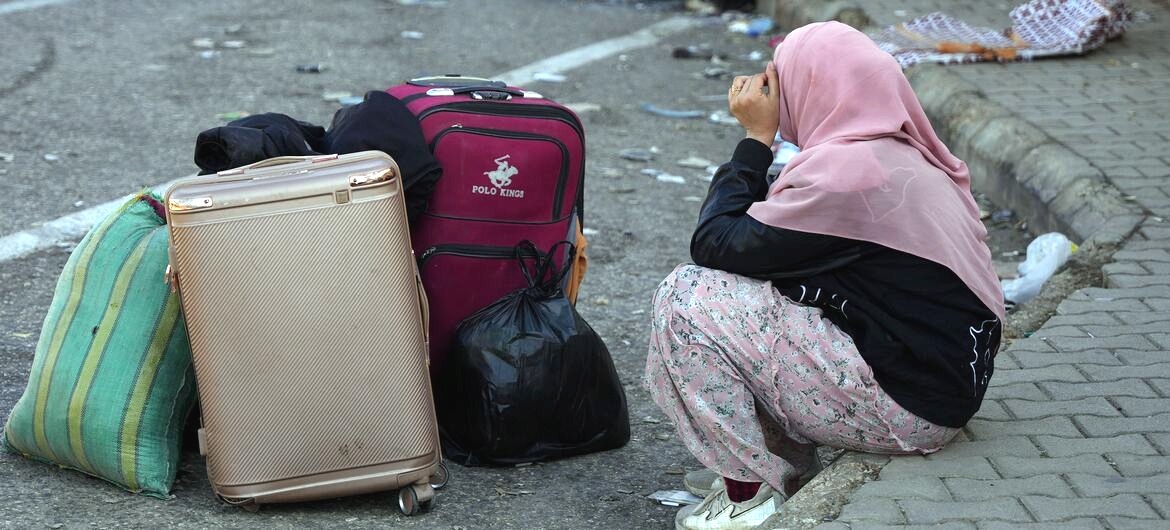
As displacement continues across Lebanon, community centres are playing a critical role in supporting families forced from their homes. Confusion around the announced US-Iran ceasefire led some displaced people in Lebanon to briefly return home, only to flee again after renewed strikes, the UN refugee agency, UNHCR, has reported.
UNHCR-supported Community Development Centres (CDCs) are serving as one-stop hubs where displaced people can access information, psychosocial support, legal aid and referrals, often in areas where movement is restricted and risks are high. Despite ongoing hostilities forcing some centres to close, 16 remain operational across the country, reaching more than 13,000 displaced people, over half of them women and girls.
These centres help reduce the need for repeated travel to access services, lowering safety and financial risks for families already facing multiple displacements. Supported by outreach volunteers working beyond the centres to reach vulnerable groups, even as some volunteers themselves have been displaced, highlighting both the resilience and the strain on community-based support systems.
UNHCR said unclear information following the 07 April announcement prompted premature returns, which were quickly reversed after large-scale airstrikes the next day and Israel announcing that Lebanon was not covered by the ceasefire. The agency warned this has heightened fear and uncertainty, with many now believing that nowhere in the country is safe. At the same time, damage to key infrastructure – including a major bridge south of the Litani River, has threatened access to affected areas, while disruptions at border crossings have further complicated movement and return decisions.
PROTECTION –
Protection monitoring this week shows many displaced families are living in extreme overcrowding, facing eviction and exploitation in the rental market, and struggling to meet basic needs amid rising insecurity. Child labour, family separation, and psychological distress are increasing, while lack of shelter alternatives is pushing some families to return prematurely to unsafe areas. Syrian refugees are consistently identified as being more exposed and having greater difficulties accessing services than other displaced groups, compounding vulnerability following the latest strikes.
How UNHCR is responding: Protection Sector partners, including UNHCR, have reached 93,072 displaced people across 448 collective shelters and outside formal shelters in host communities with protection services. UNHCR’s protection response during the week focused on households affected by repeated displacement and the latest strikes – including families with children, people with disabilities, and people facing eviction or unsafe living conditions – with rapid case management, psychosocial support, and emergency protection assistance.
• Stabilising children after repeated displacement Repeated displacement – has a direct impact on children’s feeling of safety and well-being. Protection partners report children exposed to prolonged periods without schooling, safe spaces or routine, alongside heightened fear and anxiety after successive airstrikes. In the days after the 08th April attacks, separated children were identified in Beirut and Mount Lebanon. Through a comprehensive package of services, Child Protection partners have upscaled their support to identify and support children who have been directly impacted, were wounded, or got lost due to the successive airstrikes. As a rapid response measure, partners in the Child Protection WG, co-led by MOSA, UNICEF, and IRC, have activated dedicated hotlines to facilitate rapid referrals and follow-up, including family tracing and reunification. UNHCR and its child protection implementing partners also reached 1,107 children with psychosocial support this week, through structured activities in collective shelters and communities. In one shelter in the Bekaa, a displaced Outreach Volunteer is providing weekly maths, Arabic, and English lessons to displaced refugee children, helping restore a sense of routine and continuity after weeks of disruption. These community‑based initiatives have become a critical lifeline for children affected by repeated displacement and instability.
• Assisting out-of-shelter displaced families – UNHCR teams identified displaced families living outdoors, in vehicles and unfinished buildings during field visits in Saida and Beirut. In Saida alone, around 135 Syrian refugees were found sleeping along the corniche and near public buildings after being evicted from shelters, denied access to collective sites, or afraid to return home. Recent assessments among displaced refugee households indicate that cash assistance is the most frequently identified primary need (82%), followed by food (45%) and shelter support (31%).
In response, UNHCR and partners carried out immediate protection assessments, prioritising families with children, medical needs, and disabilities. The most vulnerable households were referred on the spot for protection interventions, including psychosocial support, emergency case management, and emergency protection cash assistance, while follow‑up and advocacy with authorities and shelter partners are ongoing to secure safer accommodation options where possible. Through emergency protection cash assistance, UNHCR has supported over 450 highly vulnerable refugee families since early March, helping them meet urgent needs such as rent, transport, food and medical costs, and reduce immediate protection risks linked to repeated displacement and unsafe living conditions.
• Supporting refugees returning to Syria – As of 01st April, UNHCR support for those returning to Syria due to the security environment in Lebanon, under “force majeure”, is available to refugees. It builds on the pre-existing facilitated return programme, while taking into account the adverse circumstances in Lebanon following the escalation. Information is being disseminated through UNHCR’s Lebanon HELP platform, and refugees reaching out for support to return are counselled and supported with any documentation needs, and with a USD 100 return cash grant per person to help cover transport-related costs. The support provided aims to reduce protection risks during return and ensure informed decision‑making in a highly constrained context. Till date, over 400 families have been counselled and assisted, with increased engagement from refugees through UNHCR’s information platforms following targeted outreach and helpline messaging.
UNHCR Emergency Appeal for Lebanon USD 61 million –
The Lebanon Flash Appeal calls for US$ 308.3 million to provide lifesaving assistance and protection to one million affected people over three months, from March to May 2026. Within the framework of this appeal, UNHCR requires US$ 61 million to reach 600,000 displaced people with protection, shelter, core-relief items, and cash assistance. These programs are aimed to reinforce and complement the Government-led emergency response, and the funding for the appeal should enable humanitarian partners to rapidly scale up assistance across priority sectors over the three-month period. Confirmed funding and projections against the emergency appeal reach approximately a third of needs to date.
As of end of March 2026, UNHCR in Lebanon was only around 20% funded, with overall needs totalling US$ 472.3 million. Flexible and timely contributions are essential to:
• Maintain live-saving protection services;
• Improve and scale-up collective shelters so they are safe, dignified, and accessible;
• Provide financial support to the most vulnerable displaced households, especially those outside shelters;
• Replenish essential supplies so that UNHCR can respond quickly to further waves of displacement.
Team Maverick.


Trump Vows Continued Military Pressure on Iran, Expresses Doubts Over Diplomacy
Washington, Aug 2026: US President Donald Trump has vowed to maintain military pressure on…

Trump Vows Continued Military Pressure on Iran, Expresses Doubts Over Diplomacy
Washington, Aug 2026: US President Donald Trump has vowed to maintain military pressure on …