Revanth Reddy Urges Southern Unity Against ‘Pro Rata’ Lok Sabha Seat Proposal, Warns of Political Imbalance

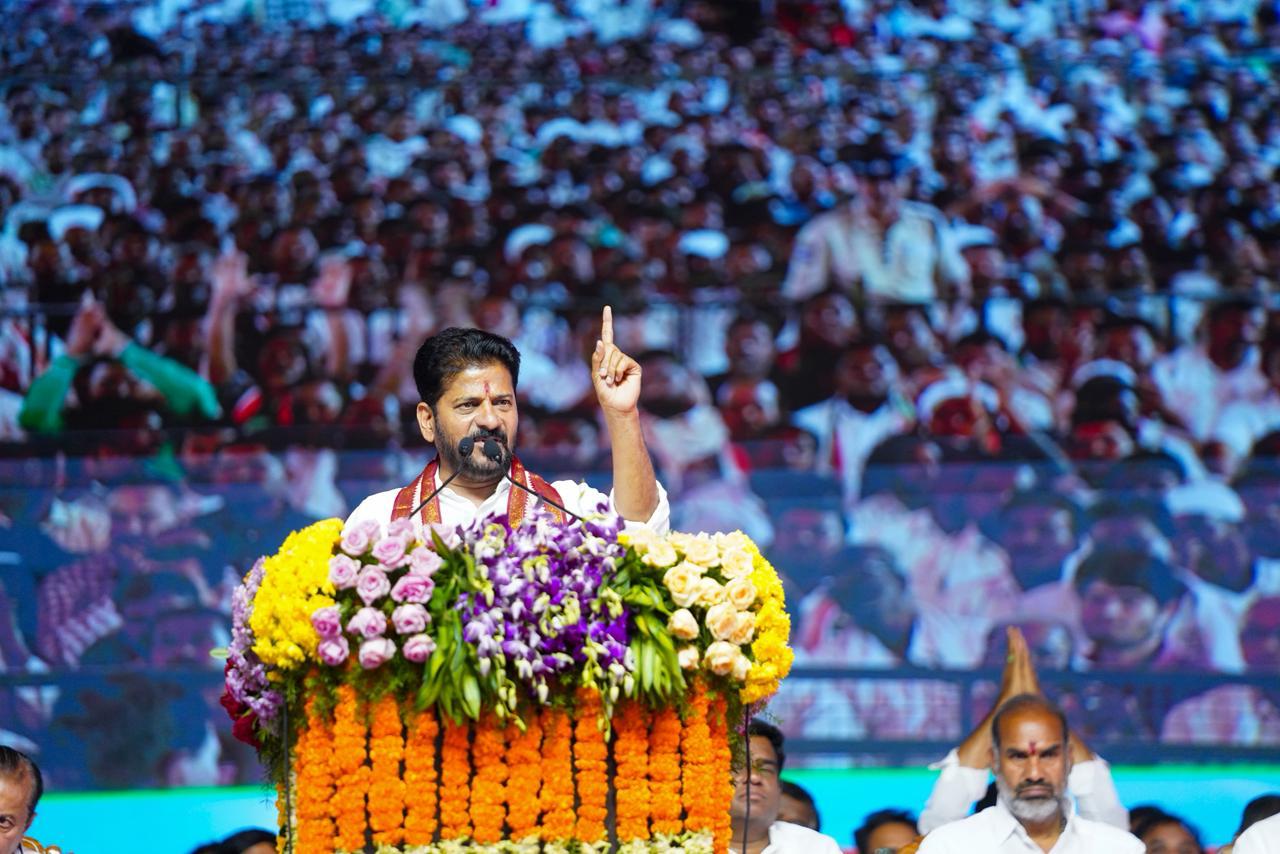
Hyderabad, April 2026 : Telangana Chief Minister A. Revanth Reddy has called for a united stand among southern states against the Centre’s proposed ‘pro rata model’ for increasing Lok Sabha seats, warning that such a move could significantly weaken the political voice of the South and disrupt the federal balance of the country.
In a series of letters addressed to key leaders including Andhra Pradesh Chief Minister N. Chandrababu Naidu, Tamil Nadu Chief Minister M. K. Stalin, Karnataka Chief Minister Siddaramaiah, Kerala Chief Minister Pinarayi Vijayan, and Puducherry Chief Minister N. Rangasamy, the Telangana leader expressed deep concern over the implications of the proposed expansion of Lok Sabha seats to 850 using a population-based formula.
Revanth Reddy stressed that the issue requires urgent and collective engagement from southern and like-minded states to ensure their concerns are effectively represented at the national level. He cautioned that the proposal, if implemented in its current form, would disproportionately benefit states with higher population growth while disadvantaging those that have made significant progress in population control and socio-economic development.
The Chief Minister also sought to clarify what he described as a deliberate attempt to conflate three distinct issues—women’s reservation, delimitation, and the increase in Lok Sabha seats. According to him, while there is broad consensus on supporting women’s reservation and conducting delimitation to redraw constituency boundaries, the real point of contention lies in the method proposed for increasing the number of parliamentary seats.
Highlighting the potential consequences of the pro rata model, Revanth Reddy provided comparative projections to illustrate the widening gap in political representation. In his letter to Chandrababu Naidu, he noted that Andhra Pradesh’s Lok Sabha seats could rise from 25 to around 38, while Uttar Pradesh’s representation could jump from 80 to approximately 120 seats. This would increase the gap between the two states from 55 seats to 82 seats.
Similarly, he pointed out that the combined seats of Tamil Nadu and Puducherry could increase from 40 to around 60, whereas Uttar Pradesh’s tally could reach 120, widening the gap from 40 to 60 seats. Karnataka’s representation, he said, could rise from 28 to about 42, but the gap with Uttar Pradesh would expand from 52 to 78 seats. In the case of Kerala, the difference could grow even more sharply—from 60 seats to as much as 90 seats.
“These projections clearly demonstrate that while all states may gain in absolute terms, the relative imbalance in representation will grow significantly,” Revanth Reddy argued. “This effectively reduces the influence of southern states in Parliament, even as their contributions to the nation continue to increase.”
The Chief Minister underscored that southern states have consistently invested in population stabilisation, education, healthcare, and economic development, playing a pivotal role in India’s growth story. However, he warned that a purely population-based model would ignore these achievements and instead reward higher population growth, thereby penalising states that have performed better on key development indicators.
He further cautioned that such a shift could have long-term implications for national cohesion. “A framework that does not account for the contributions of states risks creating a perception of inequity. This is not just a statistical adjustment—it represents a systemic shift in political power,” he said.
Revanth Reddy also linked the issue to broader concerns about financial devolution, citing disparities in the allocation of central funds. He pointed out that while states like Bihar receive significantly higher returns relative to their contributions, southern states often receive less. As an example, he noted that Andhra Pradesh receives only 63 paise for every rupee it contributes, compared to over Rs 6.69 received by Bihar.
“This reflects a long-standing North-South divide,” he said, adding that the proposed seat redistribution would compound existing financial and policy imbalances with political inequity. “We will be facing not just economic discrimination but also a dilution of our democratic voice.”
As an alternative, the Telangana Chief Minister proposed a hybrid model that seeks to balance population-based representation with economic performance and other development indicators. Under this approach, only half of the additional seats—from the proposed expansion to 850—would be allocated using the pro rata method, while the remaining seats would be distributed based on criteria such as Gross State Domestic Product (GSDP) and overall performance.
“This is one possible solution that ensures fairness while maintaining the spirit of federalism,” he suggested, inviting discussion and consensus among states.
Revanth Reddy concluded by urging all southern leaders to come together and launch a coordinated effort to safeguard their interests. “India’s strength lies in its diversity and equitable representation. It is our collective responsibility to preserve this balance,” he said, emphasizing that the issue transcends party lines and requires unified action.
The Chief Minister’s appeal is expected to intensify the ongoing debate over delimitation and representation, particularly among southern states that fear losing political influence despite their economic and social progress.
Japanese F-2 Fighter Reloaded With New Large Stealth Cruise Missile Under Its Wings.
Gifu Air Field, Kakamigahara City, Japan; August 2026: Yesterday (Friday – 31st July 2026)…

Japanese F-2 Fighter Reloaded With New Large Stealth Cruise Missile Under Its Wings.
Gifu Air Field, Kakamigahara City, Japan; August 2026: Yesterday (Friday – 31st July 2026) …