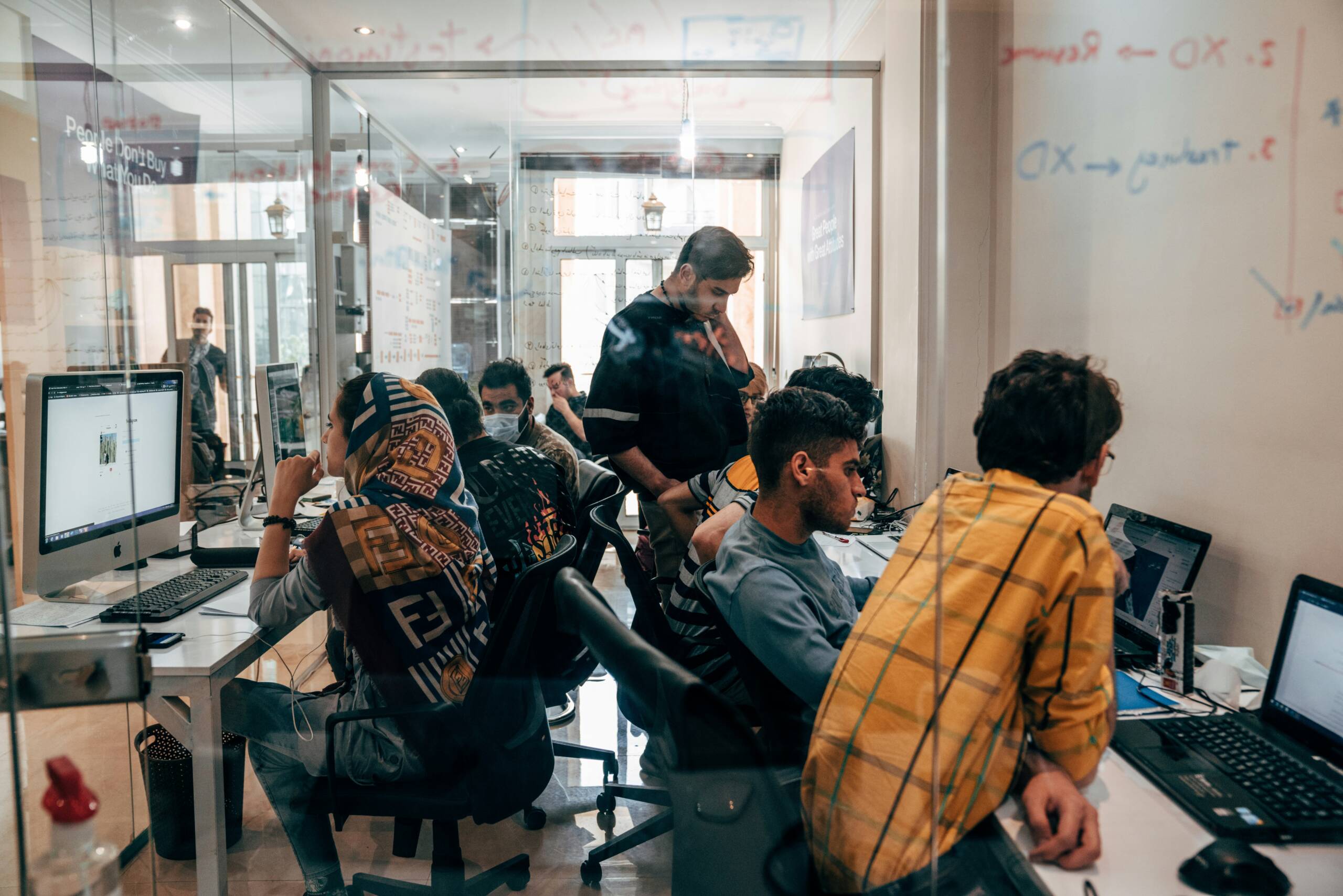
Work-From-Home Debate Reignites as IT Bodies Urge Government Advisory Amid Energy Conservation Push

New Delhi, May 2026 : The debate over work-from-home (WFH) arrangements in India’s technology sector has returned to the centre of policy discussion after industry employee bodies urged the Ministry of Labour and Employment to formally encourage remote working in digitally deliverable sectors. The renewed push comes in the backdrop of Prime Minister Narendra Modi’s recent appeal for citizens and organisations to adopt fuel-saving measures, including reduced travel and greater use of virtual work practices.
The Nascent Information Technology Employees Senate (NITES), an IT industry employees’ body, has written to Union Labour and Employment Minister Mansukh Mandaviya seeking a government advisory that would allow companies in the IT and IT-enabled services sector to implement work-from-home “whenever operationally feasible” for a temporary period. The organisation has argued that remote work should be viewed not merely as an employee convenience but as a broader national economic measure linked to fuel conservation, reduced traffic congestion, and easing pressure on urban infrastructure.
According to NITES, the timing of its request aligns with the Prime Minister’s recent public appeal in Hyderabad, where he encouraged organisations and citizens to revisit certain practices adopted during the COVID-19 pandemic. These include remote working, virtual meetings, increased use of public transport, and other measures aimed at reducing energy consumption. The Prime Minister also urged people to avoid non-essential travel, delay discretionary purchases such as gold, reduce dependence on imported goods, and support indigenous products as part of a wider strategy to strengthen economic resilience amid global uncertainty.
In its letter, NITES said India’s IT industry has already demonstrated the viability of large-scale remote work during the pandemic period, when companies rapidly shifted to home-based operations while continuing to serve global clients without significant disruption. The organisation said this experience proved that productivity, service delivery, and international project execution could be maintained effectively in a distributed work environment.
It further argued that daily commuting by lakhs of IT professionals in major urban centres places a significant burden on fuel consumption, public transport systems, and road infrastructure. According to the employee body, long travel hours also contribute to physical fatigue, stress, and reduced quality of life among employees. On this basis, it said work-from-home arrangements could serve as a practical solution to both economic and human resource challenges.
NITES president Harpreet Singh Saluja said the proposal should not be interpreted as opposition to employers or corporate operational autonomy. Instead, he described it as an act of “collective national cooperation” in line with broader government efforts to manage energy demand and external economic pressures. He emphasised that remote work should be treated as a strategic necessity in certain circumstances rather than a discretionary employee benefit.
The renewed call for WFH has also drawn support from the Forum for IT Employees (FITE), which stated that informal advisories directed at individuals are insufficient to bring about meaningful change. In a public statement on social media platform X, FITE noted that employees do not control workplace attendance policies and that companies ultimately determine work structures. It argued that a clear government directive would be required to ensure consistent implementation across the industry.
At the industry level, the National Association of Software and Service Companies (NASSCOM), representing India’s IT and BPM sector, said companies continue to operate through well-established hybrid work models. These models, it said, are calibrated based on business requirements, client expectations, and the nature of specific job roles.
NASSCOM added that the sector has also adopted energy efficiency and sustainability measures across office campuses, particularly in response to ongoing geopolitical tensions in West Asia and associated global energy market volatility. These measures include optimisation of non-essential energy use, rationalisation of facility operations, and flexible work arrangements where appropriate.
According to the industry body, such steps are part of a broader framework of operational resilience developed over recent years. It said India’s technology companies have strengthened business continuity systems and distributed delivery networks, enabling uninterrupted global service delivery even under challenging conditions.
The renewed discussion around work-from-home comes at a time when many IT companies have already begun tightening return-to-office norms after a prolonged period of hybrid and remote working during the pandemic. Several firms have introduced mandatory office attendance schedules, fixed in-office days, and stricter monitoring of workplace presence, citing improved collaboration, innovation, and organisational culture as key reasons.
However, employee groups continue to question whether large-scale daily commuting is necessary for roles that are predominantly digital in nature. They argue that the pandemic demonstrated the sector’s ability to function effectively without physical office dependency for many categories of work.
The Prime Minister’s broader appeal for conservation-oriented behaviour—including reduced foreign travel, increased use of public transport, adoption of electric mobility, and promotion of domestic products—has further intensified the discussion around flexible work models. Policymakers are reportedly considering various approaches to balance economic efficiency, employee wellbeing, and industry competitiveness.
The current debate marks a shift in how work-from-home is being positioned in India. Initially introduced as a public health necessity during COVID-19, it is now increasingly being reframed as part of a larger economic and environmental policy conversation involving fuel conservation, infrastructure stress, and sustainable urban development.
Whether the Labour Ministry will issue a formal advisory remains uncertain. However, the renewed push by employee bodies and the parallel responses from industry stakeholders indicate that the future of hybrid and remote work in India’s IT sector is once again under active policy and public scrutiny.
Team Maverick





Trump Declares Strait of Hormuz Reopened Under US Protection, Imposes Full Blockade on Iranian Shipping
Washington, July 2026 : US President Donald Trump on Tuesday announced that the Strait of …

Trump Declares Strait of Hormuz Reopened Under US Protection, Imposes Full Blockade on Iranian Shipping
Washington, July 2026 : US President Donald Trump on Tuesday announced that the Strait …