PM Modi Receives Grand Welcome in Slovakia as ‘Vande Mataram’ Echoes Through Bratislava

Bratislava, June 15: Prime Minister Narendra Modi received a warm and memorable welcome upon his arrival in Bratislava on Sunday for his two-day State visit to Slovakia, marking the first-ever visit by an Indian Prime Minister to the Central European nation since its independence in 1993.
The historic visit was marked by vibrant cultural performances, enthusiastic participation from the Indian diaspora and traditional Slovak hospitality, reflecting the growing ties between India and Slovakia.
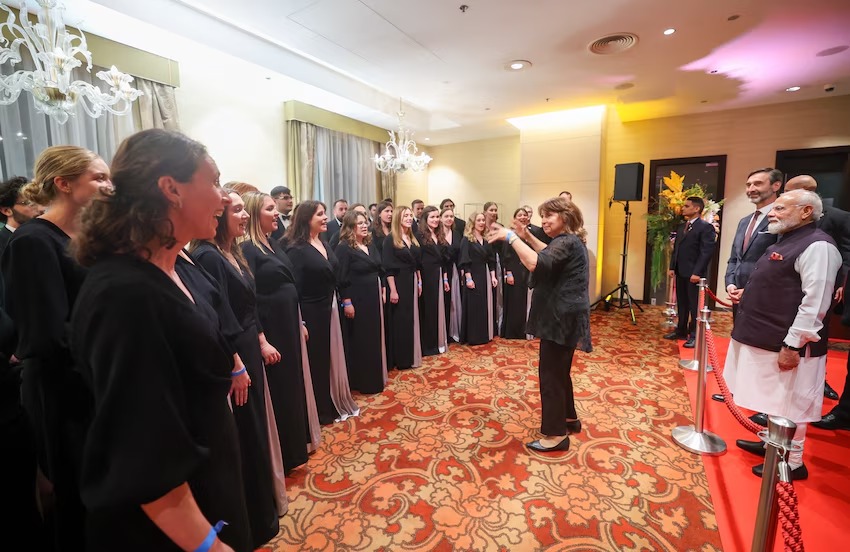
One of the highlights of the welcome ceremony was a special rendition of India’s national song ‘Vande Mataram’ by the renowned Slovak cultural troupe, the Lucnica Ensemble. The performance drew appreciation from Prime Minister Modi, who noted its significance in the context of the 150th anniversary of the iconic song.
Taking to social media platform X, PM Modi wrote: “The team of Lucnica Ensemble sang Vande Mataram during the welcome in Bratislava. This comes at a time when we are marking 150 years of Vande Mataram and recalling its glorious contribution to India’s history and freedom struggle.”
The Prime Minister also expressed gratitude for the enthusiastic reception accorded by the Indian community in Slovakia.
“Yesterday evening’s welcome in Bratislava was truly special. I am grateful to the Indian community for their warmth and affection. Such gestures reflect the enduring bonds that connect our people and strengthen the India-Slovakia friendship,” he posted.
Members of the Indian diaspora gathered in large numbers outside the Grand Hotel River Park, greeting the Prime Minister with chants of “Modi, Modi” and “Bharat Mata Ki Jai.” PM Modi interacted with several members of the community, many of whom described the occasion as historic.
Upon arrival, Prime Minister Modi was received by Slovak Foreign Minister Juraj Blanar and accorded a traditional Slovak welcome featuring the offering of bread and salt—a long-standing custom symbolising prosperity, friendship and goodwill.
The Prime Minister acknowledged the gesture in another post on X, saying: “The welcome in Bratislava included the traditional offering of bread and salt, a beautiful reflection of Slovakia’s rich cultural heritage and the values of goodwill and friendship they cherish.”
Adding to the cultural exchange, PM Modi witnessed performances by Kopaniciarik, a folk ensemble from Slovakia’s Myjava region, known for preserving traditional music and dance.
Praising the artists, he said: “Witnessed a captivating performance by Kopaniciarik from the Myjava region of Slovakia. Folk traditions such as these help preserve one’s culture and history.”
The Prime Minister also attended a spiritual performance by the Slovak musical group Mahadeva Kirtan Projekt, highlighting the cultural bridges that have developed between India and Slovakia.
Sharing glimpses from the first leg of his European visit in France, PM Modi wrote: “Here are highlights from Nice… a great start to my France visit. May the India-France friendship keep getting stronger.”
The Ministry of External Affairs (MEA) described the visit as a historic milestone in bilateral ties.
MEA spokesperson Randhir Jaiswal said that the visit is expected to strengthen cooperation and open new avenues of partnership in areas such as trade, investment, innovation, automobile manufacturing and railway infrastructure.
PM Modi stated that the visit offers an opportunity to deepen India-Slovakia relations and explore fresh areas of collaboration.
“Reached Bratislava. This visit provides an opportunity to deepen India-Slovakia relations and explore new avenues of cooperation. Looking forward to productive meetings with President Pellegrini and Prime Minister Fico,” he posted.
During his stay, the Prime Minister is scheduled to hold talks with Slovak President Peter Pellegrini and Prime Minister Robert Fico.
The visit follows a series of high-level exchanges, including President Droupadi Murmu’s State visit to Slovakia in April 2025 and President Pellegrini’s visit to India for the AI Impact Summit earlier this year, signalling growing momentum in India-Slovakia relations.



Amarnath Yatra Crosses Four Lakh Pilgrims as Devotees Continue Sacred Journey
Srinagar, July 2026 : The annual Shri Amarnath Ji Yatra achieved a significant milestone o…
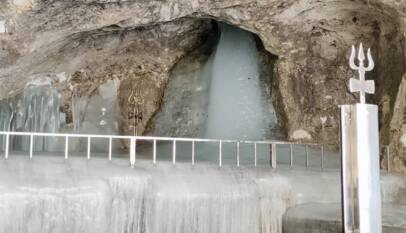
Amarnath Yatra Crosses Four Lakh Pilgrims as Devotees Continue Sacred Journey
Srinagar, July 2026 : The annual Shri Amarnath Ji Yatra achieved a significant milestone …