NTSB: United Airlines 767 Flight That Had Struck NJ Turnpike Light Pole Was Only 19 Feet Above Highway.

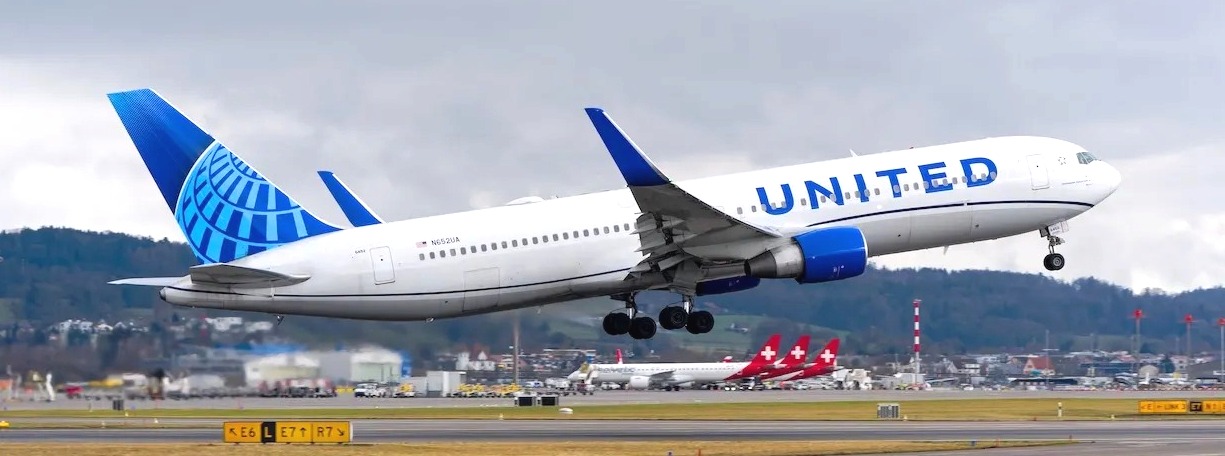
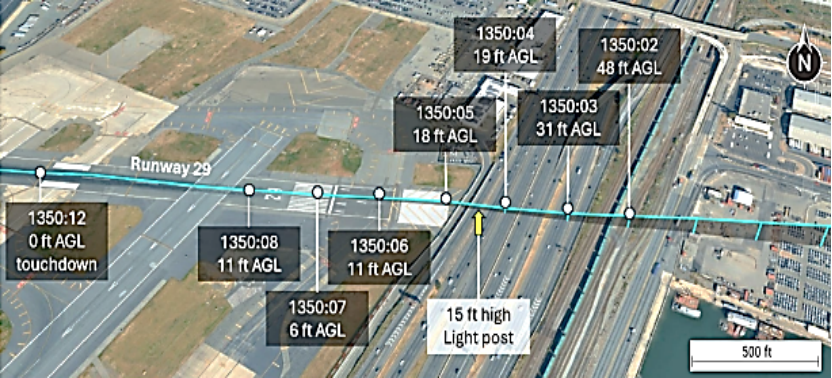
New Jersey; June 2026: A United Boeing 767 that struck a light pole on the New Jersey Turnpike while approaching Newark last month was coming in slow and was only about 19 feet above ground level when it crossed the middle of the highway, according to a preliminary report from the National Transportation Safety Board (NTSB).
The incident made headlines in early May this year (2026) when video of the airplane appearing to strike the top of a tractor-trailer on the turnpike was widely shared on social media. The NTSB had immediately launched an investigation, with United, the Air Line Pilots Association, Boeing, and the FAA all participating.
Contrary to reporting at the time, NTSB investigators found no physical evidence of the aircraft’s landing gear directly striking the tractor-trailer. Instead, it appears that the falling light pole hit the truck, causing the damage seen in the video, as well as minor injuries to the driver. United Flight 169 was arriving at Newark from Venice, Italy, on May 03rd when it was instructed to land on Runway 29.
The pilot flying told the NTSB that he “got fast” while turning the airplane into a headwind and pulled the power levers back to compensate. As the 767 descended, airspeed decayed, and the first officer advised that the airplane was “slow”, and later, “still slow and a little low”. The pilot monitoring said that, while he thought the aircraft was low, he didn’t process the information fast enough to verbalize a call for a go-around.
Several members of the flight crew recalled an audible thump as they neared and went over the airport’s boundary. The flight landed safely at Newark, and there were no reports of injuries to crew members or passengers. A graphic produced by the NTSB shows the 767 was about 19 feet AGL when it passed over the middle of the New Jersey Turnpike.
Officials said that United issued safety reminders and guidance to pilots about the approach to Runway 29 after the incident. The NTSB is continuing to investigate.
AVIATION INVESTIGATION PRELIMINARY REPORT –
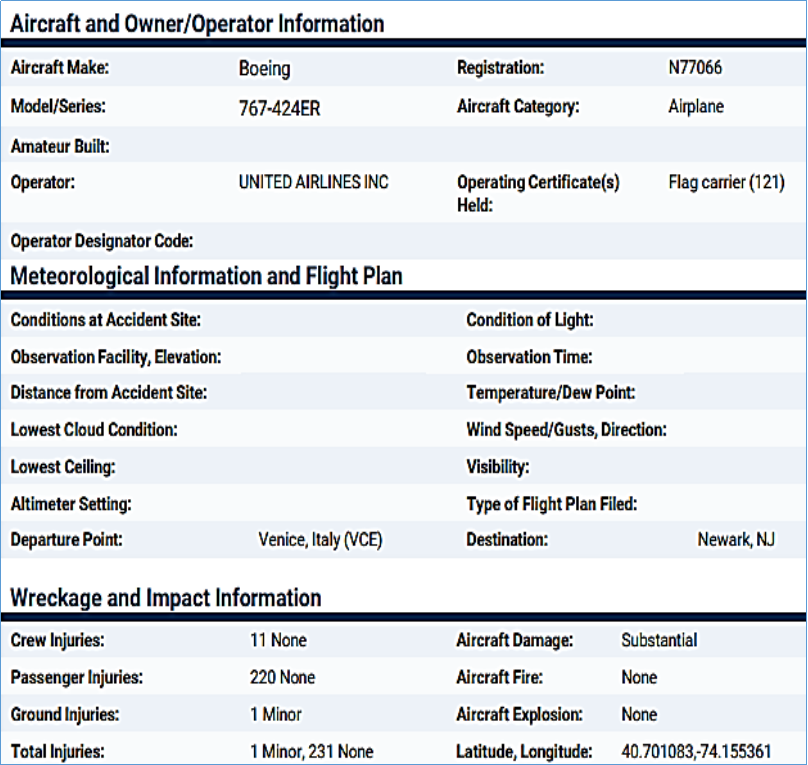
On May 3, 2026, about 13:50 eastern daylight time (EDT), United Airlines flight 169, Boeing B767-424ER, N77066, struck a light pole on the New Jersey turnpike while on final approach to runway 29 at Newark Liberty International Airport (EWR), Newark, New Jersey. Debris from the light pole subsequently impacted a tractor-trailer traveling southbound on the New Jersey turnpike. The airplane landed and taxied to the gate without further incident. The 3 flight crew members, 8 cabin crew members and 220 passengers deplaned at the gate without any injury.
The driver of the tractor-trailer sustained minor injuries. The damage to the airplane was substantial.
The flight was operated under the provisions of Title 14 Code of Federal Regulations (CFR) Part 121 as a scheduled international passenger flight from Venice Marco Polo Airport (VCE), Venice, Italy to EWR.
As part of the investigative process, the NTSB invited qualified parties to participate in the investigation. These included the Federal Aviation Administration (FAA), United Airlines, Air Line Pilots Association (ALPA), and the Boeing Company.
An operations group was formed, and the accident flight crew were interviewed. The flight data recorder (FDR) and cockpit voice recorder (CVR) were shipped to NTSB headquarters for download by the Research and Engineering Recorders Lab. Both recorders were downloaded successfully and a CVR group was formed. A vehicle performance specialist reviewed data from the FDR, CVR, Automatic Dependent Surveillance – Broadcast (ADS-B), and radar, along with security video. The ground proximity warning computer was also shipped to NTSB headquarters and will be downloaded at the manufacturer at a later date. Recovered pieces of the struck light pole were collected.
Crew Experience –
The flight times for the 3 flight crew members were as follows:
- the captain had 2,724 hours in the B757 and B767 with 378 hours as captain;
- The first officer had 1,958 hours;
- the relief officer (for the international flight) had 853 hours in the B757 and B767.
Total time with United;
- the captain had 16,385 hours with 5,205.5 as captain and 11,179.5 as first officer,
- the first office had 1,958 hours,
- the relief officer had 1,075 hours.
Note: the flight crew members flight time is their time at United and does not include their flight time before being hired at United.
History of Flight –
The flight crew was originally scheduled to depart on 01st May in a Boeing 757-200 from EWR, fly to
Shannon Airport (SNN) in Shannon, Ireland, and back to EWR. However, the flight crew was reassigned by crew scheduling to a different airplane and route shortly before their planned departure to SNN. They were now to depart EWR in a Boeing 767-400, fly to VCE, and return to EWR.
The first officer was the pilot flying (PF) on the outbound leg to VCE, and the captain was the PF for the return leg to EWR with the first officer the pilot monitoring (PM). Everything on the flight from VCE was normal until the descent. The flight crew planned to land on runway 4R but was changed to runway 22L during the descent. The crew was asked to prepare for holding while the airport arrival and departure pattern was changed. However, the flight did not have to hold.
The crew slowed to 250 knots in anticipation of holding. The runway was changed again, this time to runway 29 and the crew was assigned the RNAV W RWY 29 approach. The captain stated he briefed the new approach after each change and that even though they were compressed briefings, all required items were covered.
The captain stated they had no CRM [crew resource management] issues on the flight. The captain was not concerned about the approach. He stated that he expected to fly the final portion of the approach at 3 red and 1 white on the Precision Approach Path Indicator (PAPI). This was his desired sight picture for runway 29. The CVR did not capture any discussion of PAPI lights for runway 29 prior to landing.
The captain stated that he turned off the autopilot and the auto-throttles at approximately 880 ft MSL or just around AXELL. He said that he “got fast” while he turned the airplane into the headwind and pulled the power levers back to compensate. The airplane shortly returned to a stable airspeed even though the wind gusts were producing “moderate turbulence”.
The captain stated he heard the first officer call out “airspeed slow” while on short final (inside ½ mile). He mentioned that he did not receive any windshear alerts and that he always felt that
the airplane was in a safe position to land. He responded to the automated 500 ft callout with
the statement “stable”.
At 500 ft, the first officer stated, they were on speed and on profile, and the captain was maintaining his planned profile of 3 red and 1 white on the PAPI. Once again, the CVR did not capture any discussion of PAPI lights for runway 29 prior to landing. Additionally, the captain, as the PF, was looking outside the airplane, and the first officer as the PM was “more committed to being inside the airplane, looking for trends”.
As they descended, the airspeed began to decay, and the first officer recalled that he stated, “hey you are slow,” followed moments later by, “you are still slow and a little low”. The PM then looked back outside, and at that point recalled “I thought we were low”, however they were just about to touch down, and he didn’t process the information in time to get a go-around callout verbalised. The airplane landed, taxied to the gate, and all passengers and crew deplaned normally.
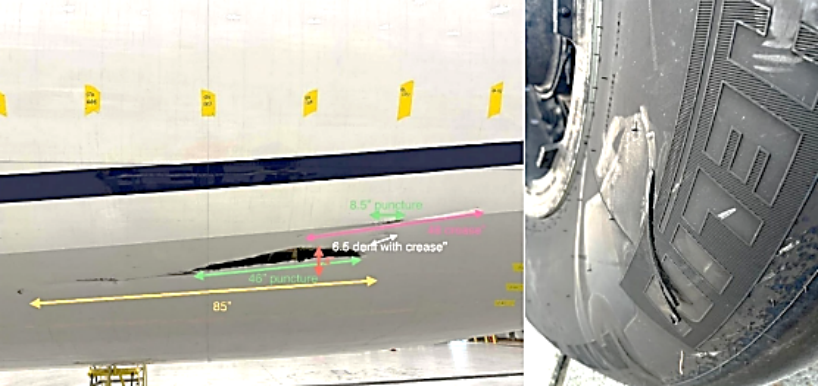
The captain stated that just before touchdown “he heard a thump”. The first officer recalled feeling a mild jolt as they neared the threshold. The relief officer stated that he heard an audible thump as they went over the airport boundary a second or two before landing. After the flight landed, the purser called the flight deck and said the aft flight attendants heard a loud bang just prior to landing. After parking at the gate, the captain went outside to assess the airplane and found damage along the aft fuselage.
Runway 29 –
A precision Instrument Landing System (ILS) approach is not installed on runway 29 at EWR. An RNAV approach is available. It provides vertical and lateral guidance until a published Visual Guidance Fix (VGF), at which point pilots are to fly via visual reference.
Visual guidance lighting systems (VGLS) provide visual guidance to pilots during the approach and landing phases of flight. There are multiple VGLSs with the Precision Approach Path Indicators (PAPIs) as the current standard Visual Glide Slope Indicator (VGSI) consisting of four light boxes arranged perpendicular to the edge of a runway. It projects a pattern of red and white lights that provide visual approach information along the descent path, indicating to pilots if they are high or low.
PAPIs are designed to reduce controlled flight into terrain (CFIT) and landing distance over and under runs by assisting the pilot in establishing a stabilized descent. The display of two red lights and two white lights indicate to pilots that they are on the desired glide path to the runway.
PAPIs are normally located on the left side of runways, however the PAPIs on runway 29 at EWR are located on the right side of the runway.
Airplane and Tractor-Trailer Examination –
On site examination of the airplane revealed three punctures to the left lower aft fuselage. The damage runs from fuselage stations 1219 to 1373 and between stringers 27L and 31L. The forward puncture was about 6” long and 1” wide, the middle puncture was about 46” long and 4” wide and the aft puncture was about 8.5” long and 1” wide. Between the damaged areas there were also dents and creases on the skin. The total size of the holes was larger than the outflow valve and the damage affected all 3 elements of the fuselage structure making the damage to the airplane substantial. The #1 tire on the left main landing gear (MLG) had evidence of slash marks.
The tractor-trailer that was struck by the light pole had damage to the windshield and the side of the trailer. The windshield appeared to have impact damage and there were impact marks on the forward upper left corner of the trailer, and punctures in the aluminium siding. One major puncture was on the front face of the trailer, and the second puncture was minor and on the forward left side of the trailer. There was no evidence of tire marks on either the tractor cab or trailer.
Safety Actions –
After the accident, United Flight Operations issued an Ops Alert that applied to EWR arrivals specific to the RNAV vertical guidance for runway 29. It reminded pilots that the visual glideslope indicator (VGSI) was designed to provide safe obstruction clearance within 10 degrees of the runway centreline up to 4 NM. In addition, United Flight Operations issued Pilot Bulletin 26-069 revision 1 to all pilots that applied to short runway landing guidance. It mentioned that a hazard was identified through their Safety Management System (SMS) that the pilot technique of shifting the aimpoint of electronic or visual glide path indications, or “ducking under”, contributes to low approach altitudes during the visual segment into certain airports and runways. It emphasised that all approaches shall be conducted so that touchdown occurs 1500’ from the runway threshold, but not prior to 1000’ from the threshold, in accordance with their Flight Manual, Chapter 3.
The investigation is ongoing.
Team Maverick.




Bengal to Receive Over ₹1,700 Crore for Rural Roads and Employment Schemes, Says Suvendu Adhikari
New Delhi, June 2026 : Senior West Bengal BJP leader Suvendu Adhikari on Monday announced …

Bengal to Receive Over ₹1,700 Crore for Rural Roads and Employment Schemes, Says Suvendu Adhikari
New Delhi, June 2026 : Senior West Bengal BJP leader Suvendu Adhikari on Monday …