IMO Evacuates 2,500 Seafarers from Strait of Hormuz as Security Fears Stall Rescue Operation

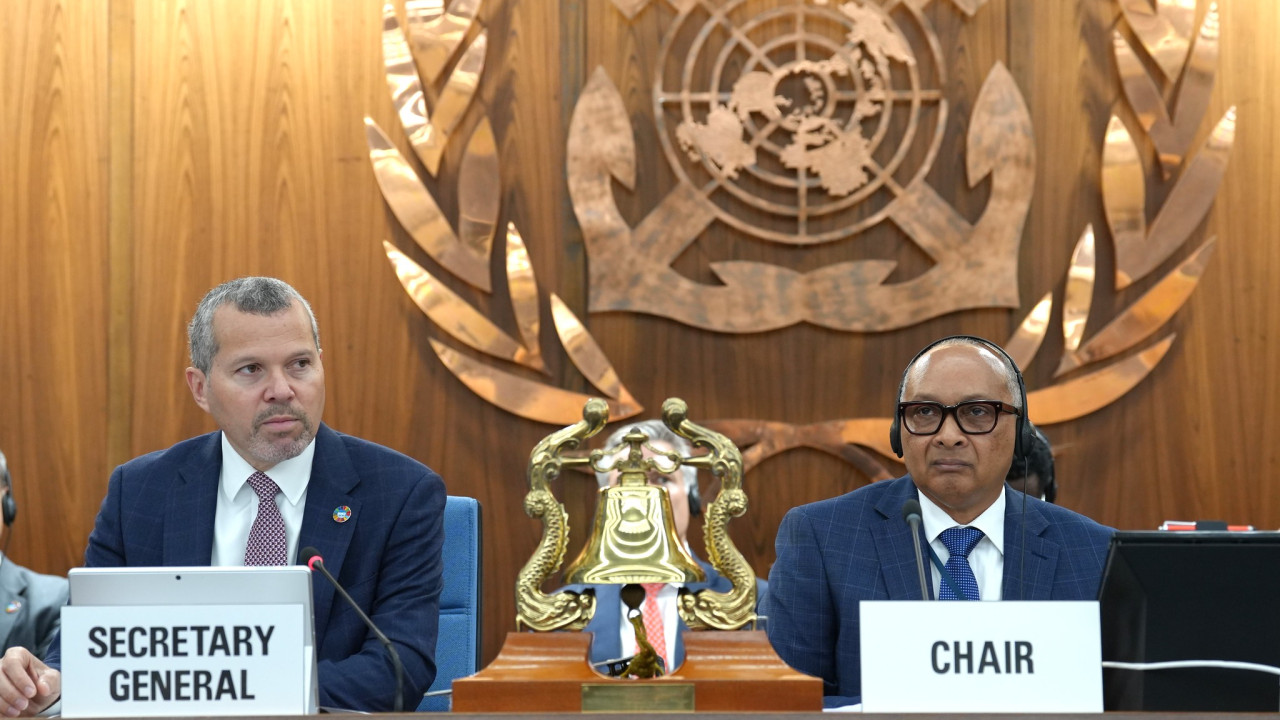
London, June 2026: Nearly 2,500 seafarers aboard 115 vessels have been evacuated from the Strait of Hormuz since the International Maritime Organisation (IMO) launched its emergency evacuation initiative earlier this week, IMO Secretary-General Arsenio Dominguez said on Friday. The operation was designed to assist commercial ships stranded in one of the world’s busiest and most strategically important maritime corridors amid heightened regional tensions.
Addressing an online press conference, Dominguez said the figures represented the first three-and-a-half days of the evacuation effort, highlighting the scale of the operation undertaken to ensure the safety of crews navigating the sensitive waterway.
The evacuation framework, announced by the IMO on Tuesday, recommended that outbound vessels use two designated maritime routes. A northern route was coordinated with Iranian authorities, while a southern passage was communicated through Oman, aiming to facilitate safe navigation while reducing congestion and security risks.
However, the operation suffered a setback on Thursday after a commercial vessel was attacked in the Gulf of Oman. Following the incident, the United Nations maritime agency suspended the evacuation programme, citing the need to reassess whether the security guarantees underpinning the operation remained reliable.
Despite the suspension, commercial shipping activity through the Strait of Hormuz did not come to a complete halt. Shipping data indicated that several vessels continued their transit through the crucial waterway, reflecting the importance of maintaining global trade and energy supplies despite growing security concerns.
Responding to questions during the briefing, Dominguez said Iran continues to facilitate navigation along the northern corridor, while the United States remains involved in supporting commercial shipping along the southern route.
He stressed that vessel owners and operators must conduct thorough risk assessments before deciding whether to proceed through the Strait.
“What is important for the vessels is to carry out the risk assessment before they make any final decision,” Dominguez said, urging shipping companies to carefully evaluate evolving security conditions before authorising voyages.
The IMO chief also made it clear that the organisation would only resume its evacuation programme once sufficient assurances are received that commercial vessels will not be exposed to attacks while transiting the region.
Meanwhile, Iran reiterated its position on navigation through the Strait of Hormuz. Deputy Foreign Minister Kazem Gharibabadi said safe passage could not be guaranteed under any arrangements that bypass Iran’s authority as the coastal state.
In a post on X, Gharibabadi stated that navigation through “vague arrangements, parallel routes, or decision-making outside Iran’s considerations” would not ensure safe transit.
He further argued that any legitimate navigation framework must be based on coordination with Iran and comply with the provisions outlined in Paragraph 5 of the Islamabad Memorandum of Understanding. Otherwise, he warned, the designated parallel route could remain suspended.
The Strait of Hormuz remains one of the world’s most critical maritime chokepoints, handling a substantial share of global oil and commercial shipping traffic. The latest developments underscore the fragile security environment in the Gulf and the challenges facing international efforts to ensure uninterrupted and safe maritime navigation.
Team Maverick







Modi Receives Ceremonial Guard of Honour in Seychelles, Strengthens Strategic Maritime Partnership
Victoria, June 2026 : Prime Minister Narendra Modi was accorded a ceremonial Guard of Hono…
Modi Receives Ceremonial Guard of Honour in Seychelles, Strengthens Strategic Maritime Partnership
Victoria, June 2026 : Prime Minister Narendra Modi was accorded a ceremonial Guard of …