Bridging the Forensic Divide: Empowering Private Medical Colleges to Conduct Autopsies

Need for Autopsy in every death –
[The article is drawn from a true incidence, and is designed to provide information and motivation to our readers. The publisher is not engaged to render any form of psychological, legal or any kind of professional advice. The content of the article is the sole expression and opinion of the author, and not necessarily that of the publisher. No warranties or guarantees are implied by the publisher’s choice to include any of the content in this article. Neither the publisher nor the author shall be liable for any physical, psychological, emotional, financial, commercial damages. Our views and rights are the same: You are responsible for your own choices, actions & results.]
In cognizance to the learned Madras High Court’s suggestion dated 01/11/2014 – to explore the feasibility of permitting private medical college hospitals to perform autopsies on unidentified bodies; which will relieve the congestion in mortuaries in government hospitals; while issuing a set of directions to authorities relating to man missing cases and unidentified bodies; it is important to understand that the cause of death is often informally registered on the death certificate in our country. The Department of Health, Government of Tamil Nadu conducted a special verbal autopsy (VA) study, on 48 000 adult (aged ≥ 25 years) deaths in the city of Chennai (urban) during 1995–97 and 32000 in rural Villupuram during 1997–98, to arrive at the probable underlying cause of death to estimate cause specific mortality.
Methods: A ten-day training on writing verbal autopsy (VA) report for adult deaths was given to non-medical graduates with at least 15 years of formal education.
There are four steps in training; 1) introduction to anatomy, signs and symptoms of various diseases, 2) mock interviews, 3) hands-on-training on writing verbal autopsy reports and 4) feedback session.
Step 1: consisted of a basic three-day introduction to anatomy, collecting data on history of past illness, using symptoms/signs check list of various diseases, and to interview the surviving spouse/close associates or relatives of the deceased & the other members of the community such as neighbours to get data on train of events or circumstances preceding the death. Reports are to include complaints, symptoms, signs, duration of illness and treatment details of the illness prior to death. The following data are to be ascertained (for all deaths due to medical causes) from the respondent to write the verbal autopsy narrative report:
- onset of illness prior to death: sudden or gradual;
- major symptom(s) and associated symptom(s) – in chronological order;
- If a symptom was present it was used as a filter to define what questions to be asked. For example, the filter symptom for heart attack was chest pain and the associated symptoms were breathlessness, sweating, vomiting and pain in the retrosternal area radiating to hand, shoulder, back etc. Cough for more than 4 weeks was a filter for lung cancer and tuberculosis. For each symptom, the duration should be recorded. Details of additional symptoms are built into the narrative in chronological order, by prompting if necessary. progress of the illness;
- any treatment received: Yes/No
- If yes, type of treatment received,
- details of hospitalization prior to death: name of the hospital (e.g., tuberculosis hospital, cancer hospital, coronary care unit etc), duration of hospitalisation, whether discharged from the hospital against medical advice or not. Status at the time of discharge from the hospital: alive/dead,
- history of similar episodes and treatment(s) given,
- abstract information related to the illness prior to death from the investigation reports done for any illness close to the time of death (within 6 months prior to the death) /hospital discharge summary etc, if available,
- If a death certificate is available, copy the cause of death given on the death certificate (In the Tamil Nadu study death certificates were available for only 20% of total deaths).
While recording history of adults with long standing illness, the description included details that occurred in the month preceding the death, with other information recorded in the past history section. If the respondent was able to give the major symptoms and circumstances leading to death, then additional probing questions are asked about the associated symptoms using the symptoms/signs checklist.
If the respondent was not able to give sufficient information on the symptoms of the illness prior to death or have difficulty in remembering any major symptom, then necessary information was garnered to rule out non-medical causes of death. When the interviewer was sure that the death was not due to unnatural cause, the following procedure was used to collect necessary data on the symptom:
- read out the filter symptom/sign of each module in the symptom/sign checklist.
- check responses to each, and note down positive responses.
- Where there is a positive response, additional details on that symptom and associated symptoms, if any, should be obtained. Thus, the methodology of collecting data in the open format using ‘symptoms/signs checklist’ is an interactive process, with the respondent taking the lead in providing the information, and the interviewer prompting where necessary for more details. The Field Interviewer gathers as much information as possible on the underlying cause of death from the respondent. It is imperative to get a logical and complete history of symptoms, signs, events, investigations and treatment, so that the medical reviewer gets sufficient information to assign a probable specific underlying cause of death.
Step 2: following two days, mock interviews were organised to illustrate the techniques of probing a respondent to get the required information on the cause of death, as well as, how to write the verbal autopsy report in local language (Tamil) in Appendix I in Additional file 1 as stated by the respondent.
Step 3: component of training included three days of hands-on verbal autopsy training in the field. To limit distress over the terminal event, the field visit was carried out at least six months after death. Name of the deceased, father’s name (if the deceased was a male) or spouse name (if the deceased was a female), age, gender, informant’s name and address of the deceased at the time of death were given to field interviewers to locate the house of the deceased.
The Field Interviewers carried symptoms/signs checklist to the field. They were blind to the cause of death stated on the death certificate. The Field Interviewer located the house of the deceased based on the data given to him, and introduced himself to the respondent and began the interview. Each one completed twenty reports which were reviewed, and feedback was provided two days after completion of field work to maximise quality of writing the verbal autopsy report.
Step 4: final component of training was feedback session for 2 days. This session involved teaching them how to include essential information in report writing. The feedback session mainly focused discussion on reports which did not have a specified underlying cause of death and reports with minimal information to arrive at the probable underlying cause of death; for example, a report may say that a person had a stroke ten days ago but did not specify the type of onset (sudden or gradual, whether the person was conscious or unconscious, had difficulty in speaking or not, which parts of the body may have been affected etc.) or a report may say that the deceased had fever for ten days and died. It did not give details about the fever and other associated symptoms if any
They interviewed surviving spouse/close associates of the deceased to write a verbal autopsy report in local language (Tamil) on the complaints, symptoms, signs, duration and treatment details of illness prior to death. Each report was reviewed centrally by two physicians independently. Random re-interviewing 5% of the VA reports was done to check the reliability and reproducibility of the VA report. The validity of VA diagnosis was assessed only for cancer deaths.
Results: Verbal autopsy reduced the proportion of deaths attributed to unspecified, and unknown causes from 54% to 23% (p < 0.0001) in urban and from 41% to 26% (p < 0.0001) in rural areas in Tamil Nādu for adult deaths (≥ 25). The sensitivity of VA to identify cancer was 95% in the age group 25–69.
Table 1: Cause of death from Vital Statistics Department* and based on Verbal Autopsy of 48, 000 Adult Deaths (aged ≥ 25) in Chennai (Urban), South India: 1995–97: –
| Causes of death (ICD9 codes) | Cause of death in VSDMale (%) – Female (%) | Cause of death based on Verbal AutopsyMale (%) – Female (%) |
| Vascular Disease (390–415, 418–459) | 8319 (30) 5168 (25) | 11056 (41) 7435 (37) |
| Respiratory Tuberculosis (TB) (011, 012, 018) | 1399 (5) 372 (2) | 2231 (8) 575 (3) |
| Other Respiratory Diseases (416, 417, 460–519 | 1088 (4) 596 (3) | 1597 (6) 855 (4) |
| Neoplasm (140–239) | 1163 (4) 1002 (5) | 2344 (9) 1999 (10) |
| Infection except Respiratory & TB (rest of 1–139, 279.8 [HIV], 320-6, 590, 680-6) | 584 (2) 303 (2) | 1034 (4) 618 (3) |
| Unspecified Medical Causes (780-9, 797-9) | 12291 (44) 115 11 (56) | 4367 (16) 5889 (29) |
| Other Specified Medical Causes | 1899 (7) 1045 (5) | 4414 (16) 2804 (14) |
| No cause given in VSD (probably medical) | 983 (4) 634 (3) | Nil Nil |
| Total Deaths – Medical | 27, 726 20, 631 | 27, 043 20, 175 |
| Re-assigned by VA to external causes | Excluded from the study | 683 456 |
| Total deaths (Medical Causes + External Causes) | 27, 726 20, 631 | 27, 726 20, 631 |
Table 2: Cause of death from Various Local Records in Villupuram District and based on Verbal Autopsy of 32, 000 Adult Deaths (aged ≥ 25) in Villupuram (Rural), South India: 1997–98: –
| Causes of death (ICD9 codes) | Cause of death in VSDMale (%) – Female (%) | Cause of death based on Verbal AutopsyMale (%) – Female (%) |
| Vascular Disease (390–415, 418–459) | 3351 (20.3) 1614 (14.4) | 3928 (24.6) 2404 (22.0) |
| Respiratory Tuberculosis (TB) (011, 012, 018) | 1659 (10.1) 686 (6.1) | 1841 (11.5) 671 (6.1) |
| Other Respiratory Diseases (416, 417, 460–519 | 717 (4.4) 471 (4.2) | 1044 (6.5) 728 (6.6) |
| Neoplasm (140–239) | 415 (2.5) 594 (5.3) | 488 (3.1) 664 (6.1) |
| Infection except Respiratory & TB (rest of 1–139, 279.8 [HIV], 320-6, 590, 680-6) | 1818 (11.0) 1584 (14.1) | 1954 (12.2) 1411 (12.9) |
| Unspecified Medical Causes (780-9, 797-9) | 5829 (35.4) 4565 (40.7) | 4173 (26.1) 2737 (25.0) |
| Other Specified Medical Causes | 2237 (13.6) 1346 (12.0) | 2570 (16.1) 2334 (21.3) |
| No cause given in VSD (probably medical) | 451 (2.7) 343 (3.1) | Nil Nil |
| Total Deaths – Medical | 16, 477 11, 203 | 15, 998 10, 949 |
| Re-assigned by VA to external causes | 2817 1291 | 3296 1545 |
| Total deaths (Medical Causes + External Causes) | 19, 294 12, 494 | 19, 294 12, 494 |
Conclusion: The ten-day training programme in writing verbal autopsy report & random sampling of 5% of the verbal autopsy reports for re-interview worked very well in Tamil Nādu, to arrive at the probable underlying cause of death early adult life or middle age (25–69 years) and less reliably for older ages (70+). Thus, Verbal Autopsy is practicable for deaths in early adult life or middle age and is of more limited value in old age.
To be continued…………………

Writer Suvro Sanyal
Log on : www.mavericknews30.com
Follows us on : Twitter @mavericknews30
YouTube : @MarvickNews30


Maharashtra Shuts Schools Across Several Districts as Heavy Rain Alert Triggers Safety Measures
Mumbai, July 2026: Authorities across several districts in Maharashtra have declared a hol…
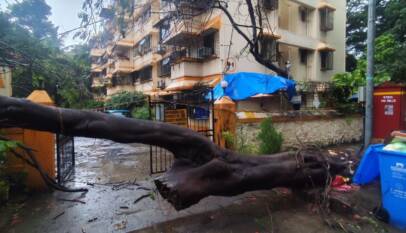
Maharashtra Shuts Schools Across Several Districts as Heavy Rain Alert Triggers Safety Measures
Mumbai, July 2026: Authorities across several districts in Maharashtra have declared a holiday for …