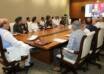
Tamil Nadu Opposes UGC Draft Regulations, Defends State Autonomy in Education

Speech at the State Education Officers’ Conference on UGC Draft Guidelines
Chennai : I extend my sincere gratitude to the Hon’ble Chief Minister of Tamil Nadu, Shri M.K. Stalin, and the Hon’ble Minister, Shri Udhayanidhi Stalin, for providing me with this rare and valuable opportunity to address this esteemed gathering. Tamil Nadu takes pride in representing the state at this significant conference on UGC regulations.
Tamil Nadu has always been at the forefront of the fight for education, social justice, and inclusiveness. Our state remains committed to ensuring quality education for students and safeguarding their rights.
The UGC Draft Guidelines (2024–2025), framed under the University Grants Commission (UGC) Act, 1956, contain provisions that could severely impact the autonomy of state universities in the long run. These regulations, which govern the appointment and promotion of teachers and non-teaching staff, admissions to higher education, and the selection of undergraduate and postgraduate courses, pose a serious threat to Union-State relations.
It is important to note that the UGC Draft Regulations, 2024 and 2025, issued under Section 26 of the UGC Act, are likely to override state university norms. However, education falls under the Concurrent List of the Indian Constitution, meaning both the State and Central Governments have legislative authority. As per Section 254(1) of the Constitution, if a State Act conflicts with a Central Act, the Central Act prevails—but this applies only to laws enacted by Parliament and State Legislatures, not regulations issued by the UGC.
Furthermore, the UGC is attempting to implement the National Education Policy (NEP) through the National Education Commission (NECP) instead of the National Education Coordination Council (NECC). These regulations are being enforced by Parliament rather than the courts, raising concerns about legislative overreach.
In the landmark case Kalyani Mathonan v. K.V. Seyyaj, the Supreme Court of India ruled that UGC guidelines are not mandatory unless approved by the states. Therefore, the active consultation and approval of state governments at every stage of policy formulation are essential. Unfortunately, these guidelines lack scientific backing, research findings, and expert consultations, and they fail to address the concerns raised by students and teachers.
The National Education Policy (NEP) and UGC guidelines appear to be hastily drafted without considering their relevance and applicability to India’s diverse educational landscape. Studies, including research conducted by the Indian Institute of Technology (IIT), indicate that these policies have not improved educational outcomes and, in some cases, have led to fewer students benefiting from higher education.
Tamil Nadu has consistently prioritized higher education. In the recent state budget, the government allocated ₹8,212 crore, accounting for 17% of the Union Government’s total education budget. However, imposing new regulations without adequate funding is unjust and unacceptable.
Additionally, Tamil Nadu’s private educational institutions operate under State Government Acts, ensuring social justice through quotas and reservations. The UGC’s decision to allocate state capital to search and selection committees for academic centers, without the state’s consent, undermines state autonomy. The State Capital Acquisition Act affirms that Tamil Nadu has the first right over state maritime sectors and full authority to appoint search committees for educational institutions.
The new UGC guidelines allowing non-academics to be appointed as teachers are detrimental. The role of educators should not be compromised by market-driven policies, as this would commercialize education and diminish its value.
Furthermore, teacher recruitment policies forcing teachers to teach unrelated subjects (such as NET/SET requirements) could negatively impact students’ learning outcomes. Teachers must be experts in their respective fields to facilitate effective knowledge exchange.
Tamil Nadu has always opposed property tax imposition on students from economically disadvantaged backgrounds. With a Gross Enrollment Rate (GER) of 47% in higher education, Tamil Nadu has made significant strides in ensuring wider access to education. However, introducing property tax on students from both inland and coastal areas will increase financial burdens on families, discouraging enrollment in higher education.
The Central Board of Secondary Education (CBSE) currently assesses students using multiple-choice exams, which do not accurately measure students’ knowledge and skills. The over-reliance on multiple-choice questions has made examinations ineffective and confusing for students.
The Multiple Entry and Multiple Exit (MEME) system is eroding the quality of education. These rules create structural barriers, fragment students into different learning pathways, and impose unsuitable teaching methods. MEME directly contradicts Tamil Nadu’s efforts to increase student retention and improve higher education outcomes. Failure to comply with these new regulations could lead to institutions facing restrictions and students being disqualified from programs.
Tamil Nadu urges the Union Government to engage with states in shaping higher education policies. We firmly stand for students’ rights, academic freedom, and institutional autonomy. Our commitment remains steadfast in protecting social justice in education and ensuring that education continues to serve as a tool for empowerment and progress.
On this occasion, I once again extend my greetings and appreciation to the Hon’ble Chief Minister of Tamil Nadu and the Hon’ble Minister for their support in this crucial endeavor.
Issued by:
Director, Department of Information and Public Relations, Chennai-9



Iran Set to Acquire Chinese MANPADS Amid Rising Regional Tensions, Report Says
New Delhi, July 2026 : Iran is expected to receive its first shipment of Chinese-made shou…

Iran Set to Acquire Chinese MANPADS Amid Rising Regional Tensions, Report Says
New Delhi, July 2026 : Iran is expected to receive its first shipment of …