Ultranationalists are targetting migrants in Russia with Folk Music & Dance.

A group of uniformed men, at least one of them masked, walk up to a pair of watermelon sellers in a street on the outskirts of the Siberian city of Novosibirsk. The men are dressed in black, wearing tactical vests with patches bearing the emblem of a bogatyr – a mythic warrior of Slavic folklore – riding on horseback.
They inform the traders, who they believe to be foreigners, that they are trading without a permit, and the black-clad men help load their goods into a van to be confiscated by the authorities.
The Russian Community, or Russkaya Obshchina (RO), men-in-black have no official position in law enforcement, although they claim to stand for conservative moral and religious values, and steadfastly supports the Kremlin, including in its invasion of Ukraine. RO was founded five years ago by Omsk politician Andrey Tkachuk, anti-abortion rights activist Yevgeny Chesnokov and Andrey Afanasyev, a host on the TV channel, which is owned by the Russian Orthodox Church.
Since the invasion of Ukraine, the RO has become the largest and most influential ultranationalist organisation in Russia, with 1.2 million subscribers to its official YouTube page and more than 660,000 readers on its main Telegram channel, as well as its own app, and enjoys support from powerful allies within the clergy and security services. “This is a classic movement of Russian ethnic nationalists”, says Alexander Verkhovsky, director of the SOVA Centre, which monitors hate movements in Russia.
“There used to be ‘Russia for Russians’, but now that is considered too radical. But in essence, this is what it is about”, he says.
As such, many of the Community’s activities are benign: Helping each other out, or organising festivities on Orthodox holidays such as Maslenitsa (Butter Week), with folk singing and dance performances in the run-up to Easter.
But an examination of RO’s various Telegram groups reveals a narrow focus on ethnic Russian interests, to the exclusion of Russia’s other non-Slavic groups – although there are a handful of minority members – and a stream of anti-immigrant content.
“The blacks will devour everything in their path if the Slavs do not unite to somehow defend their borders and values”, a young female follower of the Community’s Saratov branch, who can’t be named for fear of repercussions, told Media Reporters.
The group’s other activities include vigilantism, often with the open or tacit support of the authorities, observers say.
According to Verkhovsky, there are a number of tactics to target immigrants and other minorities. One is filing official complaints and making denunciations to authorities against what it deems immoral, such as homosexuality or abortion or “Russophobic behaviour”. Neither of the former are technically illegal in Russia, but there are laws against “propaganda” related to LGBTQ and “childfree” themes.
Another tactic is raids, such as the one on watermelon sellers in Novosibirsk. “In the case of migrants, these are places where migrants live or work”, Verkhovsky explains. Whereas, other Members of the Russian Community or similar vigilante groups, for example, the smaller group Northern Man, typically appear where immigrants are working and find some sort of “violation” – in the case of the Novosibirsk watermelon stall, unlicensed trading. They then detain the alleged violators and hand them over to the police.
Verkhovsky said, “In principle, more or less any citizen can complain to the Russian Community and say he’s been offended by some ‘bad’ people. Ideally, these ‘bad’ people are not Russian, and the person complaining is Russian. And then the Russian Community will go to protect him”.
Sometimes, the group accompanies police on joint operations as “volunteers”, though this is rarer. Verkhovsky noted that attitudes towards RO by different police departments vary, and, while some seem to welcome the group, in other cases, officers have brought charges against Community members – only for prosecutors to drop them.
The vigilantes claim they are standing up to an “immigrant crime wave”. There is crime among foreigners in Russia: For instance, Georgians make up more than half of the “thieves-in-law”, an elite fraternity in the criminal underworld. Brawls and beatings involving gangs of young immigrant men often make headlines.
However, these well-publicised incidents and individuals contribute only a small part of the overall crime statistics in Russia. According to Sergei Shoigu, secretary of Russia’s Security Council, foreigners committed just 2 percent of all reported crime nationwide last year, while comprising roughly 4 percent of the population.
Furthermore, Valentina Chupik, a lawyer who offers free legal help to migrants, told Reporters that a substantial portion of these offences are related to improper paperwork, rather than victimising Russians. “These crimes related to missing paperwork are the inevitable consequence of the organisation of illegal migration, which are committed by homeowners who rent apartments to migrants, but do not fulfil the obligation established by law to register them there”, she says.
Since a deadly attack on a Moscow music venue last year by ISIS-affiliated gunmen, there has been an upswing in xenophobia. The police have ramped up arrests and other restrictions on immigrants, especially those from Central Asia. Verkhovsky says it is hard to tell to what extent the public is actively hostile towards immigrants, but polling indicates concerns about immigration have sharply escalated.
In the 2000s, Russia suffered a scourge of far-right-wing violence, peaking in 2008 when skinhead gangs carried out 110 racist murders nationwide. In one particularly grisly episode, a Tajik and a Dagestani were shot dead and beheaded on camera in a woodland near Moscow. In 2022, two men were finally convicted of the double homicide after a third suspect, already imprisoned, incriminated them in his suicide note.
It was for a considerable period of time, volunteering for xenophobic sentiment dried up somewhat.
In the 2010s, the authorities greatly suppressed this movement and almost all these organisations either stopped their activities or were simply eradicated. And people who wanted to share these ideas and wanted to take part were either afraid or just did not know where to go at all. Some far-right activists moved to Ukraine, where they found common cause with like-minded locals.
But RO is a new phenomenon. It prefers to work alongside the authorities, largely forsaking the thuggery of old. And its brand of nationalism aligns with the Kremlin, supporting the invasion of Ukraine and actively fundraising for soldiers and their families.
“The state’s tolerance towards any groups that support the war has grown very much”, says Verkhovsky. “In general, the authorities don’t like any grassroots initiatives, but here they’ve quite notably tolerated it. This is possible only during a wartime situation”.
While the Russian Community stays relatively within the confines of the law – acting as more of an unofficial auxiliary to law enforcement than the skinheads of the past, who eagerly filmed their brazen assaults – Verkhovsky points out “many of the activists are, shall we say, inclined towards violence, and the leadership can’t always hold them back.”
In May, for instance, activists armed with pepper spray and a Taser allegedly burst into an apartment near St Petersburg where two men and a woman were drinking and taking illicit drugs. A fire broke out in the scuffle, and one of the men, of Armenian origin, died in the blaze, while the woman suffered serious injuries after jumping from a seventh-storied window.
Having friends positioned as higher authorities according to reports in Russian media, the RO manages to garner momentum towards the so called race against migrants. Alexander Bastrykin, the chief of Russia’s Investigative Committee, has intervened on members’ behalf several times, including filing charges against police officers who arrested them on various charges. And, in June, sources within the security services told reporters that they use RO as a tool for managing “interethnic conflicts”.
Team Maverick



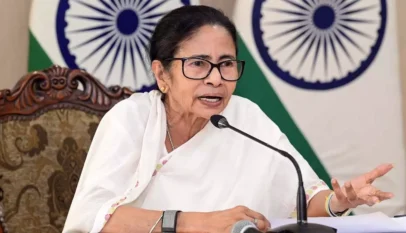
ECI Cracks Down on Illegal Political Ads in West Bengal Ahead of Assembly Polls
Kolkata, March 2026: The Election Commission of India has intensified its crackdown on una…

ECI Cracks Down on Illegal Political Ads in West Bengal Ahead of Assembly Polls
Kolkata, March 2026: The Election Commission of India has intensified its crackdown on unauthorised …