The North Korean Nuke Proliferation.

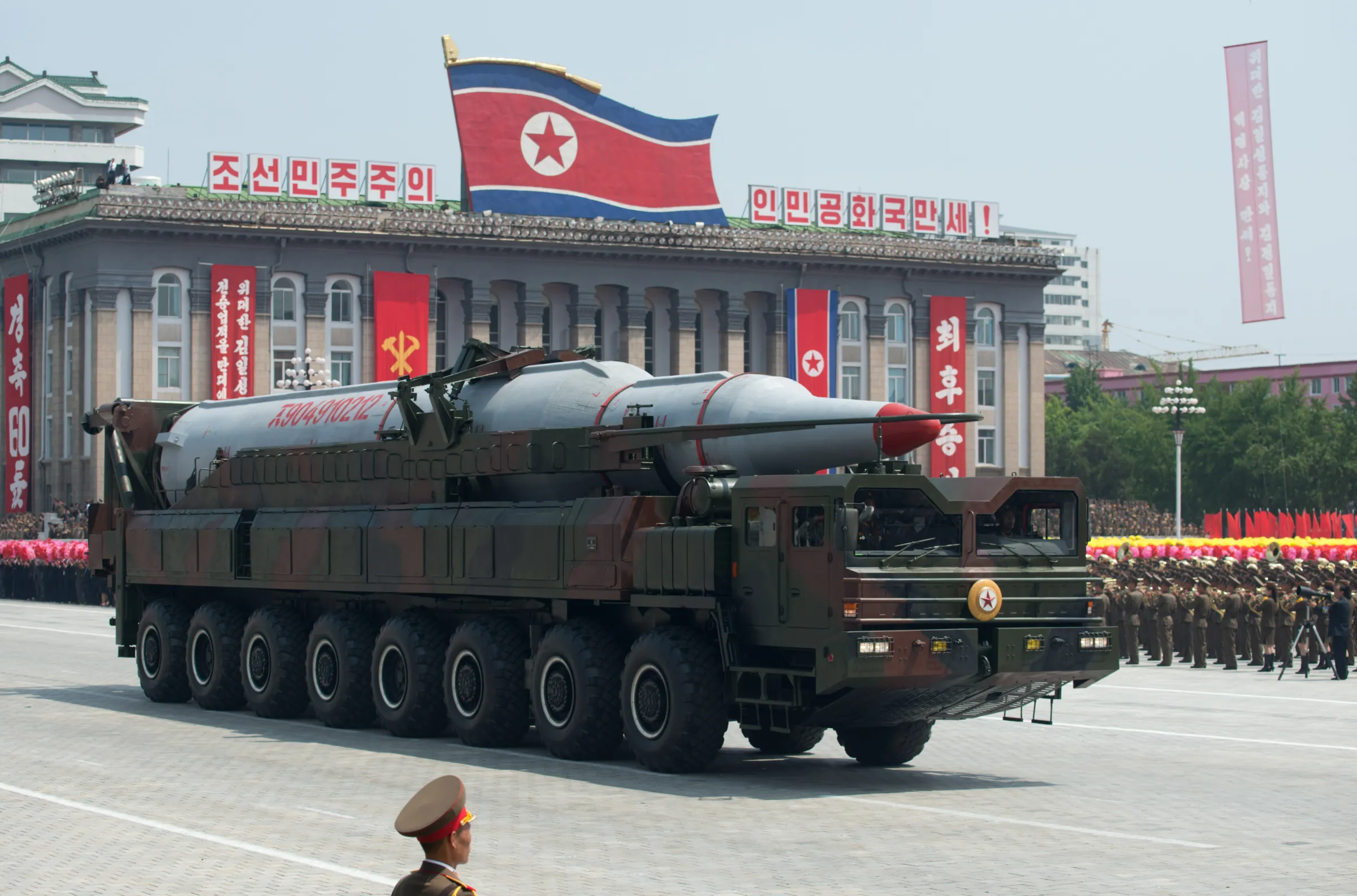
When most part of the world were preoccupied with reasons having pertinence to Geo Political Power Competition and Multipolarity; Trade Protectionism and Economic Nationalism; Conflicts and Tensions; Climate Change and Environmental Issues; Economic Disruptions; Workforce Challenges; Cybersecurity Threats; Erosion of Civility; Uncertainty and Volatility – leading to the undermining of the respective GDP’s, a nation had shrewdly delved into the consolidation of its nuclear strengths; it is the North Korea.
During the past five years, they have built more nuclear weapons and ballistic missiles to deliver nuclear bombs as far as the U.S., along with successfully managed to establish a win-win relationship with Russia. The relationship with Russia had enticed North Korea in getting associated in the Ukraine – Russian battle now being fought for the last 04 years. North Korea on the strength of a mutual defence treaty, had deployed 12,000 combat troops in the Russia’s Kursk region to join Russian forces in its war of aggression in Ukraine. North Korea is also providing Russia with significant quantities of artillery shells, ballistic missiles and drones. In short, North Korea is now Russia’s principal ally and supplier of weaponry for its war with Ukraine.
This North Korean support to Russia is what has drawn attention of the world. After the 1991 collapse of the Soviet Union and the dissolution of the 1961 Peace and Friendship Treaty with the Soviet Union; The P&F Treaty was replaced with a watered-down friendship treaty that made no mention of “mutual defence”. Russia ceased viewing North Korea as an ally. Russia’s focus at that time was on improving economic relations with South Korea. North Korea’s inclination towards Russia in 2024 was a smart tactical move. North Korea had regained the centre stage with the introduction of its defence traits in aiding Russia with its war against Ukraine, while messaging the U.S. and China that North Korea is self-reliant, not solely dependent on China and not fixated on a normal relationship with the U.S.
North Korea’s message was and is: We can go it alone. And now we have Russia, a nuclear superpower that not only accepts our status as a nuclear weapons state, but provides us with the nuclear, missile and satellite technical support necessary to exponentially increase our nuclear and missile capabilities.
But is this what North Korea’s leader, Kim Jong Un, really wants? Is this what his grandfather, Kim Il-Sung, and father, Kim Jong-Il, really wanted for North Korea? Certainly since 1994, North Korea’s focus was having a normal relationship with the U.S. North Korea while looking for normal relations with the U.S., had pledged to be accepted as a nuclear weapons state, promising never to use these weapons offensively; they were a deterrent, to prevent war. And North Korea would be a good friend of the U.S., no longer tethered to China. They cited Pakistan as a model to emulate – “you did it with Pakistan, you can do it with us”.
As US President Donald Trump and South Korea’s Lee Jae Myung is schedule to meet very soon, it won’t be a non-relevant to mention that the two leaders would engage with issues, other than the trade, related to national security issues developments with North Korea.
A few days ago, Kim Yo-Jong, the powerful sister of Mr. Kim, said Kim Jong-Un’s relationship with Donald Trump wasn’t bad, implying that dialogue with the U.S. was possible. Ms. Kim conditioned such dialogue on the U.S. “accepting North Korea as a nuclear power”.
Ms. Kim had reasserted the changed reality, since the Trump-Kim summits in Singapore (2018) and Hanoi (2019) and the symbolic DMZ meeting in 2019, wherein North Korea’s had consolidated mutual defence treaty with Russia and its military assistance to Russia for its war in Ukraine, and the nuclear and missile support Russia is providing to North Korea. This new relationship with Russia has emboldened Mr. Kim, which could incite the North Korean leader to be overly aggressive and optimistic in his relationship with South Korea.
While saying dialogue with the U.S. was possible, Ms. Kim was clear in stating that South Korea was the enemy and the North was not interested in a dialogue with the South. Despite Ms. Kim’s harsh words for South Korea and the new Lee Jae-Myung government – which most South Koreans have become accustomed to hearing – the North recently stopped its harassing broadcasts to the South, apparently in response to the new Lee government halting all its broadcasts to North Korea, to include the National Intelligence Service’s daily broadcast of news, dramas and K-pop music.
South Korea knows the U.S. position on North Korea retaining nuclear weapons has not changed: Complete and verifiable denuclearisation of the Korean Peninsula. This was the language Mr. Kim’s father, Kim Jong-Il, accepted in the September 19, 2005, Joint Statement of the Six Party talks, and the language Mr. Kim personally accepted in the June 2018 Singapore summit – “complete denuclearisation of the Korean Peninsula”.
President Donald Trump would necessarily reach out to Kim Jong-un and arrange for senior officials from both countries to meet to arrange for a third summit between the two presidents. No one wants a repeat of the failed Hanoi Summit, so preliminary arrangements must be thorough, with agreement on a deliverable – further meetings of the principals or their senior representatives and agreement on what the U.S. and North Korea are prepared to offer.
For North Korea, they can and should halt all nuclear tests, fissile material production, ballistic missile launches, cyber and other illicit activities directed at the U.S. and end their military support to Russia for its war of aggression with Ukraine. For the U.S., the easing and lifting of sanctions imposed on and after 2016, economic development assistance, security assurances, a path to ending the Korean War with a peace treaty and the eventual establishment of liaison offices in our respective capitals.
Denuclearisation would initially encompass a statement from both sides as to their ultimate goals.
For North Korea: Acceptance as a nuclear power.
For the U.S.: Complete and verifiable denuclearisation of the Korean Peninsula.
It is now to keep an eye on the developments anticipated on what the major global leaders perceives about North Korea that is building more nuclear weapons and missiles to deliver them, while embracing a revanchist Russian Federation.
Team Maverick



Amarnath Yatra Resumes After Six-Day Rain Halt, Pilgrims Hail Safety Arrangements and Renew Their Journey of Faith
Jammu, July 2026 : The annual Shri Amarnath Yatra resumed on Saturday after remaining susp…

Amarnath Yatra Resumes After Six-Day Rain Halt, Pilgrims Hail Safety Arrangements and Renew Their Journey of Faith
Jammu, July 2026 : The annual Shri Amarnath Yatra resumed on Saturday after remaining …