Rivers of Madhya Pradesh Are Carriers of India’s Sanatan Culture: CM Dr. Yadav

Chief Minister Dr. Mohan Yadav has said that Madhya Pradesh, the heart of India, is renowned for its unparalleled natural beauty and its abundant, perennial water resources. The rivers flowing through Madhya Pradesh are carriers of India’s eternal Sanatan culture, along whose banks our timeless civilization has flourished for centuries. The identity of the state is not confined only to its ancient heritage, temples, forts, and tribal traditions, but also to its 750–800 small and large rivers. Because of this rich water wealth, Madhya Pradesh is often referred to as the ‘maternal home of rivers’.
The rivers originating in Madhya Pradesh merge into the great river systems of the Ganga, Narmada, Tapti, Godavari, Mahi, and Mahanadi, thereby serving as lifelines for the entire nation. These rivers are not just physical sources of water, but also vessels of culture. Along their banks, ancient towns, religious centers and trade routes evolved.
On the banks of the Kshipra lies Ujjain, which, since ancient times, has been a distinguished center of astronomical studies and spiritual devotion, sanctified by the presence of Shri Mahakaleshwar Jyotirlinga? Ujjain is also one of the traditional sites of the world-famous ‘Simhastha Kumbh’. On the banks of the Narmada lie Maheshwar and Omkareshwar, prominent Shaivite pilgrimage centers, with Omkareshwar being one of the twelve Jyotirlingas. Orchha, Sanchi and Vidisha, nurtured by the Betwa River, stand as enduring testimonies to India’s medieval cultural glory and to the rise and spread of Buddhism.
A large part of Madhya Pradesh is covered by the Vindhya and Satpura ranges, making it the origin of many significant rivers. While the Narmada and Tapti flow westwards, rivers such as the Son, Kshipra, Chambal, and Betwa flow north and east to merge into the Ganga and Yamuna. Rivers like Mahi, Wainganga, and Tawa sustain different basins. This geographical diversity has bestowed Madhya Pradesh with the reputation of a river-rich state.
The sacred Narmada, also revered as Reva and venerated as the daughter of Lord Shiva, is regarded as the lifeline of both Madhya Pradesh and Gujarat. It is believed that mere darshan of Maa Narmada is equivalent to the merit of bathing in the Ganga. The 3,000 km-long Narmada Parikrama is considered one of life’s greatest spiritual penances. Originating from Amarkantak, the river forms the majestic ‘Dhuandhar’ falls at Jabalpur, irrigates vast regions of Gujarat and after a journey of 1,312 km, meets the Arabian Sea at the Gulf of Khambhat.
The Chambal, mentioned in the Mahabharata as Charmanyavati,originates at Janapav—considered the birthplace of Lord Parashuram—and forms a boundary between Madhya Pradesh and Rajasthan. It eventually merges into the Yamuna at Panchanada in Uttar Pradesh. The Betwa, anciently known as Vetravati and often hailed as the ‘Ganga of Madhya Pradesh,’ has nurtured historic towns such as Orchha, Vidisha, and Sanchi before merging with the Yamuna after a journey of 590 kilometers. The Kshipra, called the ‘Ganga of Malwa’, flows past Ujjain after originating in Indore district and joins the Chambal after 195 km. The Son River, referred to in the Ramayana and Mahabharata, irrigates Shahdol and Rewa before meeting the Ganga in Bihar after a 784 km journey.
Similarly, the Tapti, originating in the Satpura ranges, flows westward for 724 kilometers before joining the Gulf of Khambhat. The Mahi is unique in that it crosses the Tropic of Cancer twice during its course. Flowing from Madhya Pradesh into Gujarat, it travels 583 km before joining the Gulf of Khambhat. Other important rivers include Wainganga, the lifeline of the Gondwana region and Tawa, the largest tributary of the Narmada, on which the state’s largest dam is built. Rivers such as Kali Sindh, Parvati, Ken, Shakkar and Johila are vital for local agriculture and biodiversity.
Madhya Pradesh’s rivers also form the basis of numerous irrigation and hydropower projects. The Chambal–Parvati–Kali Sindh river-link project holds vital significance for both Madhya Pradesh and Rajasthan, while the Ken–Betwa river-link project is widely regarded as a boon for the Bundelkhand region of Madhya Pradesh and Uttar Pradesh. The Tapti Basin Mega Recharge Project is seen as a lasting solution to groundwater scarcity and erratic rainfall in Burhanpur and Khandwa districts of Madhya Pradesh and in Maharashtra’s Akola, Amravati and Buldhana districts. The Bansagar project on the Son River benefits Shahdol, Rewa and Sidhi. The Tawa project ensures irrigation and drinking water supply for Narmadapuram (Hoshangabad). The Gandhi Sagar project on the Chambal supports irrigation and generates hydropower. Omkareshwar and Bargi projects on the Narmada serve as major pillars of the state’s energy and water supply.






ISRO Successfully Tests Indigenous Ship-Borne Tracking System for Gaganyaan Mission
New Delhi, July 2026 : The Indian Space Research Organisation (ISRO) has successfully vali…
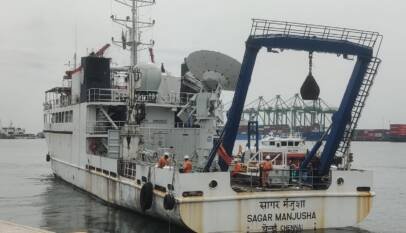
ISRO Successfully Tests Indigenous Ship-Borne Tracking System for Gaganyaan Mission
New Delhi, July 2026 : The Indian Space Research Organisation (ISRO) has successfully validated …