Macron Picks Loyalist Sébastien Lecornu as Prime Minister Amid Rising Political Turmoil in France

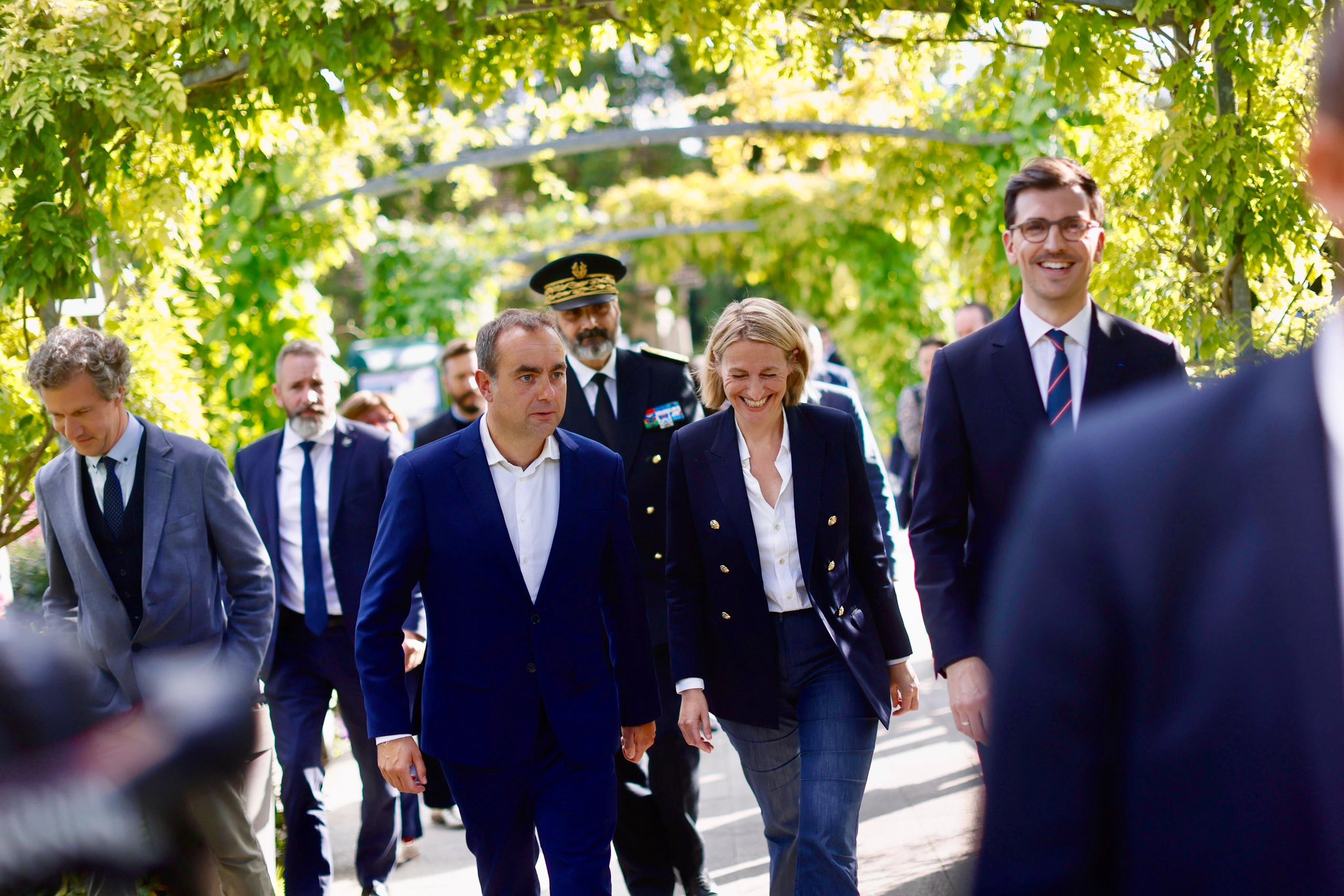
Paris, Sept 2025 : French President Emmanuel Macron on Tuesday appointed his long-time ally Sébastien Lecornu as the country’s new prime minister, defying widespread expectations that he might attempt to reach out to the left in order to stabilize his minority government. The appointment signals Macron’s intent to push forward with his pro-business reform agenda, even as political divisions deepen and public discontent intensifies.
A Loyalist in Power
Lecornu, 39, has been a fixture in Macron’s political orbit since he broke with France’s conservative right in 2017 to support Macron’s first presidential campaign. A former protégé of Nicolas Sarkozy, Lecornu quickly rose through the ranks, eventually serving as mayor of Vernon in Normandy and later as Macron’s youngest government adviser. Most recently, he held the post of defense minister, where he oversaw increased military spending and played a central role in shaping Europe’s response to the war in Ukraine.
By naming Lecornu, Macron is installing his fifth prime minister in less than two years—a reflection of France’s increasingly unstable political environment. Lecornu succeeds François Bayrou, who was ousted by parliament on Monday over his controversial plans to tackle France’s ballooning debt through sweeping spending cuts.
Defying Expectations
Analysts had speculated that Macron might try to balance his cabinet by leaning leftward, hoping to ease tensions with opposition forces and the street protests that have dogged his second term. Instead, Macron doubled down on loyalty, choosing Lecornu to safeguard the reforms that have defined his presidency: lower taxes on businesses and the wealthy, pension system changes including raising the retirement age, and measures to boost investor confidence.
Macron’s office, however, emphasized an unusual directive in French politics: before finalizing his cabinet, Lecornu has been tasked with consulting all parliamentary forces to seek compromises on the national budget and other urgent policies.
“The President of the Republic has entrusted me with the task of building a government with a clear direction: the defense of our independence and our power, the service of the French people, and political and institutional stability,” Lecornu wrote on X.
Political Risks and Opposition Backlash
The appointment has sparked fierce criticism from opposition parties, particularly on the left. Leftist leaders denounced the move as tone-deaf, accusing Macron of ignoring public anger and entrenching an unpopular economic agenda. Several groups called for nationwide “Block Everything” protests on Wednesday, aiming to channel voter frustration into street demonstrations.
The hard-left France Unbowed party pledged to file a motion of no confidence against Lecornu. However, its chances of success appear slim, as the far-right National Rally (RN), led by Jordan Bardella, has signaled conditional willingness to cooperate with the new government—at least on the upcoming budget.
Bardella made clear that his party’s support would be limited: “We will judge—without illusion—the new Prime Minister on his merits, on his actions, on his policies for providing France with a budget, and this in light of our red lines.” The RN has ruled out supporting any tax hikes on middle-class families, while pressing for reductions in immigration-related costs, curbs on public spending, and tighter scrutiny of France’s financial contributions to the European Union.
Balancing with the Far Right
The precarious arrangement leaves Lecornu reliant on the RN’s shifting support—the same party that played a pivotal role in unseating both Bayrou and his predecessor, Michel Barnier. Notably, Lecornu has occasionally maintained quiet lines of communication with RN leaders. Reports surfaced last year that he held a discreet dinner with Marine Le Pen and Bardella, underscoring his pragmatic streak.
Lecornu’s immediate challenge will be forging consensus around the 2026 national budget, a task that doomed Bayrou after his push for deep austerity measures triggered a parliamentary backlash. France’s deficit currently hovers at nearly double the EU’s ceiling of 3 percent of GDP, raising alarms in Brussels and fueling concerns over the eurozone’s second-largest economy.
Preserving Macron’s Legacy
By turning to Lecornu, Macron has chosen continuity over compromise. The move underscores his determination to defend his economic legacy, particularly reforms that socialists have vowed to reverse, such as the abolition of the wealth tax and the pension age hike. For Macron, these measures remain essential to sustaining investor confidence and reinforcing France’s role as a competitive economic power within Europe.
Yet, the gamble is high. Macron is already grappling with record-low approval ratings, and the optics of appointing a trusted loyalist risk amplifying accusations of insularity. With the opposition mobilizing, unions preparing fresh protests, and voters weary of political dysfunction, Lecornu’s premiership begins under intense scrutiny.
As France faces mounting debt, fractious politics, and growing public distrust, Lecornu’s ability to bridge divides may determine not just the survival of Macron’s government but also the trajectory of the French presidency in the remaining years of his mandate.


FIFA Chief Infantino Hails Messi’s ‘Timeless Brilliance’ After Record-Equalling World Cup Feat
New Delhi, June 2026 : FIFA President Gianni Infantino has showered praise on Lionel Messi…

FIFA Chief Infantino Hails Messi’s ‘Timeless Brilliance’ After Record-Equalling World Cup Feat
New Delhi, June 2026 : FIFA President Gianni Infantino has showered praise on Lionel …