Nepal in Crisis: Army Deployed After Violent Protests Force Prime Minister’s Resignation

Kathmandu: Soldiers patrolled the streets of Nepal’s capital on Wednesday after days of violent protests culminated in parliament being set ablaze and Prime Minister KP Sharma Oli stepping down. The unrest, described as the country’s worst political violence in two decades, has left at least 19 people dead and plunged the Himalayan nation into uncertainty.
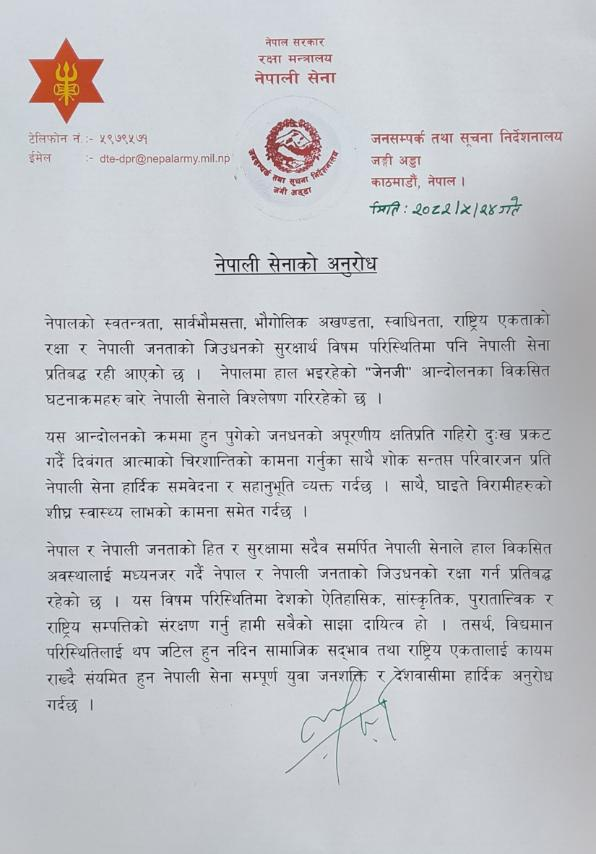
What began on Monday as demonstrations against the government’s sweeping ban on social media and simmering anger over corruption quickly spiraled into nationwide chaos. Protesters torched government buildings, supermarkets, and even the homes of politicians, as frustration over inequality and political dysfunction boiled over.
By Wednesday morning, plumes of smoke still rose from smoldering ruins. Streets were littered with burnt-out vehicles and tires. At makeshift checkpoints, soldiers inspected cars, seeking to restore calm. “It is quiet today, the army is on the streets everywhere,” one soldier told AFP, declining to be named because he was not authorized to speak to the press.
Oli Quits Amid Pressure
Among the most dramatic incidents was the attack on the residence of 73-year-old Oli, a four-time prime minister and leader of the Communist Party. His home was set ablaze by mobs on Tuesday, and within hours he announced his resignation, saying it was necessary to “allow steps towards a political solution.” His current whereabouts remain unknown.
Army chief General Ashok Raj Sigdel appeared on national television late Tuesday, urging calm. “To provide the nation with a peaceful resolution, we urge all groups involved in the protest to call it off and engage in dialogue,” he said.
Global Concern
The violence has rattled Nepal’s fragile democracy. The International Crisis Group described events as a “major inflection point in the country’s uneasy experience with democratic rule.”
The international community voiced alarm. United Nations Secretary-General António Guterres called for “restraint to avoid a further escalation of violence,” while Indian Prime Minister Narendra Modi stressed that “the stability, peace and prosperity of Nepal are of utmost importance to us.”
A Way Forward?
What happens next remains uncertain. Analysts suggest that a caretaker administration may be necessary to steer Nepal out of crisis.
“The protesters, leaders who are trusted by them, and the army should come together to pave the way for a caretaker government,” constitutional lawyer Dipendra Jha told AFP. Crisis Group’s Ashish Pradhan echoed that view, noting that a transitional arrangement must “swiftly include figures who still retain credibility with Nepalis, especially the country’s youth.”
Nepal’s demographic profile highlights the urgency: people aged 15 to 40 make up nearly 43 percent of the population, according to government statistics. With unemployment hovering at around 10 percent and GDP per capita just $1,447, many young Nepalis feel locked out of opportunity.
The Role of Social Media
The spark for the protests was the government’s decision to ban social media platforms, including Facebook, YouTube, and X, while blocking access to 26 unregistered sites. Ironically, TikTok—left unblocked—has become a powerful tool for dissent, with videos contrasting the struggles of ordinary citizens against images of politicians’ children flaunting luxury lifestyles and lavish vacations going viral.
Disruption in the Capital
Meanwhile, Tribhuvan International Airport in Kathmandu was closed until 6 p.m. Wednesday, with all domestic and international flights suspended. General manager Hansa Raj Pandey confirmed that both arrivals and departures—including private helicopters—were halted amid security concerns.
For now, the army’s presence has brought a fragile calm to Kathmandu. Yet with the prime minister gone, parliament charred, and public anger still raw, Nepal faces a critical crossroads. Whether dialogue and compromise can prevent further bloodshed remains the pressing question for the days ahead.


Portugal Part Ways with Roberto Martinez After World Cup Exit, Begin Search for New Head Coach
Lisbon, July 2026 : The Portuguese Football Federation (FPF) has officially confirmed the …
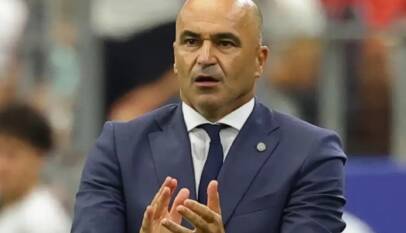
Portugal Part Ways with Roberto Martinez After World Cup Exit, Begin Search for New Head Coach
Lisbon, July 2026 : The Portuguese Football Federation (FPF) has officially confirmed the departure …