Survey demonstrates that endangered shark meats are sold at tandem in the grocery stores in US.

Sept 2025 : A detailed survey conducted by the Frontiers in Marine Science found that endangered shark meat is being sold in U.S. grocery stores to the lesser oriented customers. The survey team comprising a research team from the University of North Carolina at Chapel Hill, said that mislabeling or vague labeling of shark meat in U.S. grocery stores is resulting in consequences for both human health and shark conservation.
“We found critically endangered sharks, including great hammerhead and scalloped hammerhead, being sold in grocery stores, seafood markets, and online”, lead surveyor Savannah J. Ryburn said in a release about the study. Though the study’s sample size was small, including only 29 samples, its results found that 93% of the samples were labeled simply as “shark”.
The samples consisted of 19 fillets sold in grocery stores, seafood markets, and Asian specialty markets (mostly in North Carolina) and 10 ordered online were found to be inappropriate. Over 30% of the samples studied came from four endangered shark species, including great hammerhead shark, scalloped hammerhead shark, and tope and shortfin mako sharks. The survey teams & study’s authors said that given the decline in shark populations globally and the very high levels of mercury often found in hammerhead and scalloped hammerhead sharks, the prevalence of the product in U.S. grocery stores was troubling.
One source of the global decline is the popularity of shark fin delicacies in Asian countries. Shark meat, according to the study, is also very popular in Europe, especially in Spain, Portugal, and Italy. The study exhibited that seafood mislabeling is particularly prevalent in the global shark meat trade, where different regions have colloquial terms for shark meat, including “ocean filets”; “skomoro”; “cação”; “flake”; “rock salmon”; “huss”; “rock eel”; “rig” and “dogfish”.
Not only these terms evoke a confusion amongst the consumers about what they are buying, but it allows retailers to profit by substituting fewer desirable species to save costs. Moreover, it also allows for species that are subject to international trade restrictions under the Convention on International Trade in Endangered Species of Wild Fauna and Flora (CITES) to enter the market undetected.
“Ambiguous labeling and mislabeling hinder efforts to monitor and manage species-specific population trends, undermining stock assessments, sustainable catch quotas, and international reporting obligations, potentially allowing declines in vulnerable species to go unnoticed”, the survey report said.
The study argues that both consumers and conservation efforts would benefit from proper species labeling in the sale of shark meat. “The fact that nearly all shark meat is labeled ambiguously or incorrectly amplifies the problem. Accurate, verified product labels for shark meat would benefit consumers and shark conservation efforts and should be a priority for the seafood industry“.
Team Maverick








Team Special Olympics Bharat Accorded Grand Send-Off Ahead of Special Olympics Unified Football World Cup 2026
Faridabad July 2026 : Team Special Olympics Bharat was accorded a warm send-off at Manav R…
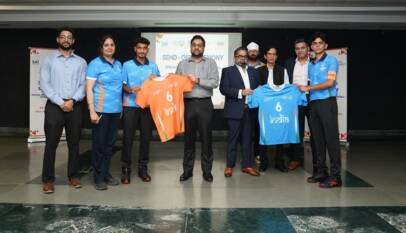
Team Special Olympics Bharat Accorded Grand Send-Off Ahead of Special Olympics Unified Football World Cup 2026
Faridabad July 2026 : Team Special Olympics Bharat was accorded a warm send-off at …