Nepal to Hold General Elections on March 5 Next Year

Sept 2025 : Nepal is undergoing one of the most dramatic political transitions in its recent history after a week of deadly unrest that left more than 50 people dead and over 1,300 injured. President Ramchandra Paudel on Friday night announced the dissolution of parliament and called for fresh elections on March 5 next year, marking a decisive moment for the Himalayan nation.
The announcement came only hours after Paudel appointed Sushila Karki, a former Chief Justice of the Supreme Court, as Nepal’s first woman prime minister on an interim basis. Her appointment followed days of intense negotiations between the president, army chief Ashok Raj Sigdel, and leaders of the youth-driven “Gen Z” anti-corruption movement that had rocked the country with unprecedented protests.
A Nation in Upheaval
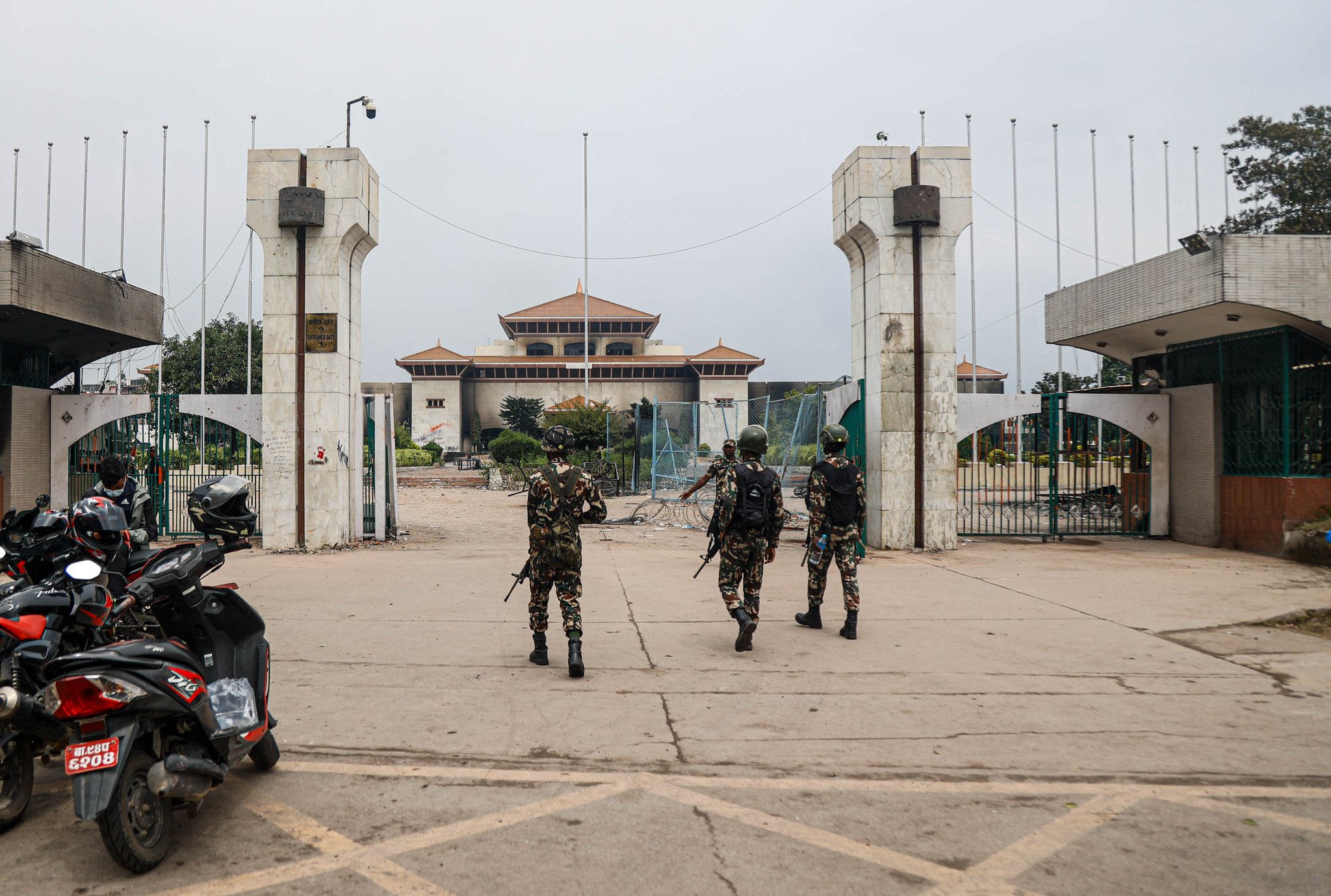
The protests began on Monday and rapidly escalated into Nepal’s worst political violence in decades. What started as anger against entrenched corruption quickly morphed into a nationwide uprising that targeted parliament and other government buildings, some of which were set ablaze. By midweek, Prime Minister KP Sharma Oli, a veteran leader of the Communist Party, was forced to resign after serving four terms in office. His resignation underscored the widespread frustration with Nepal’s revolving-door politics, where successive leaders have been accused of neglecting economic hardship and feeding public disillusionment.
Oli’s whereabouts remain unknown since stepping down, further fueling uncertainty in the capital, Kathmandu.
Symbolism of Karki’s Appointment
For many Nepalis, the appointment of Sushila Karki holds both symbolic significance and practical promise. As the country’s first female prime minister, she represents a break from the male-dominated political class that has long governed Nepal. “Nepal has got its first woman prime minister,” said Suraj Bhattarai, a 51-year-old social worker. “I hope she will take good governance forward.”
Though Karki has yet to make a public statement since her appointment, she began her tenure by visiting hospitals to meet injured protesters. Her actions, observers say, reflect her determination to restore trust in government and connect directly with citizens who bore the brunt of the unrest.
Regional and International Reactions
India, Nepal’s southern neighbor and strategic partner, expressed cautious optimism. Prime Minister Narendra Modi reiterated that India supports “the peace, progress, and prosperity of Nepal,” signaling New Delhi’s hope that the political transition would help stabilize the country.
International rights groups, including Amnesty International, issued joint appeals urging the interim administration to address human rights violations and end the “impunity of the past.” Isabelle Lassee of Amnesty International described the moment as “a turning point, where the hard work of securing human rights for all could be built upon or sent into reverse.”
Deep Challenges Ahead
Despite the sense of renewal, the challenges facing Karki’s government are immense. Corruption remains the central grievance of protesters, and eradicating it will not be easy. Economic difficulties compound the problem: the World Bank estimates that one in five Nepalis aged 15 to 24 is unemployed, while the country’s GDP per capita is just $1,447.
Adding to the crisis, more than 12,500 prisoners escaped from jails during the week’s chaos and remain at large, posing a significant security threat. Soldiers, who had been deployed en masse across Kathmandu during the height of the unrest, have now scaled back their presence as curfews were eased, giving the capital a fragile sense of normalcy. Markets have reopened, traffic has returned, and families are once again visiting temples, though uncertainty still hangs in the air.
Voices of the People
Young Nepalis, who formed the backbone of the protests, remain skeptical yet cautiously hopeful. “We don’t know what will happen in the future now, but we are satisfied today,” said 23-year-old shopworker Durga Magar. For her, the demand is simple: “Corruption just needs to stop. It doesn’t matter whether it is Gen Z or anyone older in politics who tackles it.”
Others see Karki’s rise as a rare chance to reset Nepal’s politics. “They were playing a game of musical chairs,” said Kathmandu businessman Shikhar Bajracharya, 32, describing past leaders. “There was no possibility for younger people to come into power.”
A Fragile New Beginning
As Nepal prepares for elections next year, the coming months will determine whether the nation’s first woman prime minister can harness the energy of the youth movement and translate it into lasting reforms. For now, her appointment has offered a measure of hope in a country yearning for change after years of political stagnation and corruption.
The road ahead remains perilous, but for many Nepalis, the events of the past week mark the beginning of a new chapter in their country’s troubled democratic journey.


India Beat Pakistan 3-1 to Clinch FIH Youth Hockey5s Asian Championship Title
Muscat, July 2026: India’s Sub-Junior men’s hockey team delivered a commanding performance…
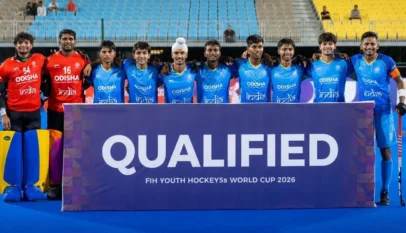
India Beat Pakistan 3-1 to Clinch FIH Youth Hockey5s Asian Championship Title
Muscat, July 2026: India’s Sub-Junior men’s hockey team delivered a commanding performance to defeat …