Gadkari Defends Ethanol Programme, Says His “Brain Worth ₹200 Crore a Month”

Nagpur, Sept 2025 : Union Road Transport and Highways Minister Nitin Gadkari on Saturday dismissed allegations surrounding the government’s ethanol-blended petrol programme, calling them politically motivated and part of a paid campaign. Speaking at an event organised by Agricos Welfare Society in Nagpur, Gadkari stressed that his business interests were transparent and that his personal wealth did not influence government policy.
“My brain is worth ₹200 crore a month. I am not at all short of money, and I don’t stoop low,” he said, rejecting claims that his family benefited from the ethanol policy.
Allegations and Response
The government’s push for petrol blended with 20 percent ethanol (E20) has been criticised by opponents, who argue that it could worsen water shortages, damage engines, and disproportionately benefit certain companies. Some critics have gone further, alleging that Gadkari’s sons run major ethanol businesses.
Without naming them directly, Gadkari responded: “I give ideas to my sons, but I do not resort to fraud. Recently, my son imported 800 containers of apples from Iran and exported 1,000 containers of bananas from India to Iran. There are no monetary dealings with Iran. My son is engaged in import and export. I also own a sugar factory, a distillery, and a power plant. I am not experimenting with agriculture for personal gain.”
He added that his efforts to advise entrepreneurs were rooted in development goals, not profit-making. He cited initiatives in Nagpur encouraging fruit and vegetable vendors to set up “fruit malls,” enabling direct sales for farmers and traders at prime city locations.
“I am not doing all this for my own earnings. My income is ample. My brain is worth ₹200 crore per month. I have no shortage of money,” Gadkari reiterated.
Countering Criticism
The minister has repeatedly defended the ethanol programme, which blends renewable biofuel with conventional petrol, citing benefits for both the environment and farmers. On Thursday, addressing the annual convention of the Society of Indian Automobile Manufacturers (SIAM) in Delhi, Gadkari accused detractors of spreading misinformation through a “paid, politically motivated social media campaign.”
He argued that the E20 rollout had been thoroughly tested and cleared by multiple agencies. “All testing agencies have confirmed there is no problem with implementation,” he said.
Benefits for Farmers and Economy
Gadkari highlighted that ethanol production from crops such as sugarcane, maize, and rice had boosted agricultural incomes. In the case of maize alone, he said, farmers had earned ₹45,000 crore due to higher demand and prices once it was permitted as a feedstock for ethanol production.
According to Gadkari, ethanol blending has not only increased farm incomes but also reduced India’s dependence on oil imports and contributed to pollution control. He noted that the initiative was discussed at the recent G20 summit, where its success was acknowledged internationally.
Legal Backing
The minister also cited recent judicial support for the programme. The Supreme Court earlier this month dismissed a public interest litigation (PIL) challenging the legality and safety of E20 fuel. The petition had claimed that most vehicles on Indian roads were incompatible with E20, raising risks of engine damage, mileage reduction, safety hazards, and complications in insurance claims.
Rejecting these concerns, the apex court endorsed the government’s position, emphasising the benefits for sugarcane farmers and the role of ethanol blending in curbing India’s reliance on costly oil imports.
Environmental Perspective
Beyond economic benefits, Gadkari underlined the environmental urgency of the transition. Studies, he said, showed high pollution levels were reducing life expectancy in India’s cities. “Ethanol blending has led to a reduction in pollution, and the issue has figured at the G20 conference as well,” he noted, arguing that critics overlooked the health gains associated with cleaner fuels.
Looking Ahead
Gadkari’s fiery defence of the ethanol programme reflects both its importance to the government’s green energy agenda and the political sensitivities around it. With rising fuel imports, farmer demands for better crop prices, and mounting air pollution, the initiative sits at the intersection of multiple policy challenges.
While critics remain concerned about long-term vehicle compatibility and resource use, the government appears determined to push ahead, banking on ethanol as a cleaner and farmer-friendly alternative. For Gadkari, the controversy is not only about policy but also about personal integrity—something he insists cannot be questioned.






PM Modi Receives Grand Welcome in Jakarta as Indonesia Visit Begins with Special Honours
Jakarta, July 2026: Prime Minister Narendra Modi arrived in Jakarta on Monday afternoon on…
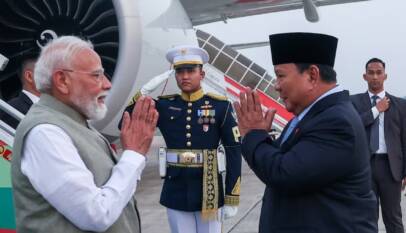
PM Modi Receives Grand Welcome in Jakarta as Indonesia Visit Begins with Special Honours
Jakarta, July 2026: Prime Minister Narendra Modi arrived in Jakarta on Monday afternoon on …