In South Korea, Gyeonggi passes local laws to ban racial discrimination, ensure refugee rights, recognise undocumented children.

Sept 2025 : The Gyeonggi provincial council passed the three local ordinances that ban racial discrimination, institutionally guarantee the rights of refugee applicants and help undocumented children of foreign nationals — a first for any government in Korea, central or local. last Friday, the provincial government said today – 22nd. September, 2025 (Monday).
The racial discrimination ordinance mandates equality regardless of skin colour, country of origin, language or cultural background, and calls for public education campaigns, regular surveys and grievance relief procedures. It also obligates the establishment of a committee and a master plan to ensure the sustainability of these efforts.
The refugee rights ordinance provides the legal basis for Gyeonggi to support refugees in accessing housing, education, medical care and employment, including asylum-seekers and those with humanitarian stay permits. It also allows the province to establish an advisory committee on refugee policy and provide emergency living expenses, medical and psychological counseling, and support for employment and entrepreneurship.
The ordinance on undocumented foreign children establishes a formal process to identify children born in Korea to undocumented parents and issue official confirmation of their existence, allowing access to health care, child care and education. It also lays the groundwork for cooperation among administrative, educational and welfare institutions.
Following the promulgation of the ordinances, Gyeonggi plans in swiftly implementing follow-up measures. It will host a forum at the National Assembly to promote the new ordinances and explore how to expand similar institutional guarantees nationwide to support migrant communities and social integration, on 28th. October. “These ordinances are more than just institutional measures — they are a social commitment to ensure that both residents and migrants can live without discrimination”, said Huh Young-gil, director of Gyeonggi’s immigration policy division. “We will act quickly to implement them and lead the way in migrant policy”.
Migrant workers are widely but quietly present across Korean society. They put food on the Korean tables, they’re in the rhythms of factories, the labour of rural fields and the streets million walk each day. Yet they are often not fully recognised as “workers”. Their voices are rarely heard, and when they are, they fade quickly. The gap between contracts and reality for migrant seafarers is glaring. Double contracts, off-the-books payments and missing compensation after accidents are common. Requests to transfer to another workplace because of unfair conditions are often met with demands for hundreds of thousands of won by employers. Even when wages are withheld, employers sometimes insist on paying only what the contract states, not what was actually earned. Migrant workers seeking medical care cannot take time off or change jobs without employer approval. Such violations of basic rights continue to repeat.
There has been a recent shift. President Lee Jae Myung raised the issue of wage arrears in Cabinet and senior-level meetings, calling for a systematic investigation into abuses affecting foreign workers. Earlier, following the widely publicised “forklift abuse case – A Sri Lankan migrant worker was tied to a forklift and was mocked by his co-workers at a brick factory in Naju, South Jeolla, in an incident that has fuelled national outrage and triggered a government investigation into the abuse of foreign labourers”, he had pledged to punish employers who mistreat migrant labourers. His latest comments, including the suggestion that workers should be allowed to remain in Korea until their unpaid wages are settled, point to a willingness to address gaps in current policy.
For migrant workers, the president’s words carry weight. For years, they have shouted against injustice without hearing an answer. Now there seems to be a political and social space to debate these issues. That shift alone brings encouragement.
The question is what must be discussed to resolve wage arrears and other abuses. Solutions have been proposed in the past, but rarely considered seriously by the government. Responses have been piecemeal, limited to moments when public pressure grew intense. What is needed now is a sustained and serious social debate. While broader attitudes toward migrant workers in Korean society must improve, several immediate steps could reduce exploitation.
Team Maverick




Iran Set to Acquire Chinese MANPADS Amid Rising Regional Tensions, Report Says
New Delhi, July 2026 : Iran is expected to receive its first shipment of Chinese-made shou…
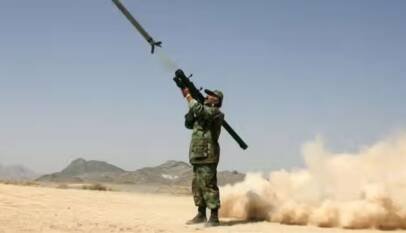
Iran Set to Acquire Chinese MANPADS Amid Rising Regional Tensions, Report Says
New Delhi, July 2026 : Iran is expected to receive its first shipment of …