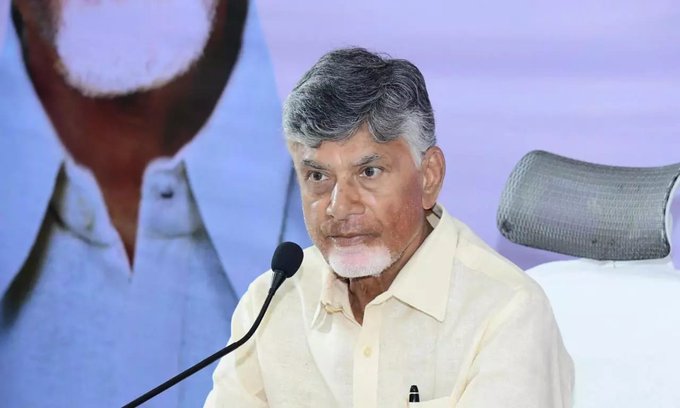
Andhra Pradesh Adopts PPP Model to Fast-Track 10 Medical Colleges

Amaravati, Sept 2025 : The Government of Andhra Pradesh on Wednesday unveiled a Public-Private Partnership (PPP) model to commission 10 medical colleges across the state. The move aims to speed up execution, ensure higher quality standards, and improve access to healthcare and medical education.
According to officials, the initiative is designed to plug long-standing gaps in both medical education and public health infrastructure. The government highlighted that the model will unlock stalled investments, generate savings, and add 110 undergraduate medical seats annually for students in the state.
Addressing Delays and Cost Burden
An official note pointed out that 17 medical colleges had been sanctioned earlier with an estimated outlay of ₹8,480 crore. However, only ₹1,550.39 crore—or 18.2 percent of the total—was spent over four years up to June 2024, leaving 11 colleges non-operational. At that pace, officials warned, completion could have taken up to 15 years.
To revive stalled projects, the current government released ₹786.82 crore after June 2024. But recognizing the need for timely results, it has now embraced the PPP approach. The model is expected to save the state about ₹3,700 crore in development costs and approximately ₹500 crore annually in operational expenses through shared investment and private-sector efficiencies.
Seat-Sharing Structure
Under the PPP arrangement, each 150-seat college will offer 75 Convenor Quota (General) seats, which increases the state’s share by 11 seats per institution compared to the earlier structure. Across 10 colleges, this will add 110 additional undergraduate medical seats, expanding opportunities for students from Andhra Pradesh.
Accessible and Affordable Care
The PPP framework also incorporates safeguards to ensure affordable healthcare. Free outpatient (OPD) services, free diagnostics, and free inpatient (IPD) care will be provided for 70 percent of beds under schemes such as PMJAY, NTRVST, and CGHS. The remaining 30 percent of IPD beds will be paid, with market-based rates applying to diagnostics and services for private patients.
Officials said that the integration of AI-driven diagnostics, telemedicine services, and digital health records will modernize delivery systems. In addition, reputed medical institutions will be encouraged to collaborate, enhancing academic and clinical standards.
Learning from Other States
The Andhra Pradesh model draws on successful PPP practices already in use in states like Uttar Pradesh, Odisha, and Jharkhand, which adopted similar frameworks for upgrading district hospitals and establishing medical colleges. The model also reflects PPP-led growth in premier national institutions, including IIT Chennai, IIM Udaipur, and IIIT Nagpur.
Expanding the Network
The state has made significant strides in medical education over the past three decades. Andhra Pradesh now has 36 medical colleges with 4,046 undergraduate seats in 2024–25, a sharp increase from just six colleges and 650 seats in 1995–96. This growth has been driven by a mix of government and private sector contributions.
Yet, officials acknowledged that execution delays left 11 sanctioned colleges inoperative as of June 2024. The new PPP-led delivery model is intended as a course correction, ensuring timely construction, financial efficiency, and improved access to healthcare.
By adopting this model, the government aims not only to accelerate infrastructure creation but also to align medical education with modern standards, ensuring that students and patients alike benefit from a system built for speed, quality, and inclusivity.




US Rescues Second Downed Airman in High-Risk Mission Over Iran, Says Trump
Washington, April 2026 : The United States has successfully rescued a second crew member f…

US Rescues Second Downed Airman in High-Risk Mission Over Iran, Says Trump
Washington, April 2026 : The United States has successfully rescued a second crew member …