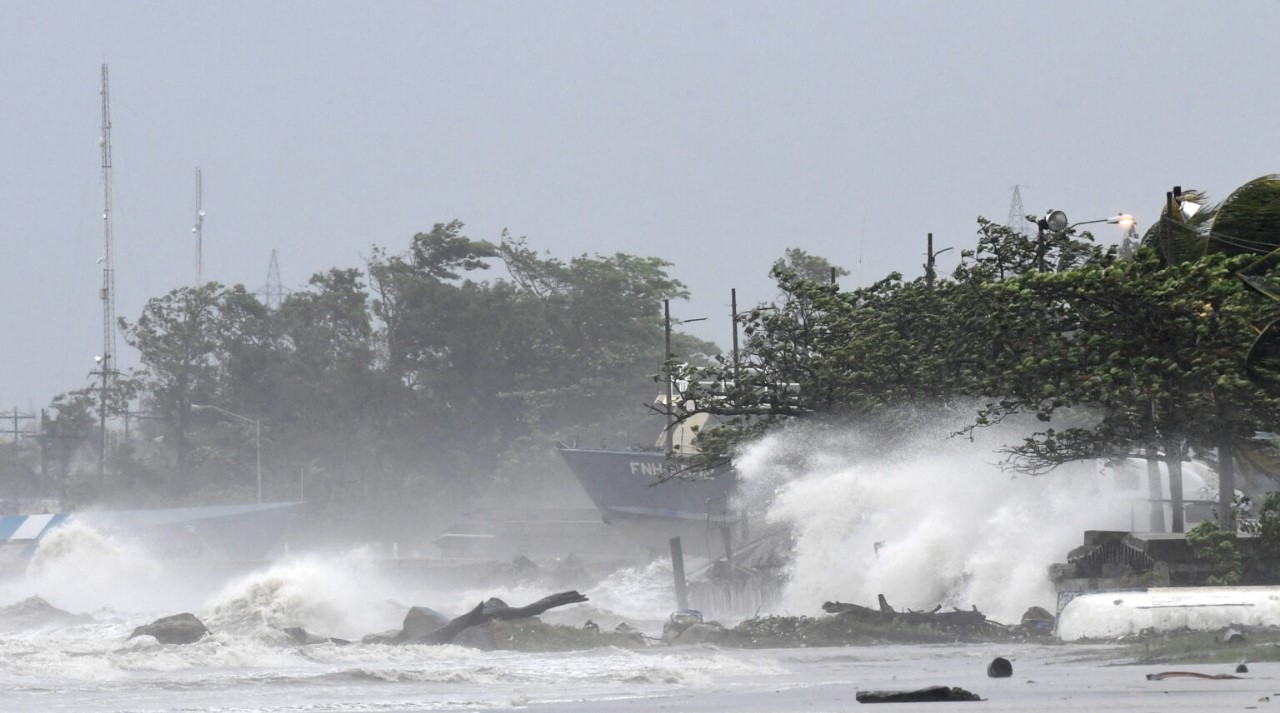
Ocean Currents those stabilise the Global Climate are disrupted.

Oct 2025 : A new study analysing chemical traces in the growth rings of clam shells reinforces growing concerns about the stability of a key North Atlantic Ocean current that helps keep the global climate livable. Creatures that form shells or skeletons in the oceans also form annual rings and the study of those annual increments is called Sclerochronology: Sclero for hard tissue, Chronology from time. The findings, that was published on 02nd October, 2025, examined changes in the ocean south of Greenland during the last 150 years and found that the inflow of freshwater has been disrupting the subpolar gyre, which distributes ocean heat, since the 1950s. The research has further demonstrated that climate heating caused mainly by fossil fuel pollution is pushing the climate toward dangerous tipping points, out of the “safe operating space” for humans, said lead author Beatriz Arellano-Nava, a University of Exeter climate researcher.
A weakening or shutdown of the subpolar gyre and related currents would weaken the northward transport of ocean heat from the tropics to higher latitudes, with different impacts by region. The tropics would experience more extreme heat on land and even worse ocean heatwaves than those already killing billions of marine organisms, from sea stars to sea birds. Sea level rise in most of the tropics would also accelerate from thermal expansion, with warming oceans swelling higher onto shorelines.
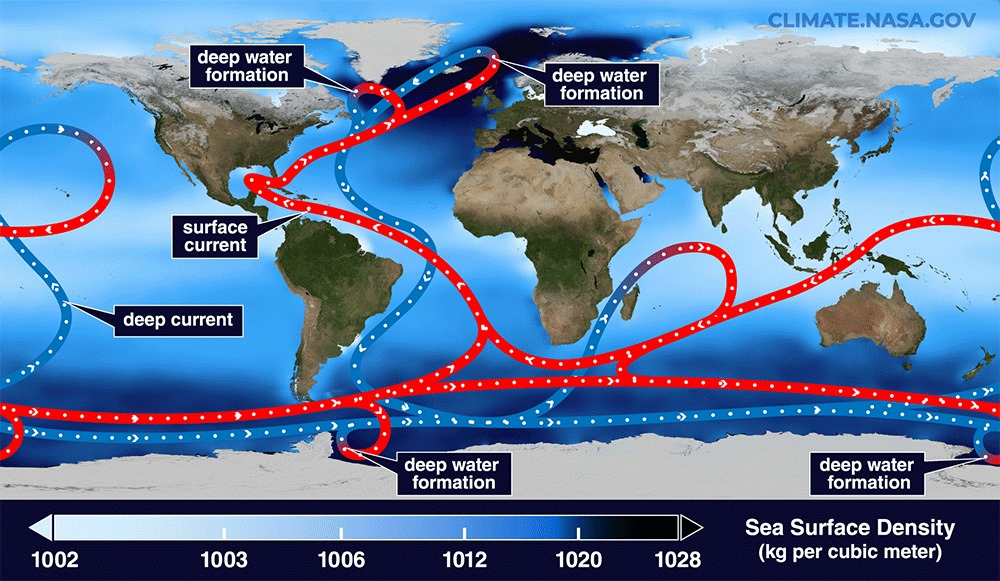
Meanwhile, there would likely be regional cooling in the North Atlantic, the study asserted more extremes in Europe are evitable: hotter summers, colder winters and worse flooding and droughts, as well as shifts in global precipitation patterns. Earlier, a 2024 study raised the stakes, showing that the impacts of a full-scale shutdown of the heat-carrying currents in the North Atlantic could unleash climate chaos in the Northern Hemisphere. The new study, focus on identifying early warning signs of climate tipping points, which are basically irreversible changes to Earth’s systems such as ocean currents, glaciers, coral reefs or forests. The research focused on the North Atlantic Ocean southeast and southwest of Greenland, known as a subpolar gyre. There, winds drive a large, “three-dimensional circulation structure in which water is transported down into the deep ocean in a spiral”, said Anders Levermann, head of complexity science at the Potsdam Institute for Climate Impact Research. The gyre, he said, “is a central part of the deep water formation that keeps the Atlantic Meridional Overturning Current (AMOC) running”. The AMOC is a complex system of currents that shunts warm and cold water horizontally and vertically between the Arctic and Antarctic.
The Atlantic Meridional Overturning Circulation carries cold water from near Greenland (blue line) southward along the seafloor toward Antarctica, while currents nearer the surface transport warmer water northward. Theoretically, the subpolar gyre in the North Atlantic can tip from a strong state to a much weaker tone. The new study confirmed these findings through an analysis of the width and chemical composition of growth rings in clams and other bivalves. In response to anthropogenic climate change, both systems are at risk of passing a tipping point. The studied collapse would weaken the northward transport of ocean heat with regional cooling in the north Atlantic, more frequent weather extremes in Europe and shifts in global precipitation patterns. Bivalve records are really amazing, as asserted by the research team. They are like the tree rings of the sea. They offer a continuous, annually resolved record of ocean conditions.
Varying oxygen isotopes show changes in seawater linked to temperature and the influence of different water masses, which helps show the changes in ocean circulation. The width of the growth rings tells scientists about temperature, the supply of food to the seabed and circulation dynamics that bring nutrients. The changes in the rings are clear once a tipping point has been crossed, during a transition to a colder climate period in the Northern Hemisphere a few hundred years ago, the shift of oxygen isotope values reflected colder conditions and a stronger influence of Arctic waters. And the growth bands became narrower, indicating both lower temperatures and reduced food availability.
The study provides direct evidence that vital ocean circulations can shift into a new state under current oceanic and atmospheric conditions, not just in a theoretical model or under vastly different ancient climate conditions. A shutdown of the subpolar gyre could cause more extreme weather events in Europe and surrounding regions, and also changes in global precipitation patterns. The problem with tipping points is that one may not observe any noticeable changes until an abrupt transition occurs, and then it’s too late.
Team Maverick








Jaishankar, Rubio Push for Defence Pacts and Near-Final Trade Deal at Manila Meeting
Manila, July 2026 : India and the United States on Wednesday gave fresh momentum to their …

Jaishankar, Rubio Push for Defence Pacts and Near-Final Trade Deal at Manila Meeting
Manila, July 2026 : India and the United States on Wednesday gave fresh momentum …