Why all South Korean Men must complete Reserve Forces Training, as BTS may not have completed Military Service yet.

Oct 2025 : All seven BTS members are set for a full-group comeback now that they have finished their mandatory military service, baring the fact that they still have eight more years of duties. Completing the active -duty service does not immediately end their service to South Korea, it marks the beginning of a new chapter called, “reserve force training”.

Reserve force training is a military exercise for South Korean men who have completed their compulsory service. Reserve force duties begin the year after men complete their active service and continue with annual training through their eighth year. This implies that BTS member Jin, who finished his service in June 2024, will begin participating in reserve force training starting this year and will complete it in 2032. This does not mean the BTS members have to say farewell to fans once again, as the program is only one to three days a year. It does, however, mean that the group may not be able to hold a concert on the days that they go through training.
The one-to-three-day training, mandated regardless of job, can still be burdensome or even fatal for many men, as it forces them to leave from work or temporarily close their shops with little to no pay. The government provides no compensation for trainees’ financial losses, aside from a small training fee that is far less than the legal minimum wage. The reserves force training also brings inconveniences for any worker when it comes to scheduling a vacation, doctor’s appointment or attending an important meeting. That said, there is virtually no way out of it. Postponing the training is allowed, but only a limited number of times, and outright avoidance can result in criminal charges ranging from fines to a one-year prison sentence.
But why do discharged men have to undergo military training for so long, and what does reserve force training entail? The core purpose of the reserve force training is to maintain as many able-bodied men as possible in case of war. While active service members are the first picks to execute duties in case of emergency, having a large pool of reserve force members secures the government more options and elevates the military power to a higher level.
That is where the reserve training comes in; it ensures that millions of reservists retain military skills and the combat readiness they acquired from their active duty days. The reserve forces are also crucial in an era when South Korea is struggling with a concerningly low birth rate, as the country already faces a manpower shortage for active duty members in 2025. The South Korean military, as of July, has around 450,000 active service members, which falls short of a minimum of 500,000 deemed necessary for wartime mobilisation.
The number of troops has steadily declined since 2019, according to data from the Ministry of National Defence and the Military Manpower Administration, and there is no sign of that being reversed soon due to population decline. The Defence Ministry’s 2025 document, “Reserve Forces Service Guidebook”, projects that the active-duty force will shrink by 140,000 personnel from today’s level by 2045. “Population decline directly reduces the pool of military manpower, forcing the active-duty forces to shrink”, the document read. “As a result, the importance of the reserve forces will only grow”.
Conceptualisation of the Reserve Training:
South Korea did not have reserve forces directly after signing the Korean Armistice Agreement with North Korea in 1953 and ending the Korean War (1950-1953). However, a key event in 1968 triggered the need for the South to formalise more troops. The so-called “Kim Shin-jo incident” on Jan. 21, 1968, during which a commando named Kim Shin-jo and a team of multiple North Korean military members crossed the inter-Korean border and attempted to assassinate the then President Park Chung-hee at the Blue House in central Seoul, alarmed South Korea and led the government to enact the reserved forces act that year.
The reserve forces came into effect from April 1, 1968, with the goal of bolstering South Korea’s ability to deter future North Korean aggression. Since this moment, discharged servicemen have been required to receive extra military training for potential national crises.
The reserve force duty period is eight years and consists of four years of mobilisation reserve training, two years of basic reserve training and two years of no training but staying in the reserve forces.
First to fourth year reserve force members undergo three days of training at a military base annually, while fifth to sixth year members receive only one day of training, with two additional sessions of operational plan exercises in a year.
“Considering their combat readiness after discharge, reservists in their first to fourth years are designated to mobilisation units that would reinforce or form new combat units in wartime, so they enter those units, stay in the units during the training period and train”, a Defence Ministry official said during an interview with the Press Media. “Meanwhile, reservists in their fifth and sixth years are assigned to regional reserve units for local Defence operations, where they undergo basic reserve training to acquire fundamental combat skills and participate in operational plan exercises to practice the operational plans of their regional units”.
The operational plan exercise is for reservists to join their designated wartime units and practice their roles. But the actual training typically entails merely watching educational videos of what they are to do in wartime or patrolling the area they are assigned to protect, making it far less physically demanding than other types of reserve training, which involves shooting practice, gas chamber training or combat readiness programs.
A combination of these programs is what reservists go through for six years, not eight years, as the sixth year is the de facto last year of training. “Reservists in their first to fourth years alone cannot meet each unit’s mobilisation requirements, and it is inevitable to designate reservists up to their seventh and eighth years as mobilisation forces to secure replacements for potential combat losses”, the Defence Ministry official said. “That said, considering their livelihoods, reservists in their seventh and eighth years are not scheduled for training during peacetime”.
One to three days of training inevitably interferes with reservists’ daily lives, often inducing a situation where they have to make up for their absence caused by the exercise. “Of course, it depends on each person’s job, but I often had to push my work back by a week or rush to finish it a week early”, said Seong Yun-ho, who works at a Defence contractor and started his reserve force duties in 2024. “When I came back from training, I found a pile of tasks waiting for me, so I had to work overtime to get everything done. At my previous company, I considered that to be one of the negative aspects. The company assigned someone to cover my work, but since I had been handling those tasks continuously, another person could only take them over in part. Efficiency dropped, and the company inevitably saw lower productivity since the work was only being covered by a substitute“.
Having to leave work is a problem that every male worker faces, and yet that is not all. Reservists do not receive adequate compensation for the cost of leaving their work behind. The government only provides reservists around an 80,000 won ($57) training fee for a three-day mobilisation training and 8,000 won for a one-day basic exercise as of 2025. It is true that the allowance paid to reservists for training, even though they set aside their livelihoods and accept economic losses to participate, falls short of the minimum wage, the Defence Ministry official said. To address this, the Defence Ministry included the issue in the national policy agenda and is pursuing a phased plan to raise the training fee to a level that reflects broader social standards.
All able-bodied reservists must undergo training despite challenges as long as they reside in South Korea, but not when they live overseas for over 11 and a half months in a single year. Those who live overseas can receive training exemption if they do not stay in South Korea 14 days or more. This is a legal way for reservists to avoid training, unlike unauthorized avoidance that comes with a criminal penalty. College students or correspondents overseas are in an ideal position to utilise this method through their eighth reserve duty year, making it possible for them to continue their studies or work and not receive training at all.
The end of the reserve force duty period still does not mean the end of South Korean men’s duties in the case of a national crisis, as civil Defence training follows immediately after the reserve duties.
Civil training is not technically military training, but it is more of a nationwide program that prepares men for emergencies and natural disasters through evacuation drills or disaster response exercises.
Unlike the reserve training that lasts for eight years regardless of men’s age, civil training duties end when men reach the age of 40, which concludes their duties for the country at long last. From an 18 to 21 months of mandatory military service to years of reserve force training and civil training, a host of duties reflects how South Korea is not a country where citizens can merely enjoy peace, but it is where a great number of men sacrifice to bring that peace. To this day, military bases aren’t the only places to find men prepared in the event of a national crisis, all over the country they remain on standby in the reserve forces.
Team Maverick



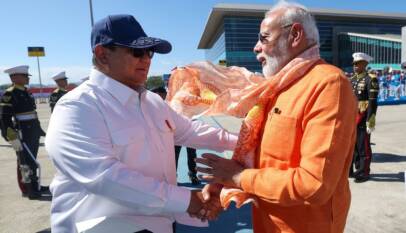



Australia Calls India a Top-Tier Security Partner, Unveils Landmark Defence and Energy Agreements
Canberra, July 2026 : Australia on Thursday described India as one of its most important s…

Australia Calls India a Top-Tier Security Partner, Unveils Landmark Defence and Energy Agreements
Canberra, July 2026 : Australia on Thursday described India as one of its most …