Reptile Excreta can change Medicine.

Both avian and nonavian reptiles excrete excess nitrogen in solid form, colloquially termed “urates” as an evolutionary adaptation that aids in water conservation. Yet, there are many open questions regarding the composition, structure, and assembly of these biogenic materials.
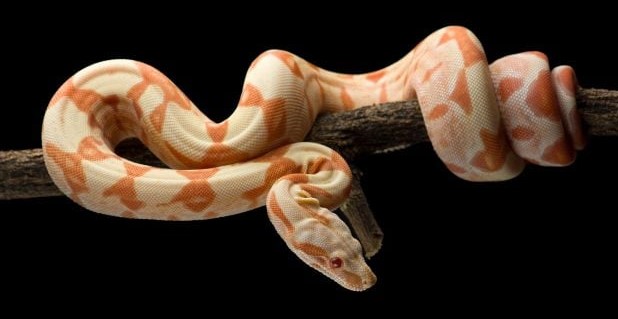
Analyses of urate excretions from Ball python (Python regius), Angolan pythons, and Madagascan tree boas, and 20 other reptile species reveal a clever and highly adaptable system employed to handle both nitrogenous waste and salts. Primitive species excrete urates consisting of 1–10 μm microspheres of turbostratic uric acid monohydrate (UAM) nanocrystals. The nanocrystals’ high surface area and ionisable nature provides a platform to coeliminate sub stoichiometric concentrations of various salts through surface-ion pairing.
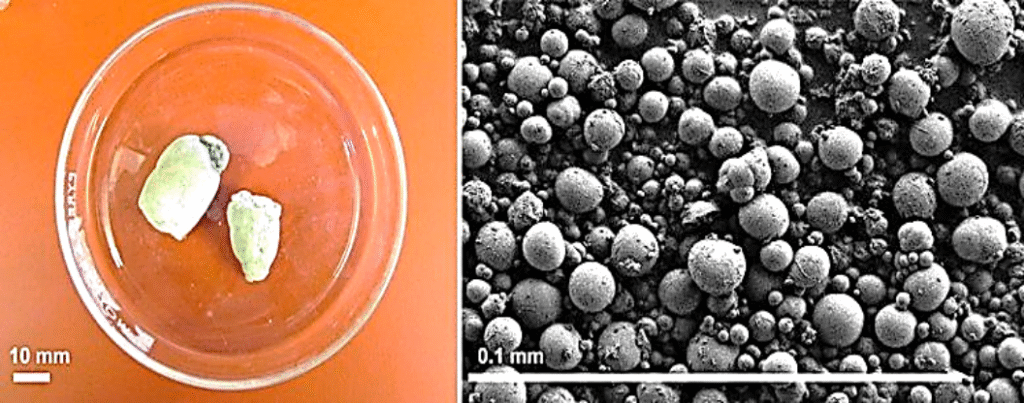
In contrast, the granular urates produced by species from more advanced snake lineages are phase mixtures consisting of predominantly ammonium urate hydrate (AUH) and smaller amounts of other crystalline forms. Identification of microspheres as a minor but highly soluble component of these excretions suggests their likely role as reactive precursors to AUH, a hypothesis supported by in vitro experiments. Importantly, this points to a previously unrecognised physiologic function of uric acid, namely the ability to sequester ammonia by transforming it into a solid.
Excess nitrogen resulting from the catabolic breakdown of proteins and purines is usually eliminated as ammonia, urea, or uric acid. Aquatic species typically eliminate ammonia, which is toxic but diluted upon release. Mammals predominantly excrete urea along with substantial quantities of water as urine, but also smaller amounts of ammonia and uric acid that must be carefully regulated. Reptiles and avians are uricotelic, meaning they excrete uric acid in solid form. The solids are colloquially referred to as “urates”. Uricotelism is thought to have conveyed evolutionary advantages, such as enabling water conservation in hot arid climates. It may offer additional reproductive benefits for oviparous species, as uric acid is 104 times less soluble than ammonia or urea, and therefore less likely to adversely affect developing embryos in an enclosed egg environment.
For reptiles, turning waste into crystals is an adaptation that prevents dehydration, but in humans, uric acid crystals cause painful health problems. In humans, elevated uric acid levels – hyperuricemia are more commonly associated with its crystallisation in vivo, yielding the classic clinical symptom of gout and some types of kidney stones. While most mammals oxidise uric acid to more soluble compounds for elimination, in humans and other higher primates the uricase enzyme was mutationally silenced approximately 12–14 million years ago.
The retention of uric acid provided a presumed fitness advantage, which has been linked to its potential role(s) as an antioxidant, in immune signaling, and in fat storage. Nevertheless, the dichotomy between the efficient excretion of high uric acid loads in reptiles and avians and the occurrence of crystal-deposition diseases in humans raises interesting questions:
(1) How do uricotelic species effectively handle large quantities of this poorly soluble compound?
(2) What is the structure and composition of the “urates” they excrete?
Both uric acid and ammonia are normal constituents of human bodily fluids. A U-shape association between serum uric acid levels and various diseases has been indicating there are protective benefits at low levels. While UAM is rarely identified in human uroliths, the hypothesis that uric acid plays a role in detoxifying ammonia does not require UAM per se. The increased solubility of UAM may be significant for reptiles who must also prioritise water conservation in arid climates.
For humans, where water is more available, ammonia detoxification would simply require some soluble uric acid. Importantly, even under optimized growth conditions, synthetic ammonium urate crystals reach maximum sizes <2 μm in diameter. Thus, if such crystals do form in vivo, it is likely they could be eliminated naturally in the urine without adverse effects.
Analysis of urates produced by a range of squamate reptiles serves to elucidate key aspects of the very clever adaptable system they employ to manage nitrogenous waste and salt. With dietary controls in place, an appreciation of how environmental storage and aging can affect sample analyses, and the benefits advancements in instrumentation, the current study provides a much more detailed understanding of the structure and function of biogenic urates. How and where the microspheres are assembled remain open and intriguing questions, though the fact that they are produced by a diverse set of uricotelic species suggests a low energy process seemingly optimized by similar selection regimes.
The recognition that uric acid plays a role in ammonia management may have broader implications for human health, though clinical studies are needed to fully substantiate the hypothesis.
Team Maverick








India Aims to Build a World-Class Drone Ecosystem as Defence Reforms Accelerate Innovation
New Delhi, July 2026 : Defence Secretary Rajesh Kumar Singh has said that building a globa…

India Aims to Build a World-Class Drone Ecosystem as Defence Reforms Accelerate Innovation
New Delhi, July 2026 : Defence Secretary Rajesh Kumar Singh has said that building …