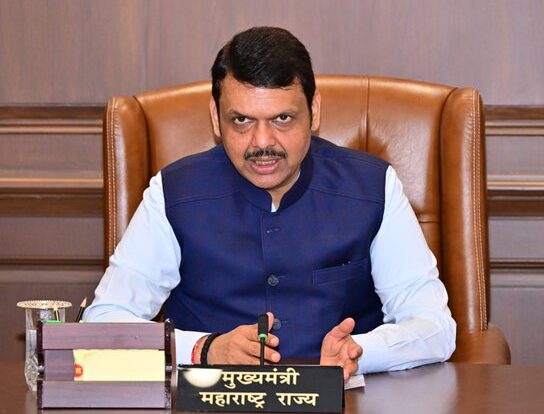
Mumbai’s ‘Suvidha Centre’ Initiative Becomes a Model for Urban Sanitation: CM Devendra Fadnavis

Mumbai, Nov 2025 : The ‘Suvidha Centre’ initiative—implemented in Mumbai through corporate social responsibility (CSR) to improve urban sanitation, water conservation, and public health—has emerged as a model project. Under the vision of Chief Minister Devendra Fadnavis, the Swachh Maharashtra Mission is gaining strong momentum across the state, with several organisations joining the campaign in response to his call.
Launched through a partnership between Hindustan Unilever Limited and the Brihanmumbai Municipal Corporation (BMC), the initiative has achieved significant impact in a short time. Currently, 23 centres are operational in Mumbai, and the 24th centre will be inaugurated soon. Two additional centres are under construction, and proposals for seven more centres are in progress. With support from BMC, Hindustan Unilever Limited, HSBC, and JSW Foundation, the project is set to expand further in the coming years.
The centres aim to provide safe, clean, and affordable sanitation facilities for slum communities and underserved urban settlements. More than 5.5 lakh citizens have directly benefited so far, and the model has demonstrated significant health benefits.
Chief Minister Devendra Fadnavis has instructed authorities to establish more such centres across the Mumbai Metropolitan Region, noting that Suvidha Centres are a key component of sustainable sanitation infrastructure.
Speaking about the project, Chief Minister Fadnavis said that in a densely populated megacity like Mumbai, the Suvidha Centre model has set a remarkable example of successful public-private partnership. These centres contribute significantly to the city’s health and hygiene. Special emphasis has been placed on high-quality facilities, community participation, behaviour change, financial and environmental sustainability, and efficient operations — all of which make this initiative exemplary for urban Maharashtra.
Key Features of the Initiative:
1. Safe and Dignified Sanitation
The centres offer safe toilets for women in slum and informal settlements, clean spaces for children, and accessible facilities for people with disabilities, making them highly community-friendly.
2. Environment-Friendly Model
Water-saving technologies, energy efficiency measures, and waste management systems together create a strong example of environmental sustainability.
3. Community Participation, Especially Women
Behaviour change campaigns conducted by 300 trained women have educated 7.5 lakh citizens on cleanliness and hygiene, leading to positive shifts in public habits, usage patterns, and health awareness.
4. Health Improvements
The ‘Suvidha Centres’ have helped reduce gastrointestinal diseases, diarrhoea, and urinary infections by 50%. Illnesses caused by contaminated water and poor sanitation—common in slum areas—have seen a marked decline.
5. Financially Self-Sustainable Model
A key strength of the initiative is that each centre becomes financially self-sustaining within nine months of launching. All 23 centres in Mumbai are currently operating as fully self-sufficient units.





Kohli Blows Kiss to Anushka After Leading RCB to Commanding IPL Opener Win
Bengaluru, March 2026 : Virat Kohli stole the limelight off the field as well as on it aft…

Kohli Blows Kiss to Anushka After Leading RCB to Commanding IPL Opener Win
Bengaluru, March 2026 : Virat Kohli stole the limelight off the field as well …