The Approaching Threshold in Iran: This Transformation is Unstoppable.

Over the past two decades, Iran has become a country subjected to almost every possible pressure in the world. American and European sanctions have stifled the economy, and its currency has crashed repeatedly. Israel’s targeted attacks have shaken its security institutions. Iran is under immense pressure, including Israeli-US attacks. The real domestic problems appear to arise after the death of Supreme Leader Ayatollah Khamenei.
As access to the energy sector was cut off, the country experienced one of the largest revenue crises in its history. The increasingly authoritarian regime of the mullahs has narrowed social breathing space and violently suppressed protests. The young population has become unable to see a future in the country.
Under normal circumstances, even half this burden would be enough to collapse a state. But Iran is still standing.
It’s weakening, but it’s not disintegrating: The source of this resistance is neither the regime’s security apparatus nor Iran’s geopolitical position. The real reason is the deep cultural backbone of a civilisation spanning thousands of years. Even as Iranians distance themselves from the regime, they don’t abandon Iran. They resent the state, but remain loyal to their homeland. Persian, Azeri, Kurd, Baluch, or Arab—it makes no difference. The carrier codes of Iranian civilisation are still alive. A nation’s historical memory often extends far beyond current politics; Iran, in its current turmoil, proves this. But no civilisation is eternally resilient. A combination of social, economic, and political pressures makes a critical threshold inevitable. Iran stands at that very threshold today.
The Real Storm is After Khamenei: The biggest rupture that will determine Iran’s near future isn’t the economic crisis, sanctions, or external attacks. All of these are straining the regime, but it will be the post-Ayatollah Ali Khamenei era that will shake its foundations.
Ayatollah Khamenei is already 86 years old and is known to be in failing health. This situation signals one of the most precarious and fragile moments in Iranian politics. Leadership in Iran is not just a position; it is the main pillar that holds the regime’s ideological, military, and political balances together. If that pillar shakes, the entire structure can collapse.
Factions within the regime have been quietly preparing for a long time:
• Revolutionary Guards: Control half of the economy, control the security apparatus and have the power to impose their own candidate.
• Conservative clerical circles: They remain the ideological backbone of the regime, but their influence in society has weakened dramatically.
• Technocratic wing: A line that is more pragmatic, outward-looking and prioritizes economic rationality.
• Modern elements with diaspora connections: Seeking a reformist orientation, but with limited influence.
No one is speaking out because, in Iranian politics, power accumulates more in silence than in speaking out. But the truth everyone senses is the same: Iran is heading towards a succession earthquake. Will this earthquake bring about a peaceful transformation? A forced restructuring under external pressure? Or an unexpected social explosion? No one knows yet. But the threshold is very close.
The Silent Sentence Heard in China: In China, the Iranians, mostly Azerbaijanis from Tabriz who were in China for trade, the suitcase economy, and visa-free travel, has summarised the country’s fragility in one sentence: “We didn’t distance ourselves from Iran. Iran distanced itself from us“. There was neither anger nor a call for revolution in this sentence. Just a profound weariness and deep resentment. These families are among those who feel Iran’s economic downturn most acutely. They buy textiles, electronics, and small appliances from China and ship them to the Iranian market, which is considered to be a modern suitcase trade. They provide for their families, but they don’t build their future around Iran. “We don’t think our children will be safe in Iran“, they say. This isn’t just an economic gesture; it’s a sign of a sociological rupture.
Shiism in Decline, Persian Nationalism on the Rise: The Iranian regime is reshaping the ideological foundation that holds society together. Shiism is no longer a magnet, especially for the young. The women’s rights movement, generational fault lines, social media culture, and increasing secularisation are rapidly eroding the influence of Shia ideology.
The state is attempting to fill this void with Persian nationalism. However, this is a risky move for a multi-ethnic country. Although Persian nationalism carries a historical self-confidence:
- Azerbaijanis, who make up one-third of the population, feel outside the centre.
- Historical demands are gaining strength again in the Kurdish regions.
- The Baloch people have been under the burden of economic exclusion for a long time.
- Ahvaz’s Arabs are fed up with cultural and security policies.
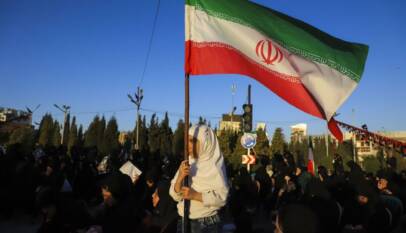
Today, Iran’s strongest sociological wave is among its youth. They seek neither revolution nor ideological change. They feel no allegiance to the mullahs or the West. All they want is a normal life, a predictable future, and a breath of freedom. The deepest dynamic that will shape Iran’s future lies within a silent, ground-up wave of secularisation. As the regime tightens, society modernises. Women, youth, entrepreneurs, artists. Everyone is creating their own little island of freedom.
Today, the Iranian diaspora isn’t just growing; it’s shifting direction. The country’s international landscape is being reshaped along three axes:
One, Close Line: Turkey and the Gulf: Istanbul, Antalya, Dubai. From education to medical tourism, from trade to the start-up ecosystem, Turkey is gradually becoming a permanent alternative for Iranian youth, rather than a “temporary port”.
Two, Eastern Corridor: China. China is no longer just a trade opportunity for Iran; it’s a corridor of survival. For Tabriz’s families, China is both an economic outlet and a modest haven of freedom.
Three, Western Centers: London and Paris. In these centres, the diaspora not only lives but also rebuilds Iran’s future culturally and intellectually. Iranian voices are being strengthened in a wide range of fields, from media and academia to art and political activism.
Iran today is experiencing not a state crisis, but essentially an identity crisis. Repression is intense, hope is low, but social transformation persists: the economy is mutating, identity is being rewritten, secularisation is on the rise, youth are seeking alternative paths, the diaspora is gaining strength, and a succession crisis is looming.
Iran is no longer the old Iran. But it is true that the new Iran has not yet been born either.
One thing is certain: Iran is transforming, both internally and externally, and this transformation is unstoppable.
Team Maverick
₹30.41 Crore Road Project Receives Administrative Approval Due to Efforts of Minister Lakshmi Rajwade
Raipur, March 2026: Significant progress has been made in road infrastructure development …
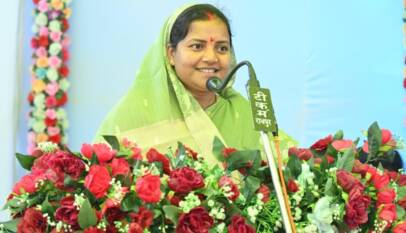
₹30.41 Crore Road Project Receives Administrative Approval Due to Efforts of Minister Lakshmi Rajwade
Raipur, March 2026: Significant progress has been made in road infrastructure development in the …