Old Bonds, New Signals: Putin’s Visit Speaks to the Shifting World Order

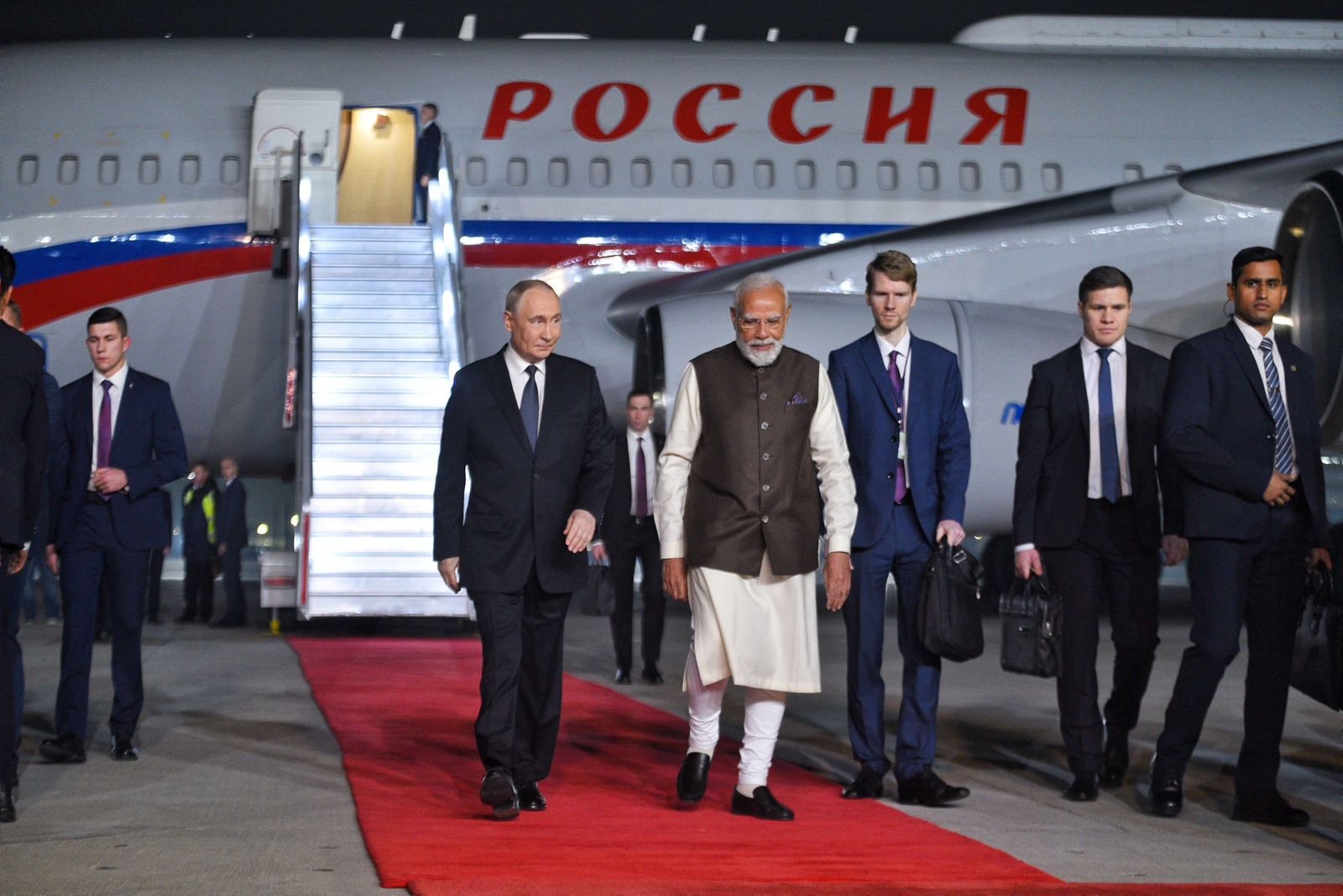
New Delhi, Dec 2025 : As the aircraft carrying Russian President Vladimir Putin taxied to a halt at Delhi’s Palam Airport, the visiting leader may not have immediately realised that an unusual and symbolic gesture awaited him. Breaking long-held diplomatic protocol, Prime Minister Narendra Modi himself was standing at the red carpet to receive the Russian President, underlining the extraordinary personal and strategic bond between the two leaders.
State-run Russian broadcaster RT later noted that Prime Minister Modi had “broken protocol to meet the Russian leader, whom he calls his friend, personally upon his disembarkation.” The moment marked a rare departure from convention and sent a strong message about the enduring closeness between New Delhi and Moscow.
Adding greater significance to the 23rd India–Russia Annual Summit, a tradition dating back to 2000, President Putin is also scheduled to launch RT India on Friday, December 5. The Moscow-based global television network will roll out four daily English-language news programmes aimed at expanding media engagement and enhancing people-to-people connectivity between the two nations. The initiative is expected to strengthen cultural outreach at a time when both countries are reasserting their roles in an increasingly multipolar world.
As Kremlin spokesman Dmitry Peskov noted during the visit, Russia and India share cooperation “in the most sensitive areas,” reflecting the deep strategic trust that defines the relationship. The visit is set to include focused discussions on collaboration in the defence and space sectors, as well as deliberations on potential cooperation in next-generation military aviation platforms.
Alongside diplomatic engagements, the India–Russia Business Forum is also being held in connection with President Putin’s visit on December 4–5, aimed at energising trade, industrial cooperation, and investment flows. A former senior Indian bureaucrat once observed that while Western suppliers are highly professional in contractual support, Russian partners are known for deep operational involvement, technical handholding, and long-term collaboration—a distinction that captures the operational nature of India–Russia ties.
The bilateral relationship between New Delhi and Moscow is time-tested and deeply rooted in strategic history, dating back to the era of the former Soviet Union. One of the defining moments came during the 1971 India–Pakistan war, when the United States deployed its Seventh Fleet to the Bay of Bengal in a show of force. At India’s request, the Soviet Union responded by sending its own naval fleet to the region, compelling the US to withdraw—an episode often cited as a turning point in India’s strategic confidence.
India’s careful diplomatic balancing was also evident during the G20 Summit in New Delhi in 2023, when the original draft declaration referred explicitly to “Russian aggression” in Ukraine. After negotiations led by India, the language was modified to adopt the more neutral phrase “war in Ukraine,” avoiding direct attribution of blame. This marked a shift from the 2022 Bali Declaration, which had expressed “deep concern” over Russia’s invasion. The change reflected India’s preference for strategic neutrality while maintaining strong ties with Moscow.
In the defence sector, Russia continues to be one of India’s most critical partners. The deployment of the S-400 Triumf air defence system has significantly strengthened India’s strategic air defence shield, enhancing protection against aerial threats. Encouraged by its performance, India is exploring future advanced air defence collaborations with Russia to further bolster national security.
India and Russia are also important partners within major global groupings such as BRICS—which now includes Brazil, Russia, India, China, South Africa, and newer members including Egypt, Ethiopia, Iran, Saudi Arabia, Indonesia, and the UAE. BRICS has emerged as a powerful platform for economic coordination, development finance, and Global South representation.
Both nations are also part of the Shanghai Cooperation Organisation (SCO), established in 2001 to promote regional security, economic cooperation, and political stability across Eurasia. Through SCO and BRICS, India and Russia continue to shape alternative multilateral frameworks that challenge Western-dominated institutions.
At present, Russia remains under extensive Western sanctions due to the Ukraine conflict, while India is navigating evolving tariff pressures from the United States and volatility in global energy markets. Against this complex geopolitical backdrop, President Putin’s arrival in New Delhi is more than a ceremonial visit—it represents a strategic reaffirmation of a partnership built on mutual trust, defence cooperation, diplomacy, and long-term economic engagement.
The rare airport reception, the launch of RT India, the defence and economic talks, and the symbolic gestures together send a clear message: despite global realignments and geopolitical turbulence, the India–Russia strategic partnership remains resilient, adaptive, and forward-looking.
Team Maverick.
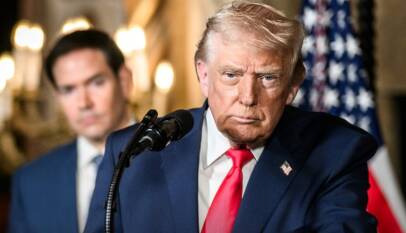
Trump Declares Strait of Hormuz Reopened Under US Protection, Imposes Full Blockade on Iranian Shipping
Washington, July 2026 : US President Donald Trump on Tuesday announced that the Strait of …
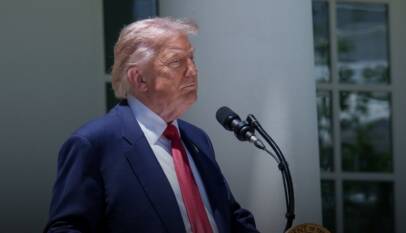
Trump Declares Strait of Hormuz Reopened Under US Protection, Imposes Full Blockade on Iranian Shipping
Washington, July 2026 : US President Donald Trump on Tuesday announced that the Strait …