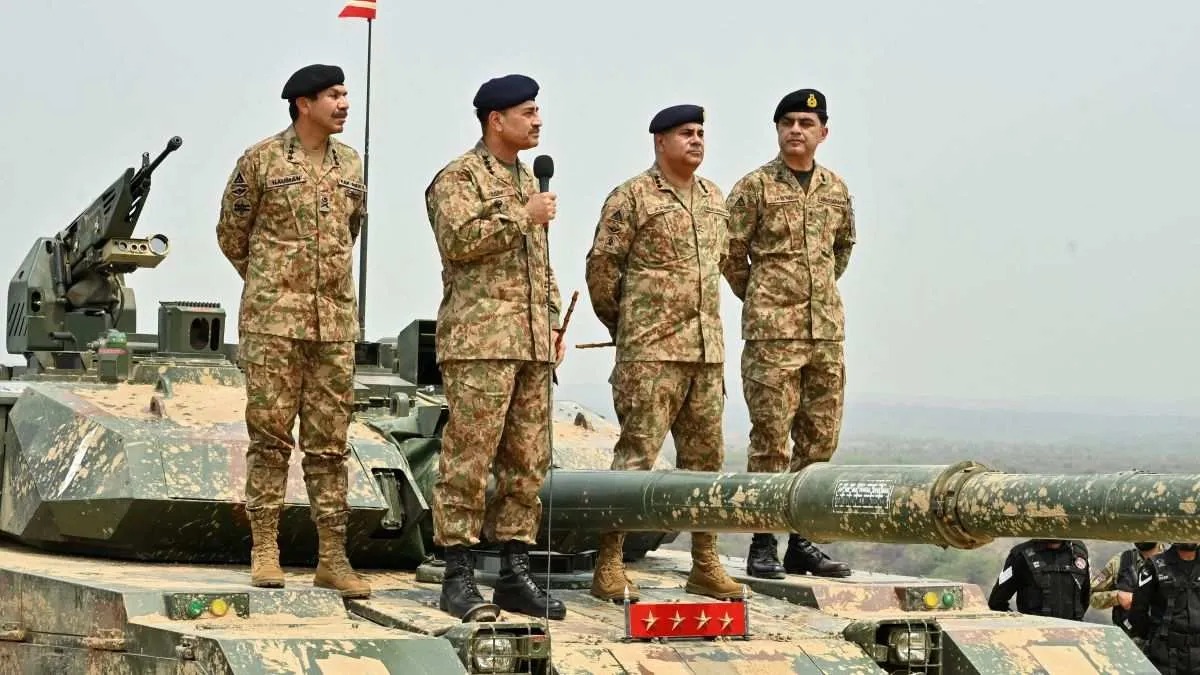
US Eyeing Pakistan As Provider Of Stabilising Forces In Gaza.

December 2025: Till today, the Trump administration had vehemently adopted strategies in finding allies those who could sponsor his truce plan of lending soldiers to be the constituent of Gaza’s peacekeeping force, a key part of the second phase of the Israel-Hamas ceasefire deal.
The US President have managed to unveil such a “Do As I Say Partner” namely Pakistan. Pakistan’s Chief of Armed Force Asim Munir is willing to act such a partner in sending troops from his sizable army to the enclave. The reasons:
Munir wants to build links with the US in order to sell them rare-earth minerals, Pakistan’s struggling economy could do with some extra cash, and it has exported its security services earlier, notably at the 2022 FIFA World Cup in Qatar. But, as “Every silver lining has a cloud” – providing security forces may spark a domestic backlash in Pakistan, amid deep opposition among Islamist parties to the US and Israel. Munir is set to visit Washington, DC, in the coming weeks to discuss the matter with US leaders.
Why Asim Munir –
International Perspective:
- Not contributing to the Gaza stabilisation force could annoy Trump, which is no small matter for a Pakistani state that appears quite keen to remain in his good graces, in great part to secure U.S. investment and security aid.
- Pakistan, the world’s only Muslim country with nuclear weapons, has a battle-hardened military having gone to war with arch-rival India three times and a brief conflict this summer.
- It has also tackled insurgencies in its far-flung regions and is currently embroiled in a bruising war with Islamist militants who it says are operating from Afghanistan.
Pakistan’s military strength means there is a greater pressure on Munir to deliver his capacity, as reiterated by defence analyst Ayesha Siddiqa; but in a sharp contrast, Pakistani Foreign Minister Ishaq Dar said last month that Islamabad could consider contributing troops for peacekeeping but disarming Hamas “is not our job”.
Domestic Perspective:
As a country flanked by two longstanding rivals, India and Afghanistan, Pakistan has relied heavily on its military throughout its 80 years history. As a result, military leaders have typically wielded immense political power, controlling the country both directly and indirectly for most, if not all, of Pakistan’s near 80 years existence.
The military faced a challenge, though, in 2018, when the charismatic and telegenic former cricket star Imran Khan won a free and fair election on a populist platform. Although he initially enjoyed the support of “The Establishment”, as the military is known, Khan quickly got into conflict with the generals. One of his most brazen acts against the brass was, in fact, to reassign the head of the country’s spy unit at the time, one Asim Munir.
Khan’s power didn’t last. He was ousted in 2022, and jailed on corruption charges. His party would remain popular, winning the most seats in the 2024 election, but the government, under military influence was refused to seat many of its female and minority candidates, leaving Khan’s party in the minority.
With Imran Khan far from power, and behind bars, the one-time spy chief rose the ranks of the military to become army chief. In May of this year, he seized on the latest Kashmir crisis, which put India and Pakistan on the brink of all-out war for several days, to become Pakistan’s second-ever five-star general, the highest possible military ranking. His latest effort goes a step further, amending the 1973 constitution in a way that opens the path for an outright power grab.
“One of the things in the 1973 constitution is: if you declare martial law, you’re tried for treason”, Dr. Ayesha Siddiqa, a Pakistani military expert at King’s College London, told reporters. “So, if tomorrow Munir declares martial law, he cannot be tried for treason”
- Pakistan’s economy has been stagnant for 50 years. In the 1970s it was the richest country in South Asia, now it’s one of the poorest. In addition, it has $ 6.5 billion in outstanding IMF loans, the 05th most in the world. Many Pakistanis are seeking opportunities abroad.
- The other major issue for Munir is the Taliban, the one-time allies of Pakistan who now hold power again next door in Afghanistan. Last month, the two countries had one of their worst border disputes in years, and now Pakistan is bombing the Afghan capital of Kabul in response to a spate of terrorist attacks in Islamabad.
- There’s one thing Munir won’t have to worry about. Pakistan’s opposition is toothless right now, Siddiqa said. The opposition has a top-down structure, meaning that with Khan in jail, the party is largely adrift, with weak local representation.
Team Maverick.

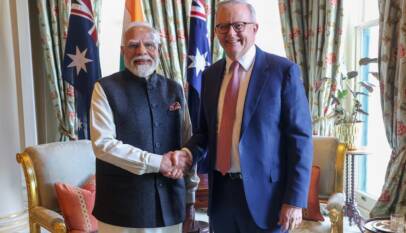

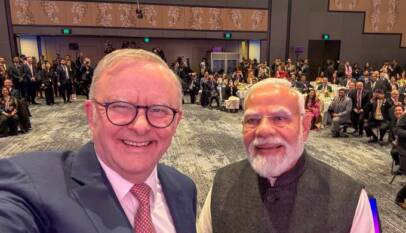




PM Modi, Australian Opposition Leader Angus Taylor Reaffirm Bipartisan Commitment to Stronger India-Australia Ties
Melbourne, July 2026 : Prime Minister Narendra Modi on Friday met Australian Opposition Le…
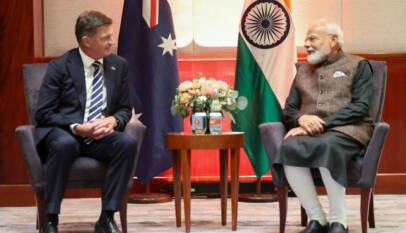
PM Modi, Australian Opposition Leader Angus Taylor Reaffirm Bipartisan Commitment to Stronger India-Australia Ties
Melbourne, July 2026 : Prime Minister Narendra Modi on Friday met Australian Opposition Leader …